

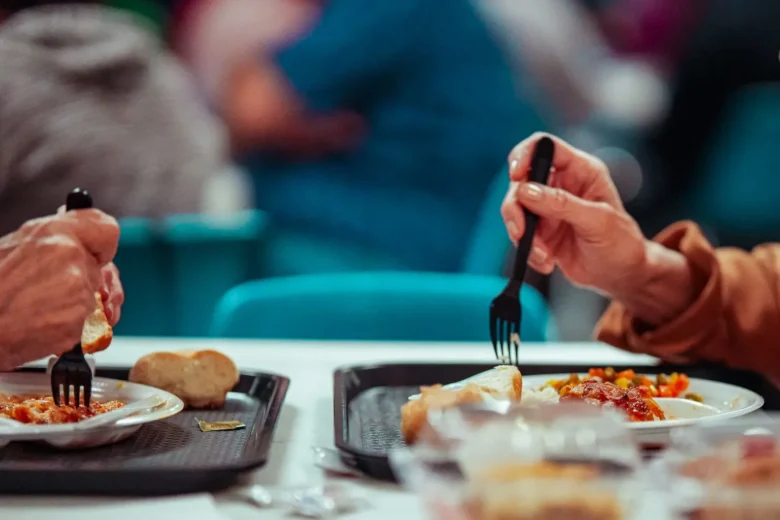
Greek music wafts out of speakers as you walk into the basement of St. John the Baptist Greek Orthodox Church in east Omaha.
The tunes are far from the only thing that sets it apart from most of the hundreds of fish fries happening around the city and state on this Friday evening.
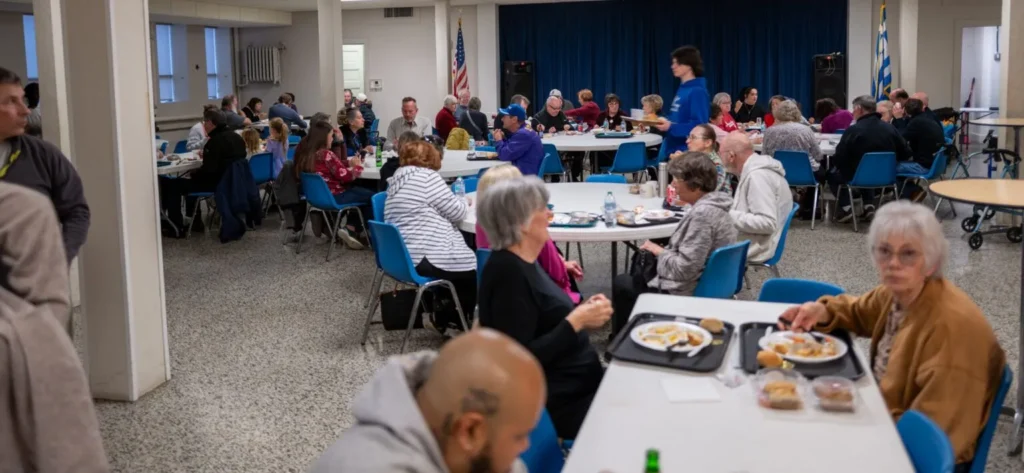
There’s no long line here, unlike in the more traditional spots where Omahans crowd into Catholic church hallways, school gyms and social halls awaiting plates of fried fish, cold domestic beers and a chance to drop a buck and spin the “meat wheel.”
And the food the friendly volunteers urge you to try at this Greek Orthodox church is different, too.
Crucially: It’s not fried fish.
Instead, they guide you toward the fish plaki, a traditional Greek oven-baked white fish dish. They sell beer, but it’s Greek beer. And they make you promise to indulge in one of the homemade Greek desserts – sold for $5 – before you go.
“We know fish fries are a big deal,” said Joe Jensen, parish council president. “We kind of wanted to, you know, be part of the party.”
Every year, I build what I like to call the definitive list of fish fries in Omaha and its suburbs. As of today, that fish fry list – which includes locations and details of more than 40 fish fries – is now live on Flatwater Free Press for the first time. Click here to view it.
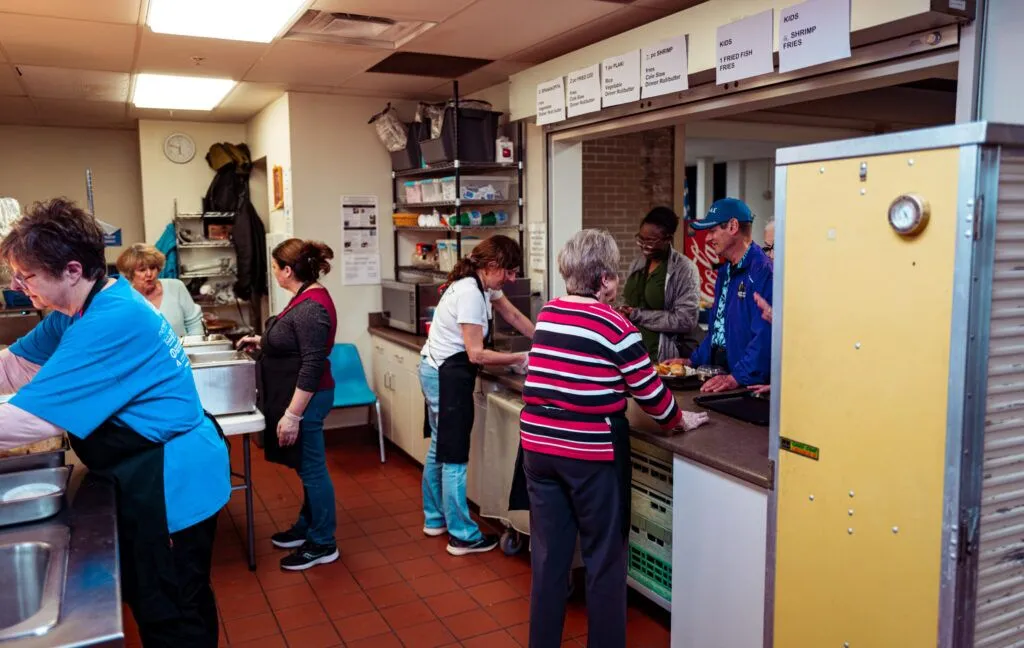
Each year when I build that list, I notice that a few more churches are serving dishes other than fried fish.
I have no hate for a plate of fried pollock, but I wanted to learn more.
Though there is fried fish available at the Greek Orthodox fry, not many diners are eating it. Instead, they’re devouring plaki, that traditional Greek recipe where the baked fish is topped with a rich sauce of olive oil, tomatoes, onions, garlic and spices like cumin and oregano.
The slightly sweet-and-sour finish of the dish is bright and tangy, and the fish itself firm but tender. It comes with a side of steamed white rice and vegetables that I’ll label, gently, as school cafeteria. But the fish itself? Worth the trip.
There’s also no shortage of homemade, crisp spanakopita on plates around the room.
Here, they are formed into a shape similar to an egg roll to make them less messy to eat than the more traditional slice, Jensen said. They come three to an order if you get them as an entree, and are also offered as a shared side. “Flaky,” “buttery” and “cheesy” are adjectives everyone likes when it comes to food, and they all apply here, balanced against the earthy flavor of spinach. Crisp pastry shatters with each bite.
And at the Greek fish fry, almost every diner seems to be enjoying at least one or two selections from the many tables of those homemade desserts.
Greek food isn’t the only non-fried cuisine making an appearance around town during Lent.
Over in Bellevue, baked salmon is a hot seller at the Knights Event Center, which hosts a fish fry with many of its volunteers from St. Mary’s Catholic Church. Lynn Trimpey, the manager of the event center, said the 60 portions of salmon prepared each Friday sell out almost right away.
That Bellevue spot also serves up two of the most unusual fish fry offerings anywhere in the metro area. They are two soups: lobster bisque and clam chowder. I noted that those seemed pretty high end for a fish fry.
“Well,” Trimpey said, “we’re pretty high-end.”
Pasta is the main event at the St. Pius X Pasta Fridays, which organizer Mike Burns said have been a staple for 24 years and serve up to 400 guests each week.
“The plan was to have a dinner that wasn’t fish because it was such a big thing elsewhere,” Burns said. “Also, we didn’t want our parish center to smell, to be honest with you.”
Each week, volunteers from the men’s club, led by their president, Bill Kellen, gather in the kitchen. They par-cook two types of pasta and five different meatless sauces: alfredo, beer cheese, spicy red sauce, marinara and garlic. One popular option is mixing the sauces.
“People have their own little secret,” he said. “They either mix it, they don’t mix it. They take it side by side. It’s this or that.”
Though Burns said there are lots of combinations folks swear by, one popular choice is a pour each of spicy marinara and beer cheese served side by side. That marinara is based on an old recipe from a member of Omaha’s Sons of Italy hall; though Burns said it has evolved over time, it hasn’t changed much in 20 years.
“The sauces start at 9 a.m. Friday and just simmer all day long,” he said. “The cooks are very proud of their sauces.”
Enthusiastic chefs seem to be one common thread at almost every fish fry. It’s also the case back at the Greek Orthodox, especially when it comes to those desserts, a few of which I’d never seen before.
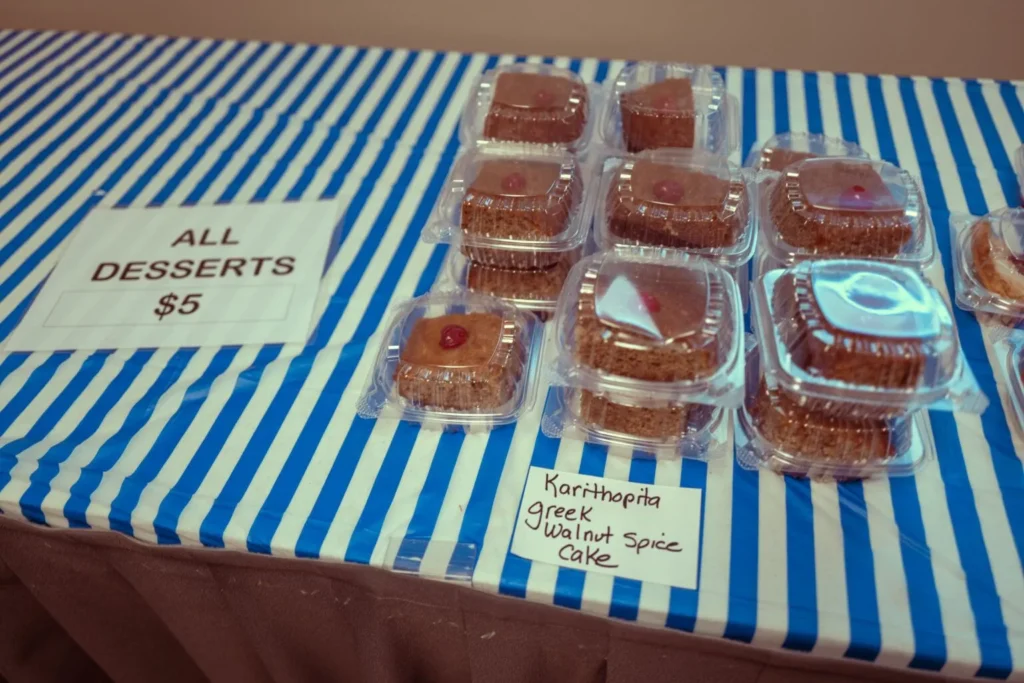
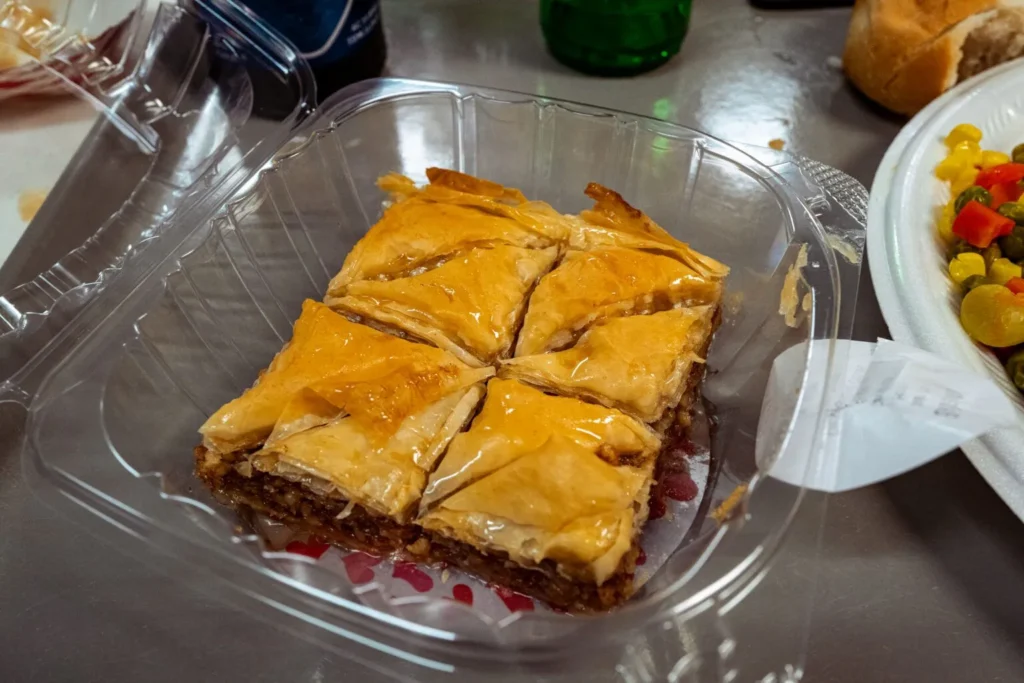
Karithopita, a Greek walnut spice cake with syrup, had a texture close to banana bread, with a moist, dense finish and a flavor touched with baking spices like cinnamon and clove. The baklava, flaky and tender with a warm, crunchy, nutty filling, is also top notch.
My favorite of all might have been the galaktoboureko, which translates to “milk pie.” A thick layer of a smooth custard made with semolina flour gets tucked inside crispy phyllo, the whole thing soaked in a sweet syrup. It’s mostly associated with the Easter season, so it makes sense that it appears at a Lenten dinner. Jensen said the desserts change weekly, as the parish members like to try their hand at a variety of dishes.
“We have very passionate cooks in the kitchen,” Jensen said.
Find details on these three Omaha fish fries plus more than 40 others at https://flatwaterfreepress.org/omaha-fish-fry-guide/.
The Flatwater Free Press is Nebraska’s first independent, nonprofit newsroom focused on investigations and feature stories that matter.