

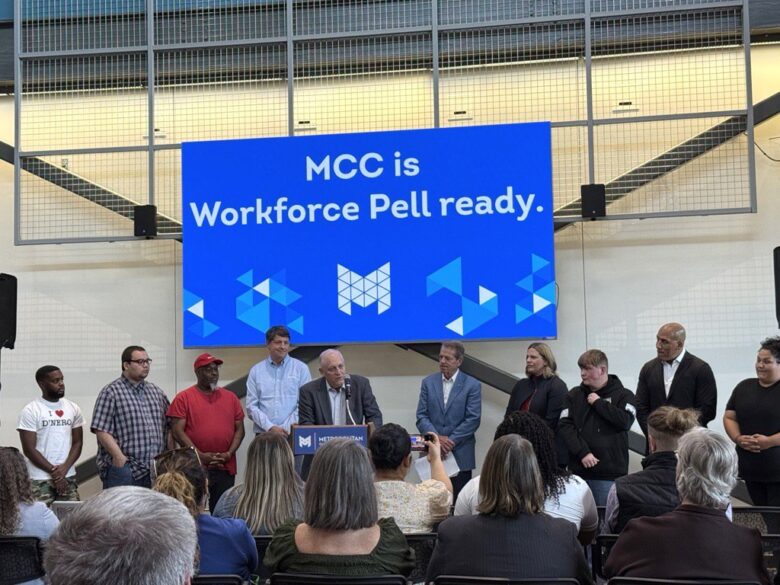
Workforce Pell Grants will soon be available for four short-term programs at Omaha’s Metropolitan Community College.
The four programs are certification for pharmacy technicians, phlebotomy technicians who draw blood, a commercial driver’s license (CDL) and a technology-related program called CompTIA+.
The Working Families Tax Cuts Act that passed in 2025 allowed for aid to go to students enrolling in short-term programs aimed at entering the workforce quickly. The noncredit and microcredential programs must have a 70% completion rate and a 70% job placement rate to be eligible for Pell Grants. Gov. Jim Pillen has approved the four programs, and they now go to the U.S. Department of Education for final approval.
“At its core, this program is about ensuring that Nebraskans who invest their time and their Pell dollars can trust that the training will lead to meaningful employment and long-term career success,” Katie Thurber, commissioner of the Nebraska Department of Labor, said during an announcement of the Workforce Pell Grant program on Tuesday.
Students looking to receive a Pell Grant would need to meet all the current eligibility requirements for the federal financial aid program, including not exceeding lifetime limits on Pell Grants. However, a student who received a bachelor’s degree may be eligible for the Pell Grant to enroll in a workforce program.
MCC President Randy Schmailzl said the Pell Grant should cover the full cost of the program for the student.
“If you want to get something quick, get in the workforce, get going, have a good job, then the Workforce Pell is the route to go,” Schmailzl said.
The programs take between eight and 15 weeks to complete, which is a requirement of the Workforce Pell Grant. Pillen added that with those short completion periods, there’s quick accountability for program success, especially with the 70% completion and job placement requirement.
“Obviously, we’re all expecting 100-and-100% but just so that people understand, it’s a great investment for our economy, great investment for taxpayers,” Pillen said.
While the four programs with Nebraska’s Workforce Pell program still need federal approval, several MCC students shared how similar financial aid helped them on their workforce path.
Hilda Gutierrez, a student in the CDL program, said with raising four kids, she didn’t have the money for her program.
“I am so blessed and thankful for you guys because it’s hard being a mother on top of trying to get your situation started, so thank you,” Gutierrez said.
Terrence Turner, also a student in the CDL program, shared that he was released from prison in the past year, and needed help to reenter the workforce.
“Being released from prison less than a year ago, and not having the funds and a part-time job, this helps a lot to further my education,” Turner said.
Rob Jeffreys, director of the Nebraska Department of Correctional Services, said the short-term programs offered at MCC line up with the realities those leaving prison face when trying to find a job and stability quickly.
“We’re breaking down silos, building clear, coordinated pathways to success,” Jeffreys said. “Workforce Pell is one of the most powerful tools that we can see that would help us with this effort.”
As the program gets up and running, Thurber with the Labor Department said she hopes to see the program extended to all of the community colleges across the state, along with the tribal colleges and the four-year colleges as well.
“What’s been missing in Nebraska is truly making sure that we’re connecting education to workforce,” Thurber said. “That’s what will make this program successful.”