

Chalandria James, a community healthcare worker and doula, said some of her clients don’t even bother applying for Medicaid anymore.
“The changes, they’ve been really confusing for everyone,” James said.
James said confusion around whether or not her patients are eligible under new regulation passed last year through the One Big Beautiful Bill Act prevents many of from trying for healthcare coverage at all. Others, like one pregnant woman she worked with, applied and waited for months to hear if she was eligible before getting coverage.
“It’s a downward spiral,” James said. “There are going to be a lot of people without healthcare coverage.”
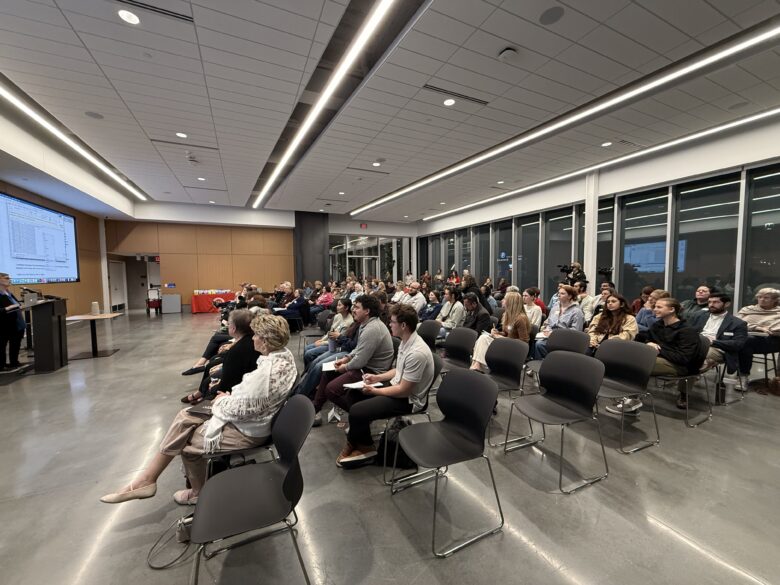
James was one of dozens of people who attended a town hall in Omaha on Monday to discuss the first six months of Nebraska’s adoption of the new Medicaid expansion program work requirements and the hundreds of Nebraskans who have lost coverage as a result.
Under the new Medicaid work requirements, able-bodied enrollees have to log at least 80 hours a month of employment, work program attendance, volunteering or schoolwork. These restrictions apply to Medicaid members between the ages of 19 and 64 who are not pregnant, do not have a disability, are U.S. citizens or meet immigration rules and make less than 138% of the federal poverty level. In Nebraska, that’s about $22,025 per year for one person and $45,540 for a family of four, according to the Department of Health and Human Services.
Nebraska was the first state in the nation to implement these requirements. Gov. Jim Pillen implemented the new Medicaid work requirements eight months ahead of schedule, and they went into effect in Nebraska on May 1. Pillen said that he intentionally opted into the new requirements early because he wants to reduce the size and cost of the program.
Since May 1, James said many Nebraskans lost healthcare coverage because of confusion over the new regulations and a lack of assistance. There are not enough staff to help Nebraskans navigate what they need to submit to prove that they are working 80 hours a month, and those who need help often cannot spare the time it takes to get it.
James said many of her clients have tried to get help from Nebraska Department of Health and Human Services but end up waiting on the phone for up to two hours, often getting disconnected before speaking with a caseworker. James said she once spent hours in the DHHS lobby hoping for assistance navigating the new requirements for herself and her six children. She said she was sent away when the building closed for the day and told to come back later.
“The bad news is we don’t know, really, how it’s going,” Megan Word with the American Cancer Society Cancer Action Network said, adding that many cancer patients are set to lose healthcare coverage since they do not meet exemption requirements and are too sick to work.
Nebraska Appleseed does have some data on the impact of the new restrictions, but the organization’s Healthcare Access Program Director Sarah Maresh said it’s about two months old. At that time, she over 1,000 Nebraskans were denied or lost coverage in the preceding six months.
“We know that that’s by design,” Maresh said. “People are being deterred from even applying to Medicaid. It’s going to cause people to be sicker and more disabled.