Omaha’s Metro Transit has premiered a new microtransit program called Metro Flex.
The goal of Metro Flex is to fill gaps between areas where it is difficult to have regular and fixed public transportation.
“If you think about neighborhoods or streets that aren’t connected, or where there’s some gaps in sidewalk access and walkability, those are going to be places that are very hard to serve with a regular, fixed route bus,” said Metro Transit CEO Lauren Cencic. “Something like Metro flex really helps bring people in from those areas and connect them into the larger network so that they can travel across the city.”
Riders will either make use of an app called Metro Flex OMA, or call the Metro Transit customer service line to schedule a ride. The app is available in English and Spanish, while the customer service line can accommodate multiple other languages.
For the first two months, until Oct. 15, rides will be free.
“This is really an opportunity for people to get to try out the service, test it out, see how it works for them, and really become familiar with it,” Cencic said.
After that time, each ride will be $3, which also includes transfers and additional rides on Metro buses. Users will be able to pay several different ways, including through the app, using Metro Transit’s fair payment system UMO or through paper ticket vending machines which are available at Metro’s transit centers.
Much like other rideshare apps and services, users will select their pick-up point and their drop off point. The app will then calculate how to best get there, depending on traffic and which buses will be available.
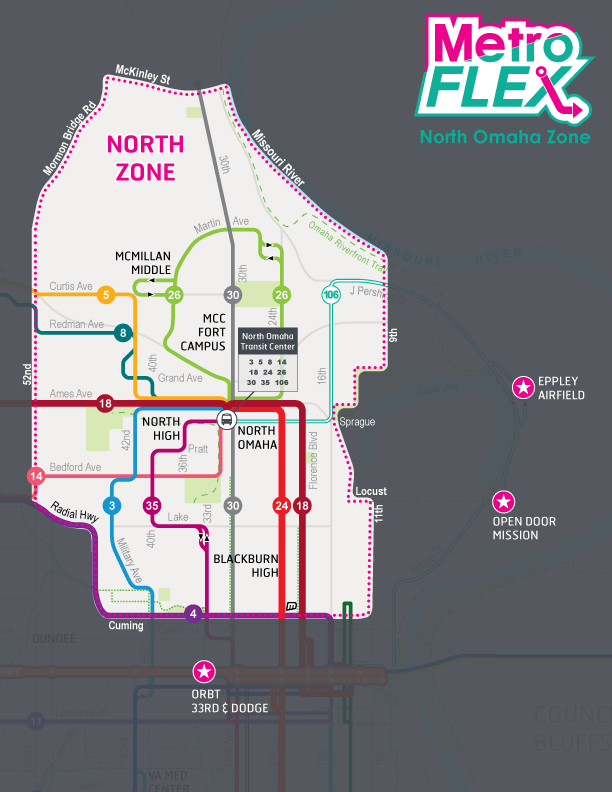
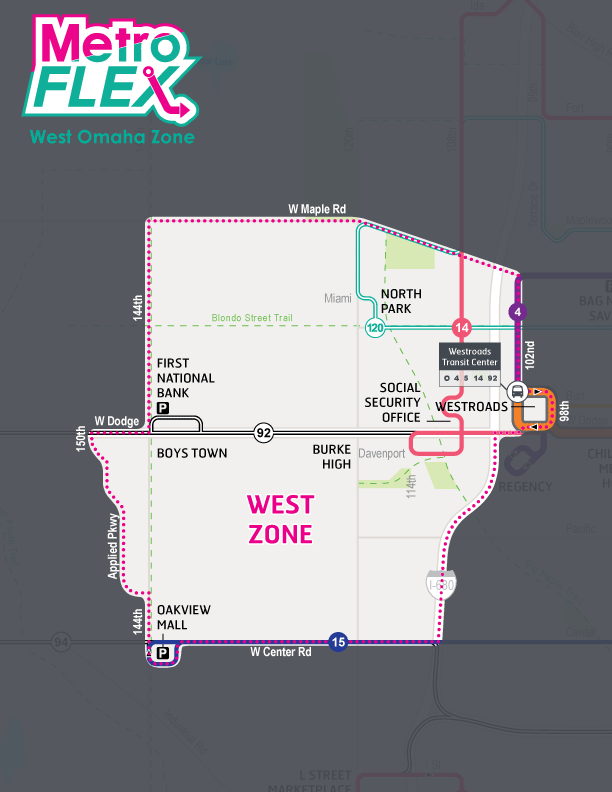
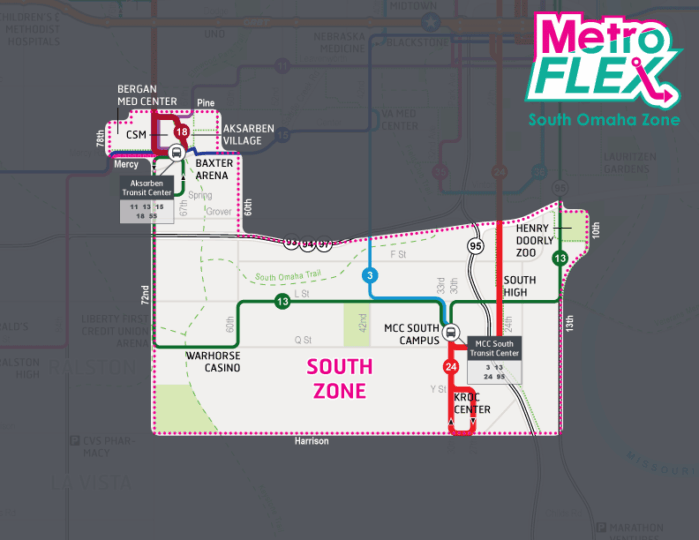
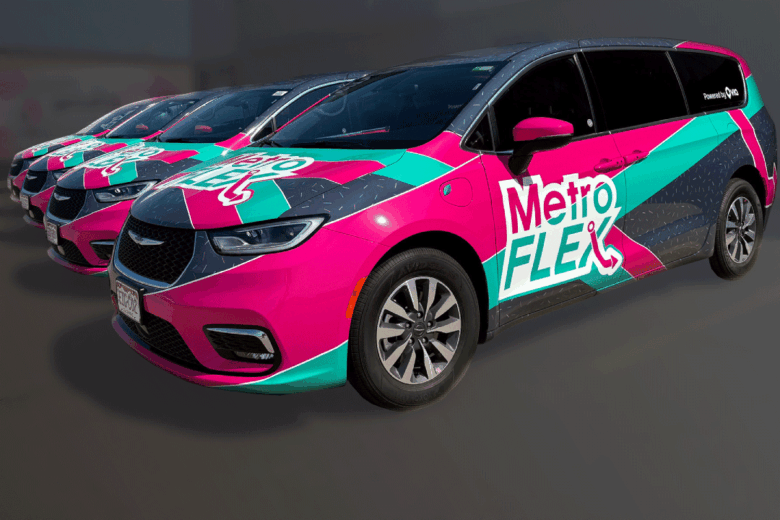
For Metro Flex, there are three zones that will be operated within, the vehicles only being able to transport within their respective zones. The three zones are then connected by Omaha’s fixed bus routes. There are currently 18 vans within their fleet, 6 being wheelchair accessible, while the other 12 will have bike racks.
To get from the South Zone to the airport, which is within the North Zone. One would schedule a Metro Flex ride, the ride would take them to the nearest and quickest bus route to the North Zone. From there the rider would then take either another bus, or another Metro Flex ride, whichever is calculated as quickest by the app’s algorithm, to the airport.
As the term “ride-share” implies, there are times when you will be riding along with others. According to Cencic, the algorithm the app uses, designed by New York City company Via, is what plans the route.
“The primary thing is, once you’re on the vehicle, we’re not going to be taking you out of the way in the wrong direction to pick somebody else up. What we’ll be doing is trying to fit those trips in as seamlessly as possible without disrupting the general direction of your trip,” Cencic said. “Additionally, when you book your trip, riders will see an estimated arrival time, and we will honor that arrival time that they were given when they were booking that trip, and will not deviate that from to go pick somebody else up.”
Via is one of the largest companies working to provide microtransit for the country, helping to operate services in places like Sioux Falls, South Dakota, Detroit, Michigan and St. Louis, Missouri. According data they have collected from these other projects, the average wait times for users ranges between 10-20 minutes depending on the area, the fleet size, demand and time of day.
“Metro Flex is a pilot project. This is something we’ve announced for a couple of years, and we’re going to learn from and grow from,” Cencic said. “We definitely foresee in the coming months, and years really, ongoing evaluation and review of our service hours, of our zones, of some of our policies and transfers and things. And really, you know, evaluating and tweaking the parameters of this pilot as we go.”
According to Cencic, the pilot project is entirely funded by various Omaha philanthropic organizations such as the Sherwood Foundation. The pilot program is currently slated as lasting two years but can be extended up to five years.