

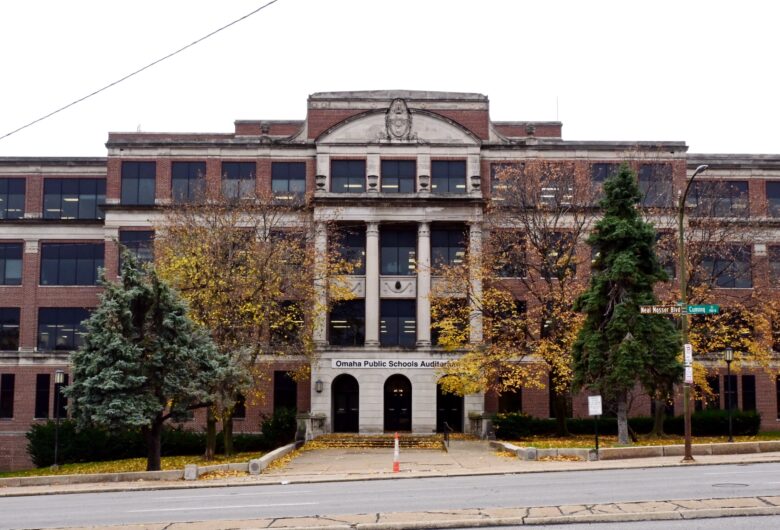
Omaha Public Schools leaders announced at a board meeting earlier this month that the district would not expand its policy to allow suspensions of prekindergarten to second grade students for violent behavior.
The Nebraska Legislature changed the law earlier this year to once again allow suspensions of younger students for violent behavior. The change followed a 2023 ban the Legislature passed to only allow suspensions of prekindergarten to second grade students for bringing a weapon to school.
Nebraska Public Media News reached out to six of the other largest districts in the state – Lincoln, Millard, Bellevue, Papillon-La Vista, Elkhorn and Grand Island – to see if they were planning to implement the new law.
While most said they were still figuring out policy changes, Millard and Bellevue Public Schools said they would make changes to align with state law.
“We will be aligning our policy with the changes that have been made to the law,” Amanda Oliver, Bellevue Public Schools director of communications, said in an email. “The policy changes go before our school board in July with the vote for approval in August.”
Rebecca Kleeman, director of communications for the Millard district, said in an email the district’s policies and procedures follow state law, “so specifically to your question, we will modify our rule to make it align with the law.”
The Lincoln, Elkhorn, Papillon-La Vista and Grand Island districts all said that legislation changes were still being reviewed and any changes would come before their boards in the future.
However, Grand Island Superintendent Matt Fisher seemed to hint that the district will not be changing its policies to align with the new state law.
“We expect a conversation will take place at a public board meeting at some point in the coming months to clarify any policy language that is recommended by our legal counsel,” Fisher said in a statement. “With that being said, we anticipate our current practices will largely be unchanged.”
Spokespeople for the other three districts all said that they are still reviewing their policies and have not yet made a decision.