
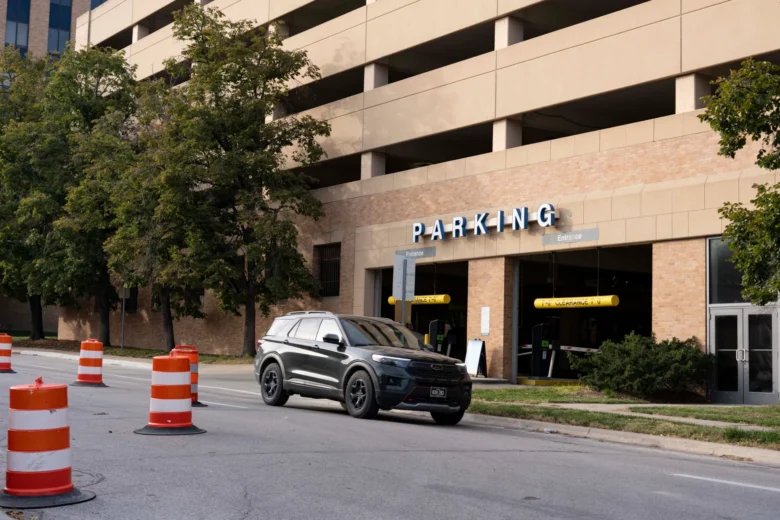
At the foot of Mutual of Omaha’s nearly complete downtown headquarters, a sparkling 15-floor parking garage awaits the company’s move-in day.
A block west, another garage goes up next to a new apartment complex. Across Douglas Street, a decades-old garage completes the triangle of parking.
All of it, 3,386 spots when completed, belongs to a single owner: the City of Omaha.
The city has committed $421 million to the streetcar project. But it has put nearly as much money — $415 million — toward amassing parking garages.
The garages are meant to free up land for tax-generating development near the new transit line. They’re key to the streetcar’s finances: The cost of operating the streetcar depends on Omahans paying to park. Garage revenue will also pay off the hundreds of millions of dollars in bonds issued to pay for parking construction.
In just the last two years, Park Omaha has added nearly 5,000 parking spots in downtown and midtown garages. Another 5,800 spots are in the works, boosting the city’s downtown inventory and expanding paid parking west to the Crossroads. The public garages will also be able to serve a wider variety of drivers at all hours, they reason.
“The city has a vested interest in making sure that we effectively and economically manage all of the parking that is available downtown,” said Deputy City Attorney Jennifer Taylor. “We don’t want to have to compete with private entities providing parking because … it’s a waste of space.”
Getting Omahans to accept paid garage parking will require a mindset shift since many are used to finding a free spot at the door of their destination, urban designers said.
But those are growing pains — a necessary part of becoming a bigger, more vibrant city, they said.
“Park Omaha has got this herculean task … of having to live in the past, be in the present while setting us up for the future,” said Kene Okigbo, the director of urban design nonprofit Omaha by Design. “It is almost impossible, because some of us will never stop living in the past, some of us can only be concerned with the present, and then some of us are stuck dreaming of the most idealistic future.”
But by relying on parking fees to pay its bills, skeptics say Omaha is undercutting its own efforts to reduce car dependency.
“If you’re betting on everyone parking in all these stalls, then how does that square with trying to add public transit like the streetcar?” said Tony Jordan, the president of Parking Reform Network, a Portland-based nonprofit. “You’re kind of betting against yourself in this strategy.”
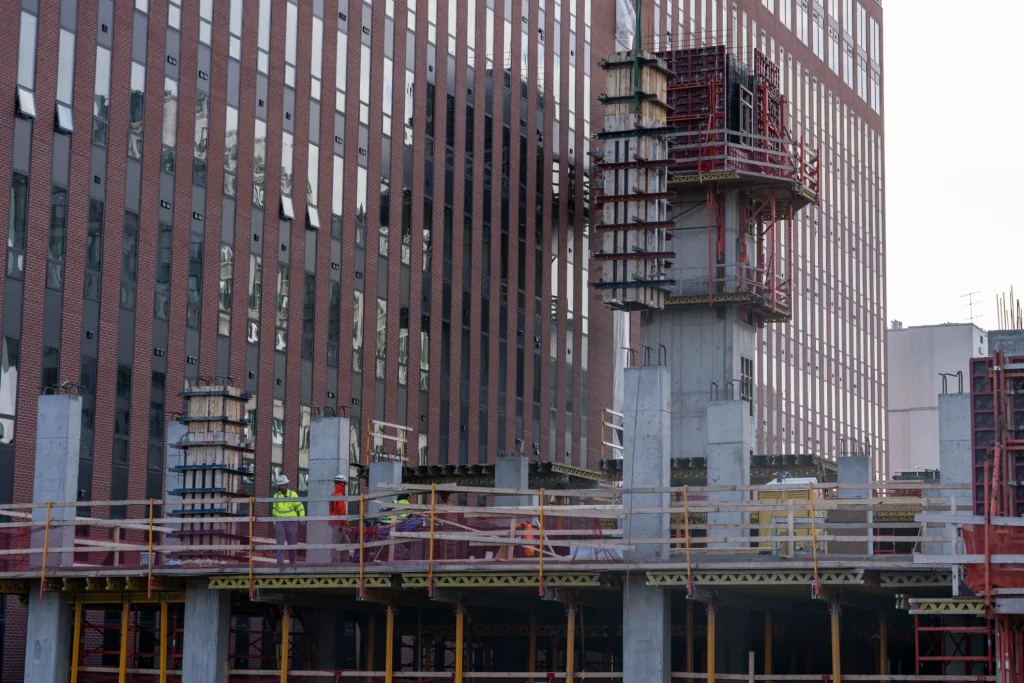
Asphalt to brick and mortar
To keep businesses from leaving downtown, Omaha leaders offered a valuable commodity: subsidized parking.
In 1997, the city agreed to pay about $20 million to build two parking garages next to First National Bank of Omaha’s planned downtown headquarters. The city then leased spots to the company at below-market rates.
Four years later, the city bankrolled a $17.5 million parking garage at 13th and Capitol to keep Union Pacific downtown.
Back then, creating new lots and garages as businesses requested them seemed like “the easy solution,” but it left the city with a parking system that ate up too much real estate, said Hannah Adeponu, the city’s parking and mobility manager.
Public Works oversaw meters while Parks and Recreation ran lots and garages, and the two didn’t coordinate, Adeponu said.
As a result, Omaha’s parking operation ran a deficit every year from 2003 to 2013.
The city brought all parking under Public Works in 2013 and started addressing Omaha’s “upside-down” parking fees, said former parking manager Ken Smith. At the time, metered spots were free after 5 p.m., but garages still charged into the evening. That meant garages sat mostly empty while drivers circled downtown searching for rare open spots.
In the mid-2010s, the city extended hours and raised rates at meters and lowered rates at several garages. Garage use rose, metered spots began freeing up and traffic congestion subsided, Smith said.
That smoothed out parking’s finances, but it still left too much prime land devoted to private parking sitting empty outside of work hours.
A new streetcar line paired with high-rise parking garages offered the solution, city leaders thought.
Key to the plan is the idea that the same spots in city garages can be used by parkers with different needs. For example, the same spot at the new Mutual tower can be filled by a company employee during work hours, a concert-goer at night and a nearby apartment dweller over the weekend.
Positioning garages along the route also lets people leave their cars and take the streetcar throughout downtown or midtown, Jensen said. For example, a Creighton basketball fan could park in a midtown garage, grab dinner nearby and then take the streetcar to the game without moving their car, he said.
Stockpiling parking under the city’s banner can drive changes in how valuable land is used and make downtowns more pedestrian-friendly, said Michael Manville, an urban planning professor at the University of California Los Angeles.
But investing in both transit and parking is a difficult balancing act, said Garrett Hoie, an Omaha native now working as a New York transit planner. Making driving and parking downtown easier could undermine the streetcar’s ridership and development potential, Hoie said.
The city doesn’t want Omahans to be forever dependent on cars, but it can’t ignore that driving is the dominant mode of transportation, Adeponu said.
“We want to ensure that … we have enough parking to serve all of the different needs downtown,” Adeponu said.
Gains and pains
One by one, new city garages started popping up.
660 spots near the Gene Leahy Mall. 385 spots on Blackstone’s main strip. 753 spots at the University of Nebraska Medical Center’s new Edge District.
But the bulk of the city’s new and forthcoming parking in the urban core is tied to Mutual of Omaha.
When the city agreed in 2022 to demolish the W. Dale Clark Library and make way for the tower, it also pledged to buy more than 5,700 parking spots from the insurance company.
For $53 million, the city bought three garages containing 3,600 spaces at Mutual’s old midtown campus. Those spots can be used by hourly parkers and streetcar commuters and will be in greater demand after the vacated office buildings are redeveloped, Taylor said.
The 2,200-spot garage at the base of the new Mutual headquarters will cost the city $99 million to acquire. The city agreed to lease the spots back to the company from 6 a.m. to 6 p.m. on weekdays for $2.1 million a year. At nights and on weekends, the garage will be open to the public.
In total, the city is paying Mutual about $152 million for parking garages.
Transportation consultant and streetcar critic Tom Rubin said it’s “un-freaking-believable” how much public money the city forked over to Mutual in the deal. Taylor said the city got a good deal since the negotiated prices are less than it would cost to build all of the garages today.
The city will own more than 14,000 spots in garages east of 48th Street when construction projects wrap up next year. The city also runs more than 4,500 metered spots.
The city also plans to expand its paid parking operation to the west and south. A 250-spot garage off South 24th Street is slated to open next year. The city has earmarked about $115 million to build three garages at the new Crossroads development west of 72nd and Dodge streets.
Any further expansion of Park Omaha’s paid parking footprint would require support from local businesses, Adeponu said.
The city is counting on revenue from the garages — mainly parking fees — to pay off hundreds of millions of dollars in bonds issued to pay for parking construction. Parking revenues are also the primary funding source for the streetcar’s operations, around $7 million a year; and Park Omaha’s everyday budget.
For the financial plan to work, the parking division needs to collect much more from customers than it has historically.
The city budget projects that revenue from parking charges will double from $15.5 million in 2025 to $31.1 million in 2026. Adeponu attributed the jump to the rapid growth of Park Omaha’s inventory.
Adeponu said the city is considering rate increases at garages and lots, but she declined to provide details.
Park Omaha confirmed that monthly rates at one garage, 15th and Douglas, will rise from $82.50 to $125 in November due to “excessive demand.”
The rates haven’t increased in years, but operating and maintaining parking has become more expensive, Adeponu said. Park Omaha strives to be self-sustaining, but there’s no intent to overcharge users or turn a significant profit, she said.
“I don’t think that our goal is to be rolling in it like a private company,” Adeponu said.
Some Omahans, like Robert Maxey, strongly resist paid parking and don’t want to see more of it throughout the city.
The retail worker said he almost completely stopped going to the Old Market years ago after the city began charging at meters in the evening. The few times Maxey has parked downtown, he found the Park Omaha app confusing.
“Obviously, we want to be a big city,” Maxey said. “Maybe I’m just old-fashioned, (but) I’m just used to not paying for parking.”
Private-sector transit planner Brandon Siracuse takes a different view, noting that Omaha’s parking rates are affordable compared to cities like Chicago and Minneapolis.
Charging for parking also nudges people to transport themselves in other ways — by bike, bus or streetcar, he said.
The debate over charging fees aside, Mark Brannen worries that the parking garage spending spree puts the city in a fiscal bind.
If parking fees can’t cover the bond payments, the city may have to raise taxes or cut critical city services, said Brannen, an Omaha urban farmer who unsuccessfully ran for City Council last year.
Ultimately, changing how and where people park is “part of growing up” for Omaha, said Kansas City parking manager Matthew Muckenthaler.
“This is the thing that tells you, ‘Congratulations, you have evolved,” Muckenthaler said. “You have a big-city problem now, which means you need a big-city solution.”
The Flatwater Free Press is Nebraska’s first independent, nonprofit newsroom focused on investigations and feature stories that matter.