

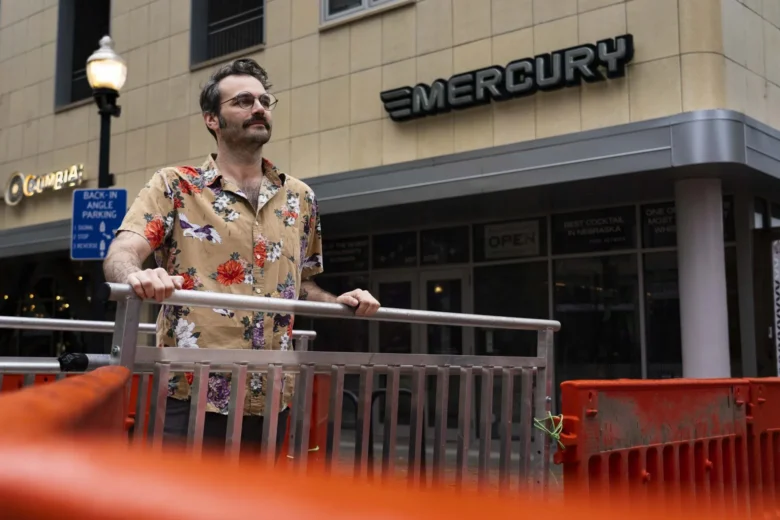
As he picked up the microphone, Clark Ross gazed out to a sight that had become all too rare: His bar was full of people.
These weren’t regulars drawn to Mercury for a cocktail on that chilly February night. They were Omaha business owners and residents who, like Ross, had struggled under the strain of streetcar construction.
Ross revved his voice as he recounted “the disruption outside our doors” of torn-up streets, diminished parking and ceaseless noise. The city had put them in this mess, and it should help them out of it, he said to roaring applause.
“We refuse to let the future of Omaha be built on the bankruptcies of our local shops,” Ross said at the Feb. 23 gathering. “Tonight, we are going to move from impacted to organized.”
Less than a year after founding the Streetcar Impact Alliance to advocate for businesses hurt by heavy construction, Ross is ending his downtown bar’s fight for survival.
Mercury will close in January, and he will look to hand off the advocacy group to another business owner, he told the Flatwater Free Press.
Others along the streetcar route are closing, too: Fifth House in Blackstone and Addy’s downtown location called it quits in the last week.
Ross blamed the streetcar work that has repeatedly ripped up the streets around his bar at 16th and Harney for restricting customer access and depressing sales. His mistrust toward the city deepened after seeing behind-the-scenes emails, which he shared with the Flatwater Free Press, that suggest a city official steered business away from Mercury because of Ross’ advocacy.
“I’ve come to this place every day for over 10 years now, and I love this place,” Ross said. “I have to walk away from it because of a construction project that got mismanaged. It’s hard to get your head around.”

Erin Grace, a spokeswoman for Mayor John Ewing, said, “The decision was made to add a one-year utility reconstruction project to the two-year streetcar project.” Business owners are understandably frustrated by the disruptive work, she said, but the streetcar intends to add population density downtown and increase their customer base.
City leaders have met regularly with business owners, including Ross, and taken steps to ease their pain and expedite construction, she said.
It’s heartbreaking to see businesses like Mercury closing, Grace said, urging Omahans to patronize those along the route. Streets are starting to open up, and the city has lowered parking rates to make those trips easier, she said.
Ross fears that many more businesses will follow his into the grave. In a recent Streetcar Impact Alliance survey, 36 businesses — more than half of the 66 respondents — reported losing more than $10,000 a month.
The storefronts along the route would need more than $850,000 of relief each month to stay afloat until the streetcar opens, the survey found. There’s no cavalry coming to provide it, Ross told fellow business owners at the group’s Monday meeting.
“What you’re really facing here is the reality that this streetcar is just cruising by a bunch of closed doors,” Ross said.
***
Mercury opened in 2016 when 16th Street was “a touch more rough and tumble” and anchored the block as it grew, Ross said. The craft cocktail bar struggled during the COVID-19 pandemic but rebounded with its best-ever year in 2023, Ross said.
The downturn in sales took hold in 2024 after streetcar-related utility work gouged out roads around the bar, deterring would-be customers, Ross said. A gaping sinkhole that opened up across the street in January 2025 and sat unfixed for a year and a half made matters worse, he said.
Fed up by the upheaval, Ross launched the Streetcar Impact Alliance. Dozens of business owners signed onto the cause at the group’s first meeting in February.
The group, which later became a nonprofit, sent a demand letter to the city calling for direct cash grants, tax breaks, parking changes and improved communication.
Starting the group got Ross in the door for weekly meetings with the Mayor’s Office, but unbeknownst to him until months later, it also cost him a longtime client.
For years, JEO Consulting had held an annual happy hour for clients at Mercury. But in March, the engineering firm canceled days before the event without much explanation, Ross said.
Behind the scenes, a top Omaha Public Works official told colleagues invited to the event that he would sit it out because of Ross’ actions, according to city emails obtained by Ross and shared with Flatwater.
“Everyone is certainly welcome to make their own choice on this, and I definitely won’t hold it against anyone if they go, but based on the recent actions of the Mercury’s owner, I will not be attending,” Assistant Public Works Director Austin Rowser wrote in a March 3 email to his colleagues.
Another Public Works leader suggested asking JEO to consider a different location. Rowser replied that he told a JEO employee that “I wouldn’t go and recommended the (Omaha Tap House) or Wilson and Washburn.”
JEO President Jeff Henson confirmed that the company moved its party to downtown bar Wilson & Washburn “after a City staff member told us he would not attend if it were held at Mercury.”
“The City did not direct JEO to relocate the event; that decision was ours,” Henson said in an email.
The financial impact of losing JEO’s event was a few thousand dollars, but Ross said he was more upset to know that a high-ranking city official was covertly undermining his business. Rowser’s comments made him wonder if the city had done anything else to retaliate against Mercury, he said.
“It just showed that people in the city are actively working against us for no other reason than just to work against us,” Ross said.
In an interview, Rowser said he made a personal choice not to patronize Mercury because Ross had been “very threatening at the time, very demanding, very entitled” in written correspondence with the city. Rowser declined to provide examples but said Ross had demanded money and threatened legal action against the city.

Rowser denied that he retaliated against Ross, noting that the city was not Mercury’s client.
“Retaliation has a specific meaning. I see it more as cause and effect,” Rowser said. “It’s a private business, and people aren’t obligated to patronize the business if they don’t like or approve of their stance on certain matters, and that was my choice.”
Ross said he has never spoken to Rowser or sent any communications threatening to sue him or the city.
As construction raged outside his bar, Ross laid off staff and trimmed spending on everything from food supplies to toilet paper. The bar now operates seven days a week with 10 employees, he said.
“We’ve cut to the bone at this point,” Ross said. “There’s nothing left to cut.”

Streetcar construction in the Capitol District plunged Addy’s flagship location deep into a hole, owner Tim Addison said. Sales were down 78% this year over 2025, which also had been marred by road work, he said.
Addison said he had to funnel money from his other two locations out west to keep the downtown sports bar from sinking. Amid months of street closures, he decided to sell the struggling location to his nextdoor neighbor, The Fat Putter, which will continue operating the business and eventually rebrand.
Ewing quickly rebuffed the Streetcar Impact Alliance’s demand for city grants to construction-impacted businesses in February, citing legal restrictions on doling out cash. But the city and construction firms made a few positive changes on the margins, Ross said.
Pedestrian walkways across work zones improved safety and business access, while GPS navigation updates helped drivers maneuver road closures, he said. The city supported a September block party on 16th Street, but then crews tore up the street again days later, he said.
The most direct help came via an anonymous donor who put up $5 million for grants and loans to streetcar-adjacent businesses this summer. The Nebraska Enterprise Fund, which administers the program, has sent out about $4.6 million to 86 different businesses and is in the process of allocating the remaining money, Chief Operating Officer Michael Young said.
A $50,000 forgivable loan through the program helped Mercury through a few lean months, but the early signs of financial recovery that Ross had hoped for this year haven’t shown up on the bar’s ledger, he said.
Recently, the city rejected Ross’ pitches to spend $300,000 on more block parties and to add a local business representative to the Omaha Streetcar Authority Board.
“They’ve just been the department of no,” Ross said.
Grace, the mayor’s spokeswoman, said the city helped facilitate the $5 million fund for businesses and an earlier $1 million fund administered by the Greater Omaha Chamber.
The city is committed to supporting future events, but it can’t legally use streetcar bonds to pay the bill, Grace said. Adding a local businessperson to the streetcar board would require the city remove one of its delegates, jeopardizing its ability to control project funding, she said.
The Streetcar Impact Alliance has given business owners a valuable voice, and city leaders hope to keep working with the group, Grace said.
Ross has worked in the food and drink industry since he was 14, but Mercury was his first business. He’s not sure what comes next.
“Now I have to figure out what I’m going to do with the rest of my life,” Ross said.
Ross announced Monday that he will begin dissolving the Streetcar Impact Alliance if nobody volunteers to take it over. He told business owners they shouldn’t expect any kind of bailout and urged them not to take on big loans to fight a losing battle.
Shannon Beck, the owner of Nodest Home Plants in Blackstone, said Ross has done a great job building the group, and she doesn’t want it to die. She hopes to take the reins of the nonprofit with several other business owners and continue pushing for donor-funded relief.
“There’s so much money in Omaha, and there are good people in Omaha,” Beck said. “We’re going to have a talk and see if it’s worth it (to keep the group going).”
The Flatwater Free Press is Nebraska’s first independent, nonprofit newsroom focused on investigations and feature stories that matter.