

Nicholas Herfordt feels that Harney Street in Omaha marks a part of the state’s history, but in the worst possible way. So he’s working on a campaign to change the name.
“If more people knew who (Harney) was, I think changing the name of the street is a layup decision,” Herfordt said. “I mean, there’s very few redeeming qualities about him, even for his day.”
General William S. Harney was born in Tennessee, but he made his name serving across the Midwest and West in the 19th century. He joined expeditions to sign treaties with Native American Tribes, served in the Second Seminole War, and fought in the Mexican-American War. But he drew Herfordt’s attention because of a massacre in 1855.
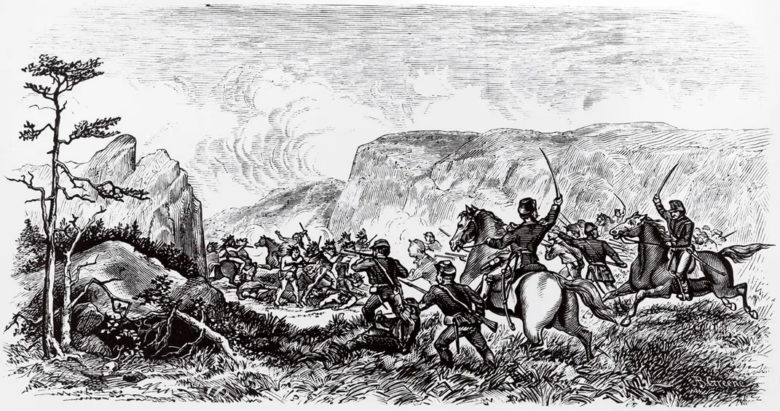
On Sept. 3 of that year, Harney led 600 soldiers in a massacre of a Lakota Tribe near present-day Ash Hollow State Historical Park. They killed 86 people, mostly women and children, fatally injured more and took many others captive, marching them to Wyoming.
“Having a street named after you, it’s an honor,” Herfordt said. “It’s something you bestow on someone who’s done something worth recognizing so you can learn about that person. As far as I’m concerned, (Harney) is one of the last people who should probably have a street named after him.”
Harney also earned a reputation for violence and even beat a woman named Hannah, who was a slave, to death because he believed she took his keys. But he’s had many things named after him, including a mountain peak in the Black Hills of South Dakota, and a waterway in the San Juan Islands in Washington. Both of these geographic locations have since been renamed.
“We have a lot of history with name changing,” said Paul Harney Soderman, a descendant of Harney’s who has been closely involved in these renaming efforts and others across the West. “Here’s the funny thing, though, it might be harder to rename a street in a city.”
Soderman, while he supports Herfordt’s efforts, acknowledged that, unlike renaming a mountain peak, renaming a city street will require a great deal of leg work.
“It’s really up to the people that live there,” Soderman said.
To rename the street, Herfordt will have to gather signatures from 60% of property owners along the street and pay a $1,000 filing fee with the city planning department. Even if he clears those hurdles, the Omaha City Council will have final say over the application. Herfordt hopes that his idea will get overwhelming support from city residents. Because the city’s new streetcar route runs, in part, along Harney Street, he hopes the initiative will be relatively easy.
Herfordt suggested renaming the street after Lakota Chief Little Thunder, although Soderman said the city would need approval from the chief’s family members.