

Rose Krekelberg stood before city leaders Tuesday to share her own experience of homelessness. The Omaha woman grew up in the foster system and found herself in a cycle of addiction and sex trafficking as a young adult.
“Being unhoused is not a personal failure but the result of circumstances that deserve compassion,” Krekelberg said. “Please look closely at my face, and remember it. So when you see someone begging for food or sleeping under a bridge, you think of me. Because I am them, and they are me.”
Councilwoman Aimee Melton shared a personal story on the intersection of mental health and homelessness. Her mother’s twin sister, Connie, experienced homelessness due to schizophrenia. Despite a robust support system, Melton’s aunt spent years on and off the streets, her adult children unable to locate her. She ended up at a bus stop in Phoenix, Arizona, where she was raped and murdered.
“My mother has never been the same,” Melton said. “There isn’t one cause for homelessness, and you can’t always force people to do things that they don’t want to do. We need to try to provide them with help.”
The hours-long public meeting brought tears and frustration Tuesday as dozens of Omaha residents voiced their thoughts on a proposed ordinance targeting homeless encampments.
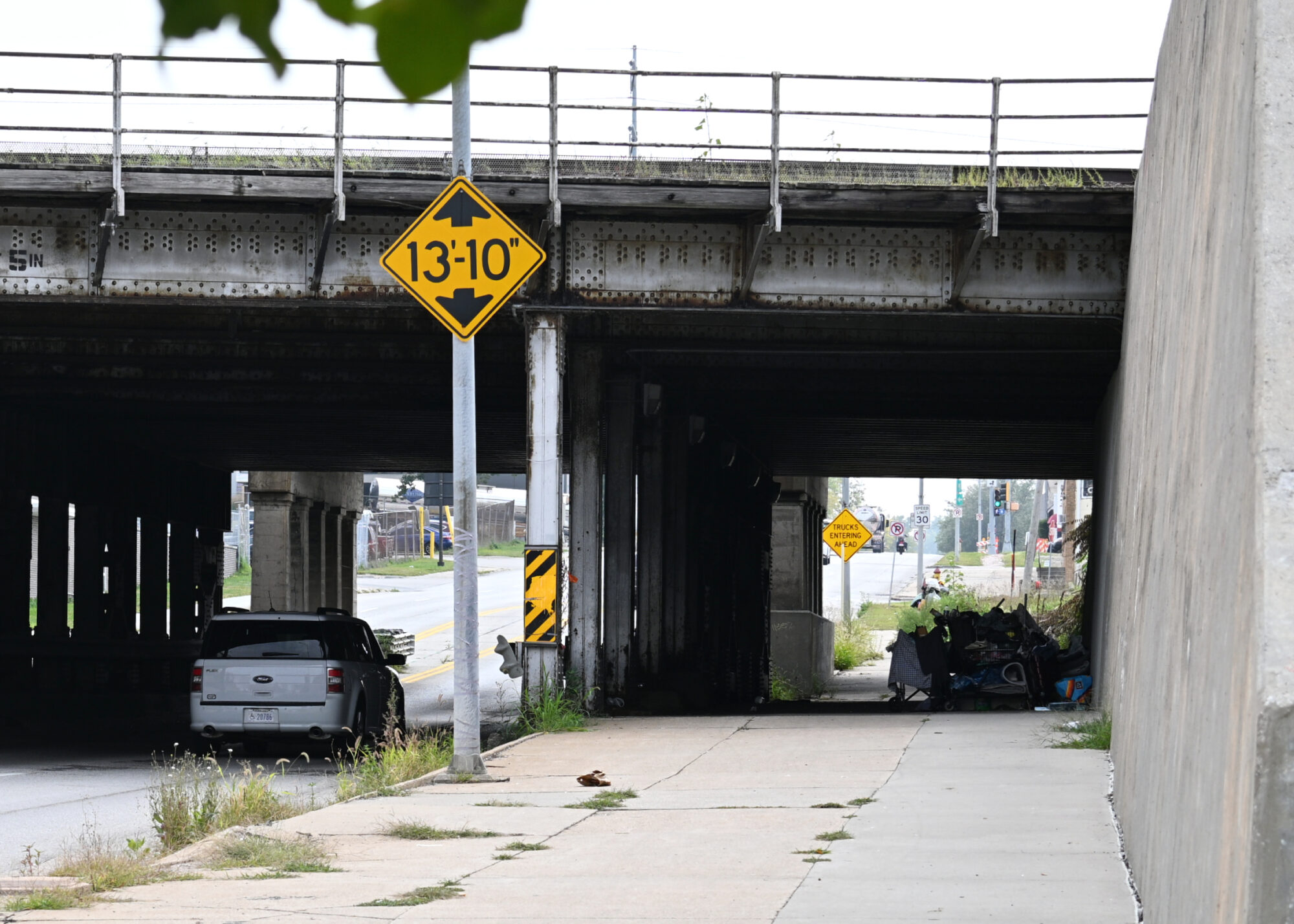
Discussion comes as the city’s homeless population reaches a political crossroads. A recent increase in encampments prompted hundreds of complaints to the mayor’s hotline over the summer and sparked public debate among law enforcement and civic leaders. There are conflicting ideas on a path forward.
The ordinance discussed Tuesday was introduced by Councilman Brinker Harding. It would require that police or first responders give people living in encampments the option of moving to a shelter before issuing a citation or making an arrest. Any person found guilty of violating the ordinance could face a fine up to $300, 30 days in jail, or both.
Mayor John Ewing presented an alternative idea Friday. Alongside the nonprofit Threshold Continuum of Care, he announced a pilot program meant to connect homeless individuals directly with several local agencies that provide emergency shelter, mental health resources and long-term housing.
Ewing labeled Harding’s proposal as too costly and a drain on the Omaha Police Department, which is experiencing a shortage of officers. He noted that housing someone in jail costs about $170 per day and can contribute to the cycle of homelessness.
The city will look to Threshold Continuum of Care to lead the pilot program, which was largely created by Jason Feldhaus, executive director of Threshold. Feldhaus addressed council members Tuesday.
“Can I pull this off? I think that’s the big question,” Feldhaus said. “I’ll tell you this. From a political point, I have to say yes. From a personal point, I would rather fail falling forward than falling backwards.”
In the past decade, Omaha has seen a rise in people experiencing homelessness, according to data compiled through an annual nationwide count. There’s no clear data that shows an increase in homeless encampments, though law enforcement, city leaders and area nonprofits say they have seen a growing number.
Harding’s ordinance received the support of Douglas County Sheriff Aaron Hanson, who sent a representative to the Tuesday meeting to read a written statement.
“My position is rooted in one simple fact: these encampments are dangerous,” Hanson wrote in the statement. “They’re dangerous not only for the people who live and work nearby, but also for the vulnerable individuals who live in them.”
Hanson’s statement was one of only a few in support of the ordinance. A majority of those who spoke expressed concerns and frustration over the city’s “criminalization” of homelessness.
Harding restated his intent to work with city leaders and area nonprofits on an ordinance that will “address a growing issue.”
“I know a lot of people assume I’m a cold-hearted individual and I’m doing this for political reasons,” Harding said after hours of public testimony. “Both of those couldn’t be further from the truth. What you don’t know is some of the research I’ve done, some of the people I’ve talked to, or the fact that I’ve had people in my family who were homeless.”
Now is the time to address homelessness, before it grows “out of control,” he said.