

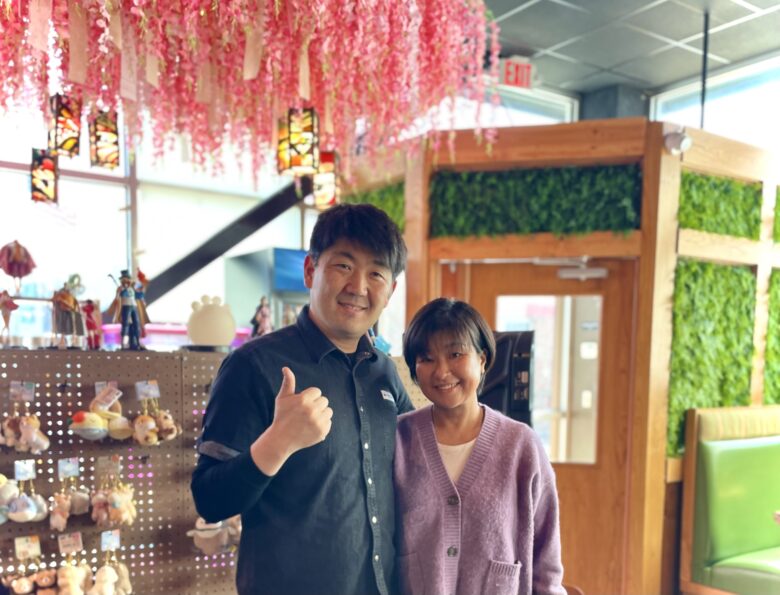
There was no way to write about Misolado without taking note of its many contradictions.
For instance, this is the fastest service I’ve ever experienced when ordering ramen. But the shop honors an ancient tradition for creating its broth, which is an incredibly slow and intentional process. It requires brewing long-fermented miso, rice koji, and marrow into the clean, rich, and satisfying base for its house-made noodles.
The quick kitchen turnaround does nothing to reflect the intense preparation that happens behind the scenes to make each bowl a reality.
The slowest food imaginable, served faster than you can find a seat.
Upon entering Misolado, the shop currently occupying the former Sakura Bana, you’ll pass through a small market displaying figurines, collectibles, and tchotchkes before coming to a selection of snacks and drinks. Sweet yogurt-based fruit drinks and gently carbonated teas are among more familiar favorites, but there isn’t a wrong choice to be made. The choose-your-own-adventure ordering model allows customers to select from a long list of broths, proteins, and add-ins, and you’ll place your order and pay at the small host desk before finding your own seat.
Again, the casual means by which you order belies the establishment’s commitment to Omotenashi, or hospitality and customer care.
Self-serve, but with the warmest customer service you could ask for.
When I connected with Misolado’s owner, Kenichi Ota, I learned more about the process and the passion that makes each dish worth the extra effort.
“I am from Japan. Born in Nagano.” Ota said, his accent thick but his English excellent. “I came to the United States 21 years ago and started my ramen business (Ramen Support LLC) nine years ago. I started consulting, teaching people who wanted to learn ramen. I graduated ramen school, and all of my connections from there, my friends, we would do pop-ups. (When I came to the U.S.) we would do ramen school here.”
Ota was living in Los Angeles at the time, building a community among those with the same reverence for the craft. He taught Ramen School, sharing the traditions and recipes, while also teaching the fundamentals of surviving in the restaurant business.
“Three or four years ago I decided I wanted to have a restaurant of my own,” he said. “I didn’t want to compete with the hundreds of ramen restaurants in New York or California, and I didn’t want to make the same ramen everyone was making. I wanted it to be special, handmade, traditional.”
Ota set his sights on Kansas, opening KC Craft Ramen to rave reviews. His labor-intensive take on the traditional dish included noodles made in-store daily, along with proprietary oil blends and carefully chosen premium ingredients.
“I want to do my ramen business the way I learned. To share Japanese culture, education, and to make it exciting for people.” Ota said. “At Misolado, everything in Omaha is very local. It is much harder to get Japanese ingredients, and so it’s even more important that I do this right. My dream is to create a (cultural) bridge from Omaha to Japan, to help people see how special Japanese food and traditions and people are.”
On the day I first sampled Misolado, I perused the mini market while waiting for my friend Aya to join me. She was the one who suggested a story on the new spot and its passionate owner. She met the Otas at Saturday school, and had been to Misolado for the soft opening. She recommended the restaurant because of her respect for the Otas, and for the labor-intensive process each bowl undergoes to deliver a traditional dish to your table.
The market has treats and trinkets to capture the attention of anyone who happens to linger. One of my sons is an avid Pokémon player and was delighted that I found a selection of packs you won’t find at your local gaming shop. My other son, a Dungeon Master, was equally thrilled at the dragon figurines that will become foes in an upcoming campaign. For my daughter, Pocky. I selected a gently carbonated strawberry milk before Aya caught up with me.
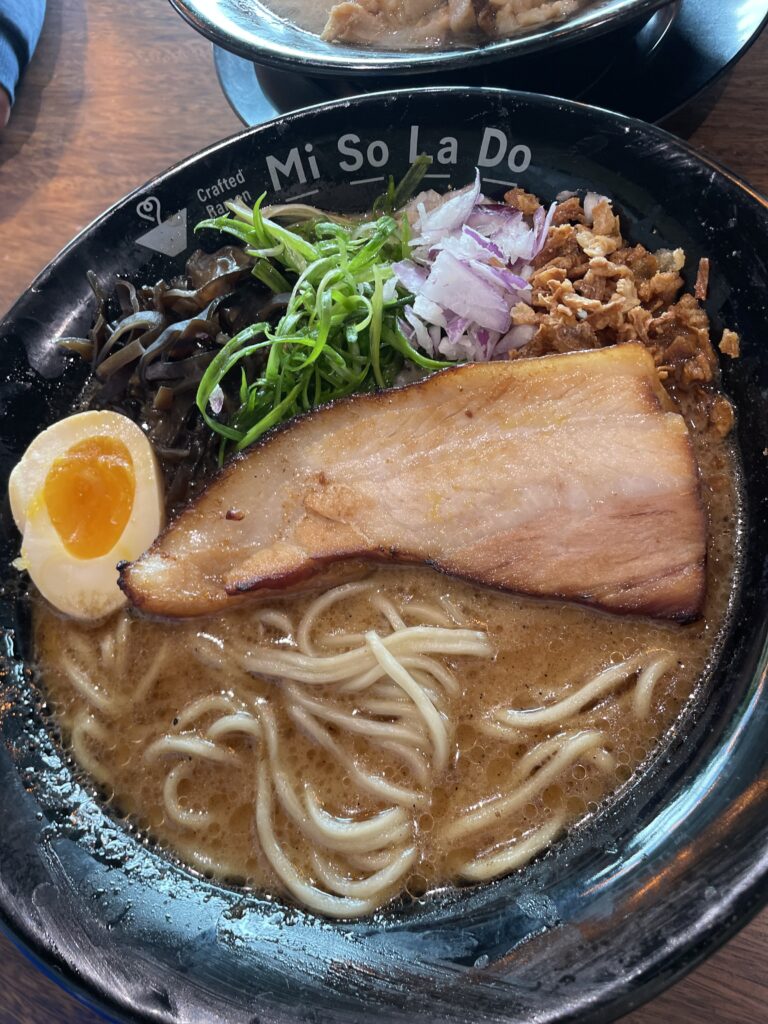
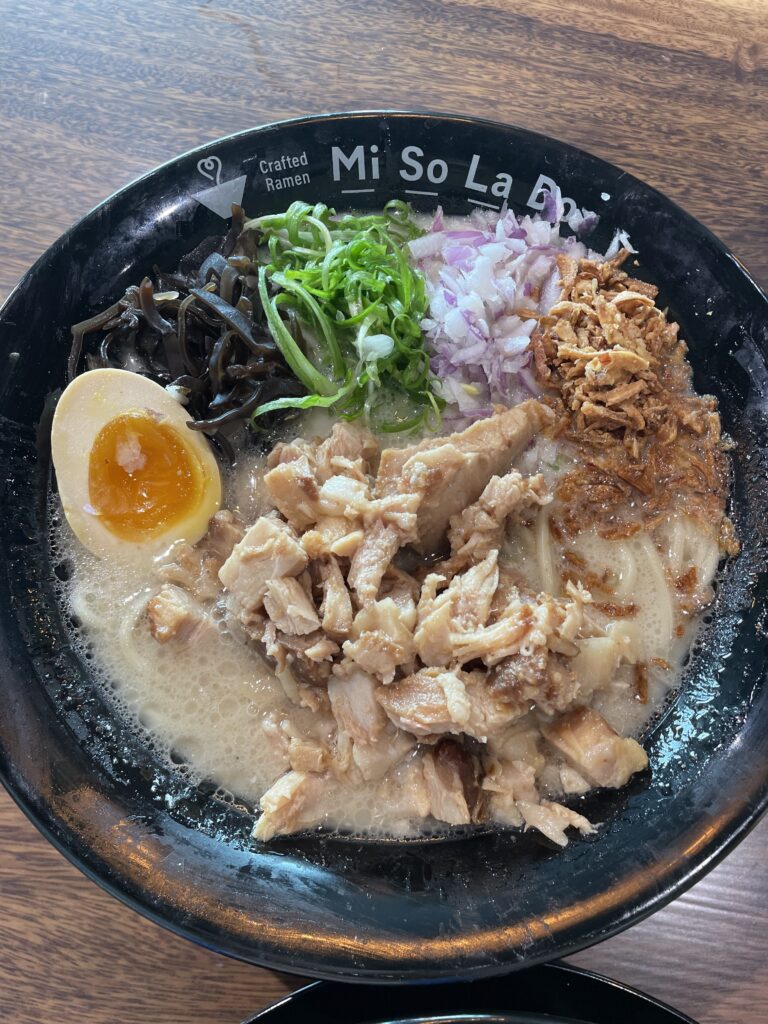
I placed our order for a Gyoza starter and decided on a bowl of Misola Black while Aya ordered the Tonkotsu. Our Gyoza arrived quickly, toasted on the tops with soft, pillowy centers. The wrapping is drizzled in a garlic oil that lends a crisp sweetness to the savory pork filling. Our ramen was hot on its heels and arrived steaming in beautifully branded bowls.
The hand-pulled noodles are thick and springy, the ideal vehicle for the unctuous, almost milky broth. A perfectly seasoned jammy egg warmed itself in the miso broth surrounded by bright, fresh vegetables, hearty black mushrooms, and salty slices of pork belly chashu.
Aya’s Tonkotsu featured a salt base with mushroom oil and diced pork chashu. The texture of still-crunchy fried onions is a welcome addition to the otherwise very wholesome bowl of fresh vegetables.
Every dish comes with the option to add or subtract anything you’d like from your bowl, as the goal is to deliver a personalized experience to each diner.
While you can still get your hands on a factory made and freeze-dried imitation of the ancient dish at your local gas station, you could instead, experience centuries of tradition and decades of dedication boiled down into a single dish right here at Misolado.
In a city like Omaha where food and culture continue to bring together the most creative and curious minds, we need more places like Misolado. Where you are invited to more than a meal, but to sit at the table and truly connect. I am looking forward to more of what Kenicha Ota is building, one bowl at a time.