

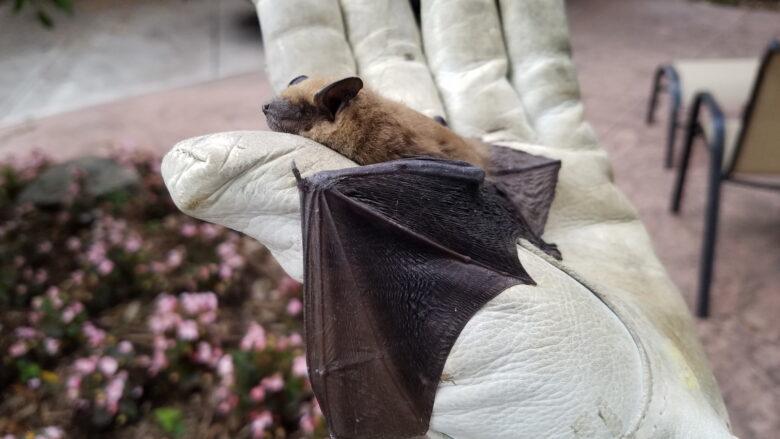
Spring is a time for renewal and rebirth. As warmer weather settles in and nature reawakens, it’s commonplace to spot a bat roost or beehive, which aren’t always welcome sights.
General fears of insects and rapidly-swooping, winged mammals aside — these encounters aren’t without real concerns. Bees can sting, sometimes repeatedly, and for those with allergies, it can be serious. Bats can carry disease and “bat bugs,” cousins to bed bugs, making direct contact something to avoid. And finding either species in your home can mean damage to structures over time.
Yet in recent years, humans have started to pay more attention to the important roles bees and bats play in our ecosystem. To many, they are a beloved part of our world worth recognizing and protecting.
As pollinators, bees help maintain wildlife and grow the food that sustains us. According to the World Wildlife Fund, they are also “climate heroes,” combating climate change through their plant support.
Globally, bats are also classified as pollinators, and while they may not feed on nectar here locally, they are insectivores. Yes, we have these nocturnal creatures to thank for their work in keeping mosquitoes and agricultural pests at bay.
When it comes to addressing an unwanted roost or hive, part of protecting these species means humane exclusion or relocation — acts of removing them without harm.
Two local experts who specialize in the area said working with professionals who know what they’re doing and care about conservation is crucial.
Humane Bat Exclusion
Travis Caldwell, owner of Heartland Humane Bat Removal, has been in the business for 16 years. He became interested in the line of work after rescuing a baby squirrel and connecting with the Nebraska Wildlife Rehab.
“I learned a lot about other animals, but bats at the time were kind of intriguing and neat,” he said. “Once I started hearing about how some of these other companies operated with the bats, you know, some of them not humanely, I felt I could fill the void.”
Some companies were using toxic techniques that not only harmed bats, but could also harm pets, children, and the elderly. Killing bats is illegal in Nebraska, as they are a protected species.
He felt there had to be a better way.
“That’s not a solution to the actual problem. So, I started figuring out how to get them out the right way,” he explained.
That process, known as “bat exclusion,” involves installing one-way devices over their entry points that allow bats to fly out at night, but not back in.
Caldwell said local bat species end up in homes and businesses as trees don’t provide sufficient warmth, especially in extreme winter weather.
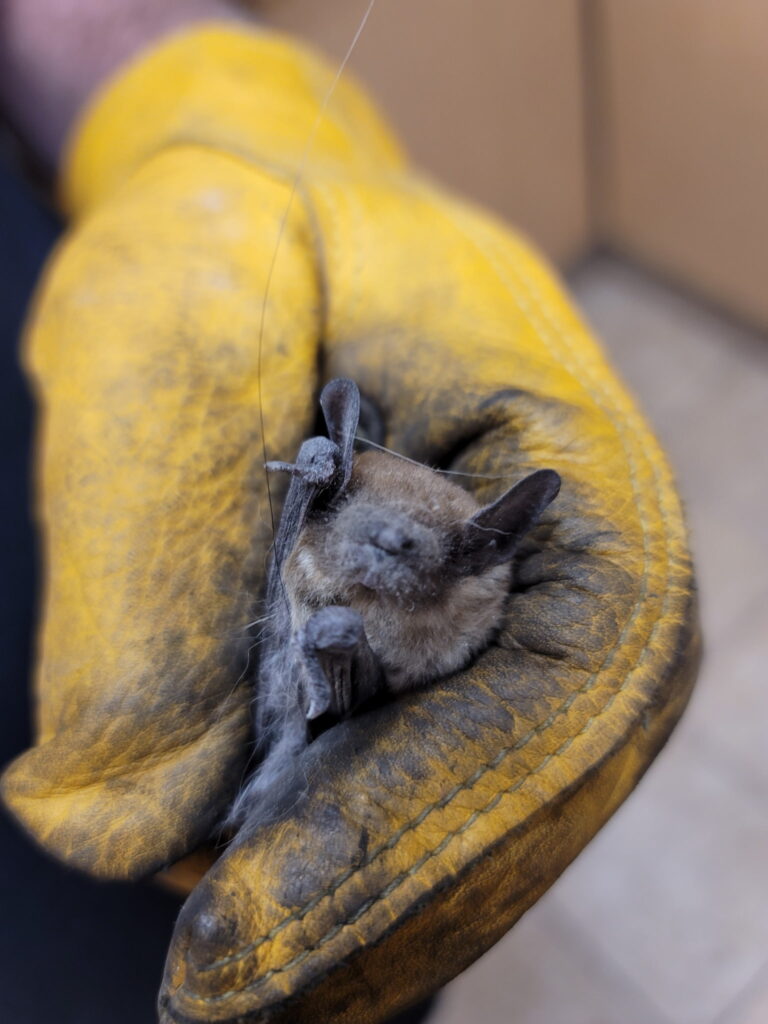
“They only dwell in man-made structures,” he said. “I mean, you might find a couple in a tree here or there, but that’s not a sustainable habitat for them, because people are always cutting trees down and they don’t provide as much warmth as homes.”
When it comes to exclusion, the time of year makes a difference. May through August is maternity season. Because baby bats are unable to fly or fend for themselves, Caldwell said he takes a hiatus during the summer months.
The removal process involves an inspection, installing the exclusion devices, and sealing holes to prevent future unwanted guests from calling that particular spot home. However, the displaced bats will just seek out another sheltered place nearby.
“If you get them out of one house, and say there’s an abandoned house right next door, they’re just going to move over to an abandoned house, or abandoned building, or you know, a building that’s dilapidated, they’ll move into that,” Caldwell said.
He added that Omaha would need to see significant infrastructure changes to provide adequate warmth for our bat population.
As far as how the bats find their way inside in the first place, Caldwell explained that they will land on shingles, find gaps in soffit areas, crawl inside attics, and then use hollow wall cavities to navigate through homes.
Caldwell often collaborates with the Nebraska Humane Society and Nebraska Wildlife Rehab.
He said people can call him if the bats are living in the home and they’re looking for a permanent solution, but if it’s a one-off bat or there’s a suspected bite, he recommended calling the Nebraska Humane Society to collect the bat for free and conduct rabies testing.
The Nebraska Wildlife Rehab rescues bats during the winter and schedules an annual release called “Bats Over Omaha” that’s available for public viewing each spring.
Beehive Relocation
Ryan Gilligan is a beekeeper and the owner of Gilly’s Gold—a bee removal service. He is also a member of the Omaha Bee Club, which provides beekeeping education and mentorship.
He began beekeeping seven years ago with just two hives. Since then, that number has grown to as many as 50, and he now performs specialized live bee removals in his spare time.
Gilligan said while he enjoys the benefits of fresh honey, that’s not why he’s in the beekeeping business.
“I want to go out and rescue bees,” he said.
His bee advocacy started as a child after neighbors destroyed a hive.
“I always was interested in insects, and there was actually a beehive in a tree about half a block from the house,” he explained. “I would watch them. Well, one day I went over there and the entrance was cemented and it looked like they killed all the bees. I actually went up to the porch and asked, ‘Why did you kill the bees?’”
The homeowners said the bees were creating problems, and Gilligan remembers scolding them. Even as a child, he felt that what they did was wrong.
That moment stuck with him, and today he is one of only two providers in the area that offer humane bee relocation services.
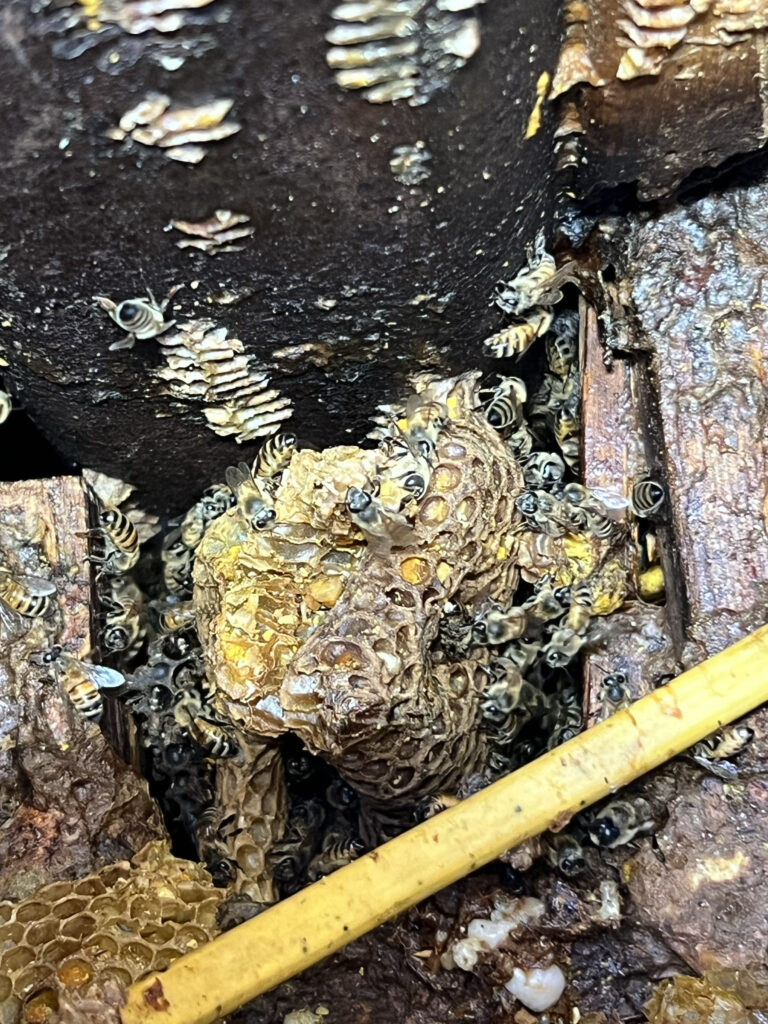
Gilligan removes beehives from just about anywhere, including houses, apartments, businesses, and in one case — the floor of a shed. Similar to bats, they are typically found in walls, soffits, and hollow cavities.
The relocation process involves accessing the hive, removing honeycomb, and using a specialized vacuum to collect the bees without harming them.
“It’s like playing whack-a-mole,” he said, describing the time-consuming challenge.
Most relocations average between four to six hours, but there was a memorable job near Liberty, Nebraska where he extracted over 400 pounds of honey over a couple of days.
“It was a church that was going to get renovated to a house, and the building was going to get moved,” he explained. It was a two-day process of actually doing the removal. The first day, I did half the hive and all the bees. And the second day was just removing more comb with a lot of honey in it.”
Gilligan keeps the hives he retrieves and documents the process on his YouTube channel.
Gilligan said his busiest, stickiest time of year is May through July after what beekeepers call the “honey flow” season, or when Dutch white clover blooms. He said the “liquified sugar” gets everywhere during peak season.
Homeowners will typically discover a hive when they see a flurry of bee activity outside.
“It’s like a superhighway in the air. There’s always bees coming and going throughout the day,” Gilligan said.
Sometimes, if a hive is in the walls, people may hear a faint buzzing sound or see discolored drywall.
While hives can be relocated, Gilligan said one of the best ways to prevent unwanted guests — from bees to bats to mice — is to maintain the soffits and eaves by sealing gaps and openings.
While bees don’t currently receive the same regulatory protections as bats, Gilligan urges people not to turn to poisoning as a solution. Ethical considerations aside, there may be other implications. Hives that are left in walls to rot can lead to worsening insect problems and expensive structural repairs, which he has witnessed firsthand.
“I get a lot of calls. If you don’t have the proper equipment to actually do the job, it’s not going to work out too well. It requires the know-how,” he said.
Gilligan noted that honeybees aren’t native to North America, and that some of the most threatened species here are our native bees, including bumblebees and mason bees. They are also our best pollinators, yet without protections, certain species continue to decline every year.
In addition to humane removal and relocation, there are other steps we can take to protect these species, including using organic material in our landscapes instead of pesticides, growing wildflowers, providing water, installing bat houses, and promoting conservation efforts.
Let this spring and summer serve as a reminder that this planet belongs to all of us, and we can coexist in harmony. After all, we need the bats and the bees. And they need us.