

Growing up in the small, conservative town of Imperial, Nebraska Andy Norman found few peers sharing his love of skateboarding, alternative music and indie media.
Until he met Mike Smith, that is.
Creators and disruptors by nature, the friends went on to careers in the youth, education and workforce development space serving young people who don’t fit the college-bound mold. In 2010 Norman, a journalist and musician, and wife Angie, a creative, founded the online media group Hear Nebraska to celebrate the state’s music industry. They employed interns to create much of its content. That same year Smith, a social worker, launched an indoor skate park and youth outreach center, The Bay, in Lincoln.
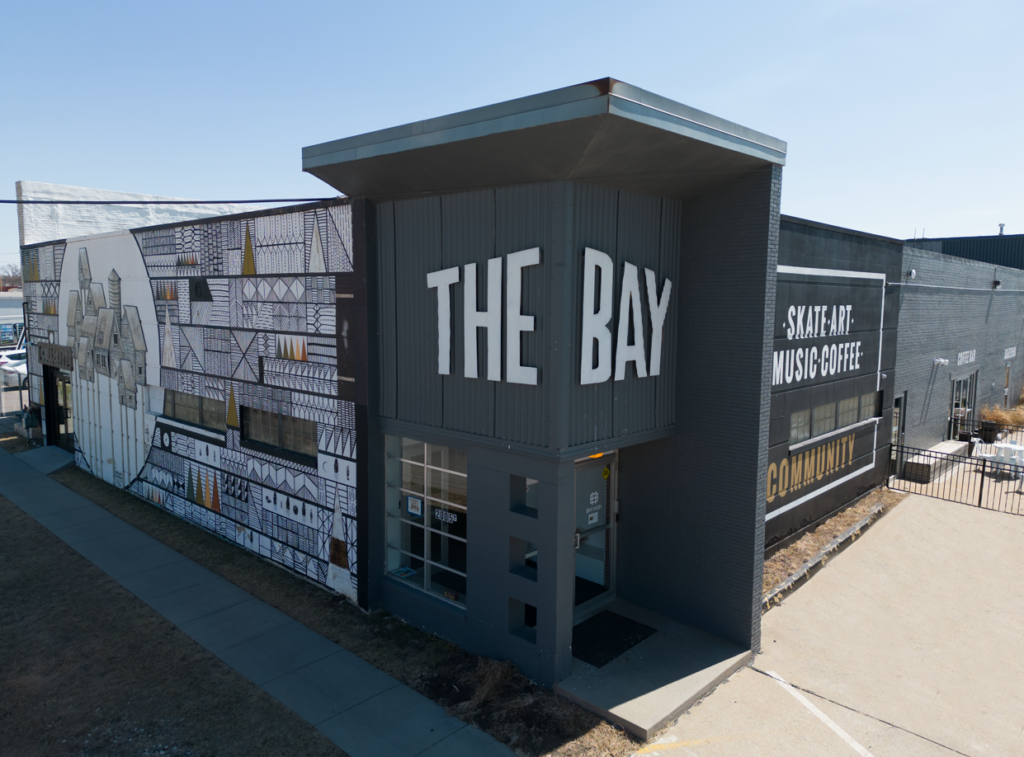
In 2018 the entities merged to form Rabble Mill, now branded as The Bay. Norman continues leading it today. These grassroots, outside-the-box efforts giving young people agency, mentorship, community and employment have evolved into a nearly $4 million annual budgeted operation. The Bay has a facility in Lincoln with workforce development programs, an indoor skate park and an alternative focus school for juniors and seniors, Bay High.
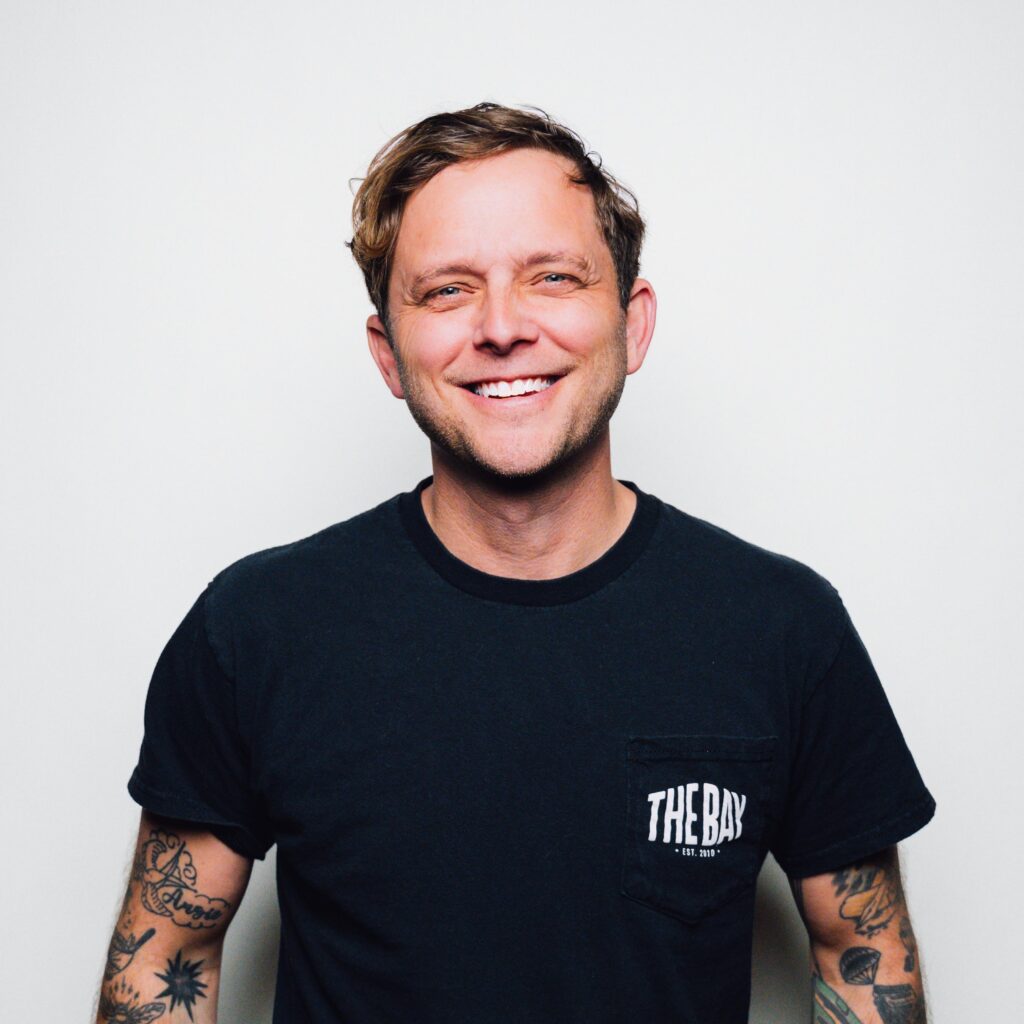
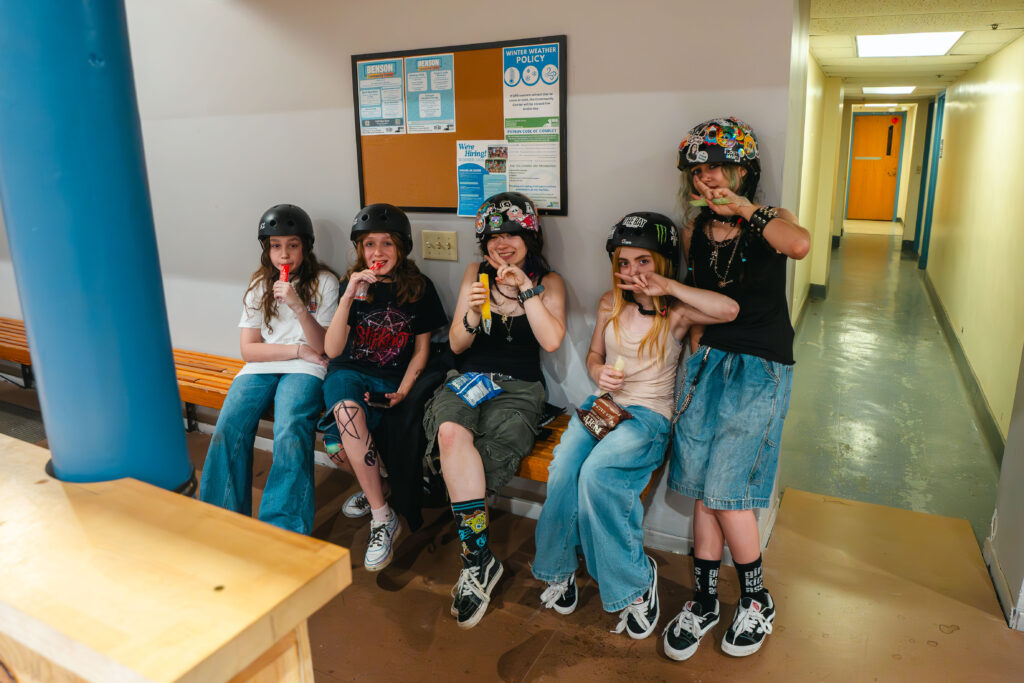
“We have kids from every public high school in LPS,” Norman said. “It’s a real mix of kids looking for a smaller school setting who maybe weren’t thriving in a specific public school, and in a lot of cases needed community and weren’t finding it. But they find it through us.
“They feel very comfortable being uniquely themselves. They’re the coolest kids.”
Former Bay board member Ashley Hustad said her son Declan has gone from being bullied at his previous school to thriving at his new one.
“Bay High has been a positive change for Declan because instead of being made fun of for who he is, he’s celebrated for who he is. Being different is a strength there, not a weakness,” she said.” The teacher support is more hands-on because of smaller class sizes. Declan is more engaged and interested in the subject matter. He also made great friends pretty quickly. The reality of how hard mental health struggles can be for teens isn’t brushed off – it’s approached with empathy, care and a plan. As a parent, that is so very important.”
For Norman, it’s all about community.
“We help build relationships that connect kids, especially those hardest to reach or not finding their thing elsewhere. By helping them find that they feel safe … and that’s when they can really start developing and building confidence that I can do this, so maybe I can do this other thing.”
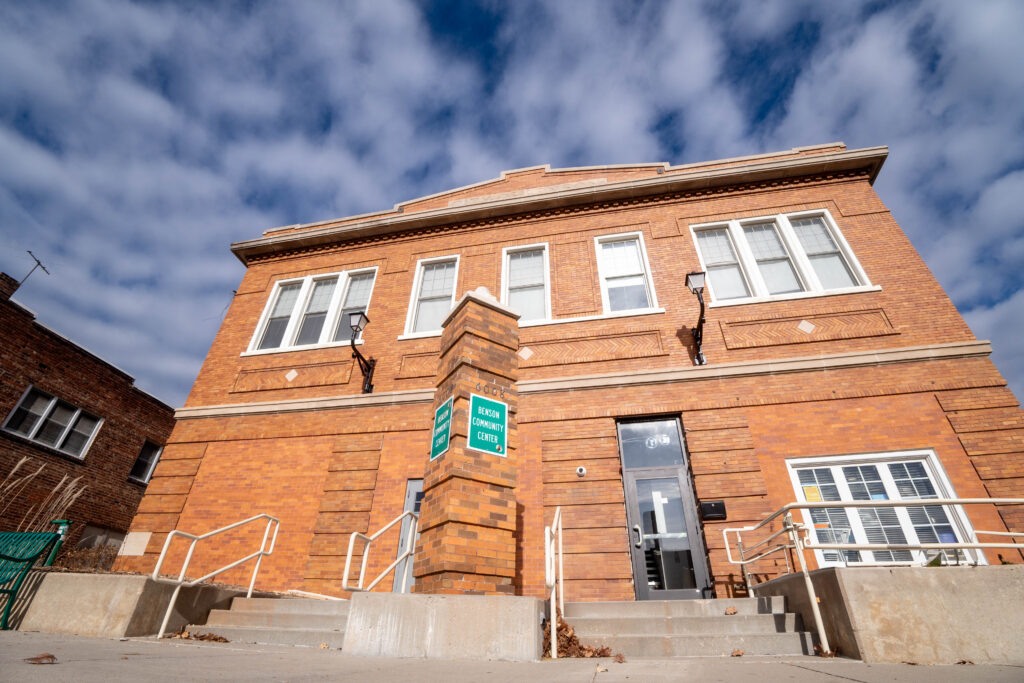
A few years ago The Bay expanded into Omaha, operating out of the renovated Benson Community Center.
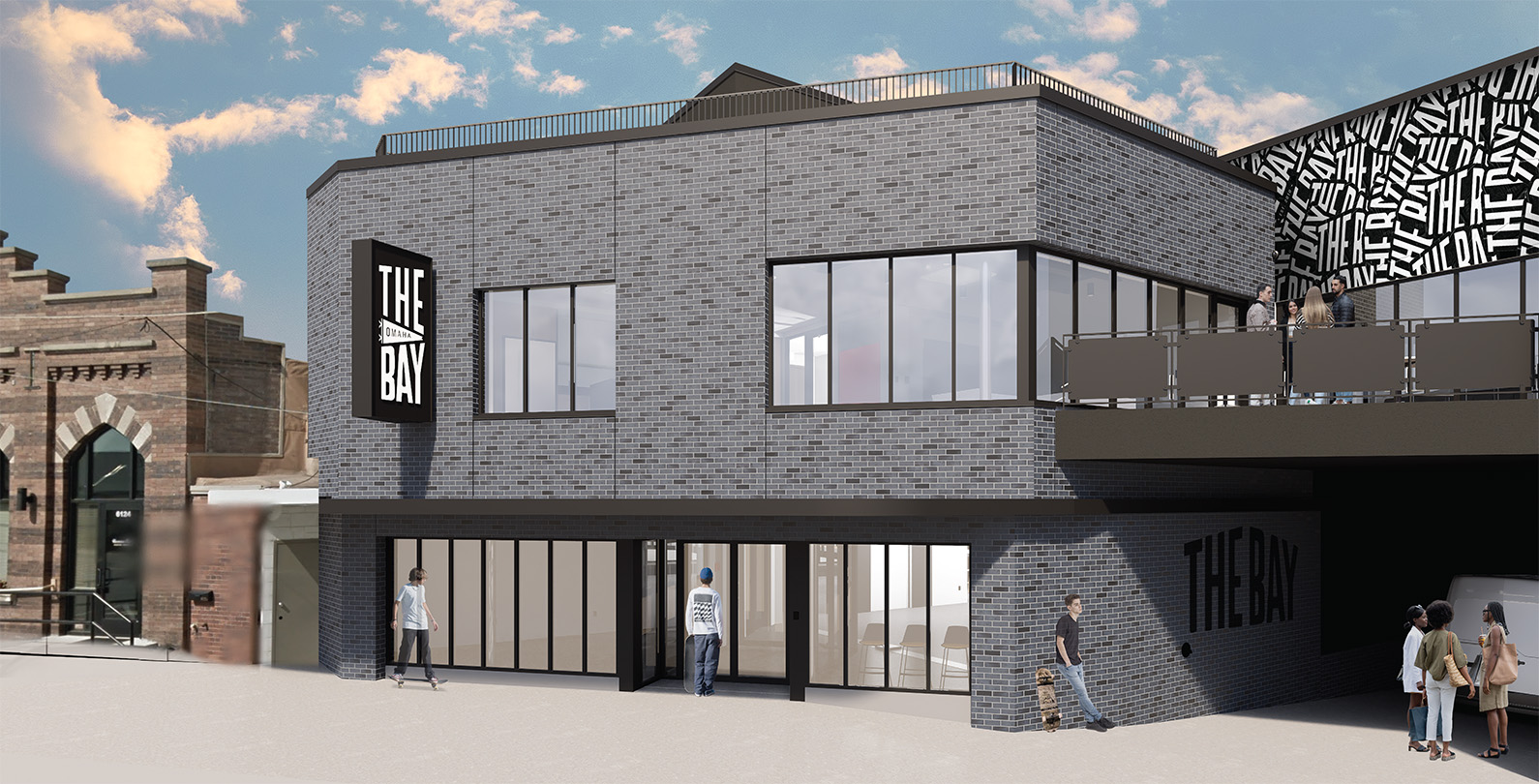
A $20 million capital campaign is allowing The Bay to construct a new Omaha home in the former Hulac Chevrolet dealership building at 6120 Military Ave. The 40,000 square foot space, slated to open in January, will be double in size to the Lincoln site, thereby opening new opportunities to serve more youths. Last year The Bay’s various sites and programs served more than 3,700 young people.
The Bay Omaha will offer programs currently not available at The Bay Lincoln, such as e-sports, emerging tech, fashion and entrepreneurship. Its public skate park is by California Skateparks, designer of the 2026 Paris Olympics skate park.
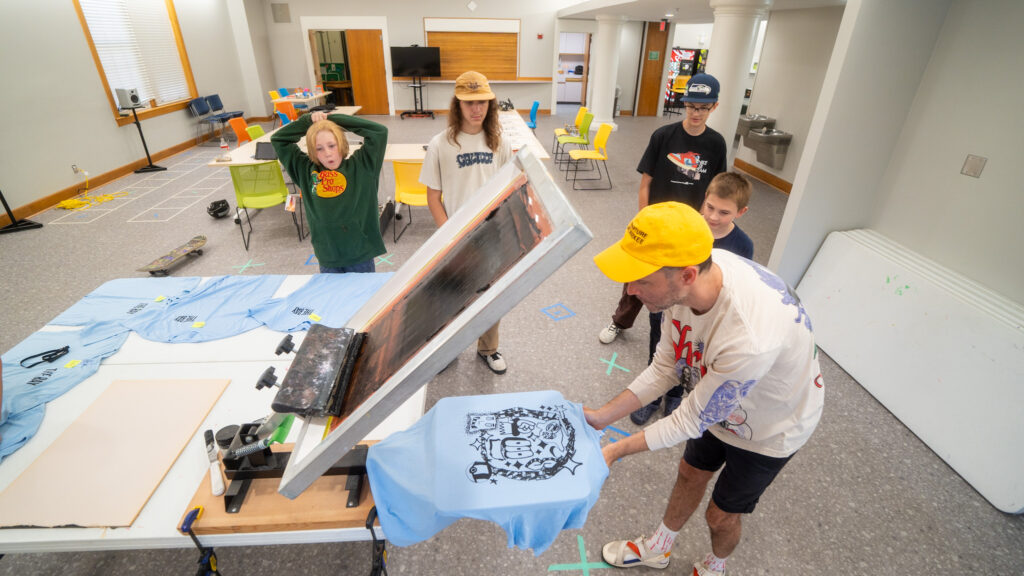
The Bay operates a workforce education program in Lincoln called Gap Year. The eight-month career and skills accelerator is for 18 to 24 year-olds. This fall The Bay’s launching a Gap Year pilot in Omaha. Cohort participants will complete a nine-month track to build creative, technical and professional skills in performance, production design, storytelling and entrepreneurship.
“It’s a challenging age range to work with because they’re no longer in school or living with their parents, so they’ve got to choose to come to us – which they do – and that says a lot,” Norman explained. “Our job is to help equip them with infrastructure skills some of us gain through family or mentorship, but not everybody. It’s a lot of practical stuff, like how to manage your calendar so you show up on time, how you communicate in an email, when to communicate via email versus text, how to grocery shop. We help build financial literacy. We employ a lot of the kids who grow up in our space. Many don’t have bank accounts to allow automatic deposits, so we help them establish those. We call it future winning skills.”
The program targets young adults who, Norman said, “are not on a rocket ship straight to college or career.”
“They literally need to find themselves and they find themselves and what they love in our programs,” he added. “Our job is to help them turn that into further education, a career or a business they want to start.”
Declan Hustad may take CNA classes this summer or may enter the Gap Year program.
Both Normans know from personal experience the importance of engagement.
“The impact of representation, of seeing someone you can relate to, and feeling a sense of belonging, is life-changing,” Angie said. “Even the smallest nudge or opportunity given to kids and young adults could change the course of their lives forever. So many people did that for us when we were kids. Those acts of support really made all the difference.”
The Bay partners with major foundations like Lincoln Public Schools and youth serving nonprofits such as Kids Can, Completely Kids, Girls Inc. and B&B Sports Academy.
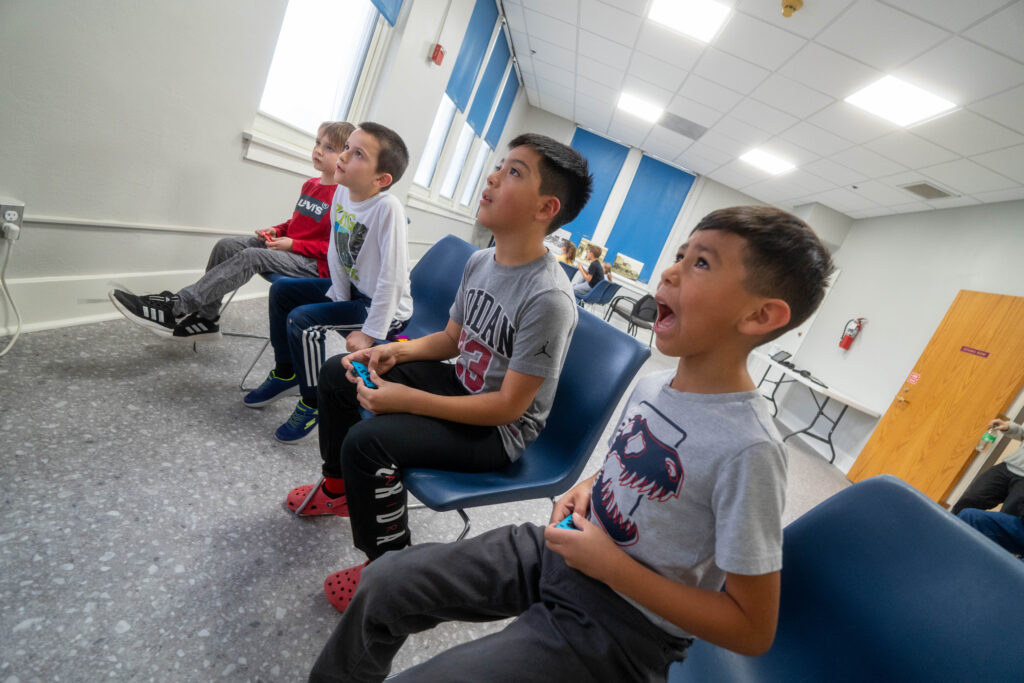
With a mission of empowering girls through music education, Omaha Girls Rock enjoyed a long run highlighted by its summer camp. Hear Nebraska was a collaborator. Growing pains resulted in program cuts and now OGR is part of The Bay. Summer camp wasn’t held during its year-one transition under The Bay, but will return in July.
“We’re really excited for the first summer camp,” Norman said. “We’re really excited to see that program come back to life. You see these young women who maybe didn’t touch an instrument before, form a band, build camaraderie, write a song together, then perform it on stage in front of family and friends. How simple and impactful it is.”
A new partnership with Metropolitan Community College will connect GAP Year participants with MCC credential programs that can get them trained, employed and into career pathways.
“Metro’s going to help supercharge that program,” Norman said. “I’ve learned enough to know we have to partner if we’re going to solve some of the most serious issues that affect young people. We have to collaborate and figure out how we can find mutual benefit and I think the Metro partnership is a perfect example. There are things they do so well and there are things we do well and we’re going to bring those together. They trust us because they see we are connecting and engaging with kids that are hard to reach.”
MCC’s Gary Girard said colleges like his are alarmed by the number of high school students who drop out before attaining their diploma and that do not go onto post-secondary education. That’s where The Bay comes in as a bridge for students looking to complete their GED or to pursue credentials, certificates or associate degrees.
“The work they’re doing compliments where we need to go,” Girard said of The Bay. “It’s a no-brainer for us. This is what we need to impact that population. I think these kinds of relationships are transformational.”
Norman sees himself in many of the young people The Bay serves.
“I relate to feeling not fitting in, that I wasn’t good enough. I relate to kids who might feel like they don’t have a network to put them in positions to succeed,” he said. “This was me. This is a lot of us. That’s something I’m passionate about – democratizing opportunity for young people. And The Bay does that.”
The Bay has become more than an outlet providing after school diversions, particularly with Bay High.
“Mike (Smith) recognized early on kids were skipping school to attend The Bay,” Norman said. “So the hours had to be set after school. Kids were saying, ‘I wish I could go to school at The Bay.’ He had the vision for it. I raised the money and managed the relationships to get us across the goal line.”
Young people disconnected from school and, in some instances, family now have a place to call their own when they need it most.
“Night and weekend programming is one of the things that makes our space unique,” Norman said. “A ton of kids don’t have anywhere to go after school or on nights and weekends. We know we are preventing bad things from happening just by them being with us and connecting with our mentors and finding community.”
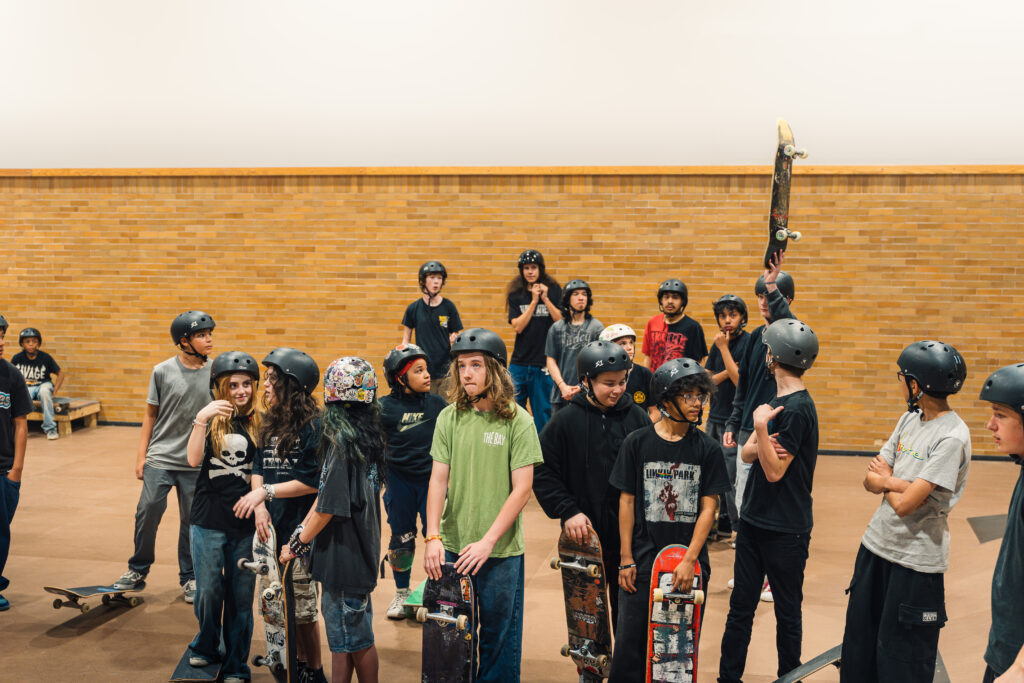
Accessibility and inclusion are built into The Bay.
“We eliminate cost barriers in everything we do,” Norman added. “We really try to make the experience extremely signifying and othering by eliminating every barrier we can.”
It sometimes frustrates Norman that The Bay is pegged as only a skateboarding center.
“We love skateboarders and the culture of skateboarding, but we do so much more than skateboarding,” he said. “What we’re doing is connecting kids and giving them confidence and skateboarding is a phenomenal channel through which that can happen.”
Norman added that Mike Smith was instrumental in helping him find his tribe and creating something that aligned with Hear Nebraska.
“We connected because we were both into alternative things,” Norman said. “We sort of stood out amongst the crowd. We found we were into a lot of the same subjects and enjoyed hanging out. That was definitely a relationship that impacted my life.”
Hear Nebraska supported The Bay, especially when it came to music and community events. Norman said he and Smith compared notes, adding, “We helped The Bay in lots of different ways by booking bands or filming events, so we were connected from the beginning.”
Another influential relationship that set Norman on his course was with the late publisher of The Reader and El Perico, John Heaston, who arranged for Nebraska Public Media to acquire those journalism platforms upon his death. Norman graduated with a journalism degree from the University of Nebraska-Lincoln.
After striking out with applications to newspapers on the coasts, he followed a tip that landed him at the City Weekly in Omaha, before moving over to The Reader. Heaston, he said, “became a true mentor of mine and somebody I think about a lot.”
“I was still very much a fresh reporter and editor getting to know the city of Omaha well and building relationships,” Norman recalled. “He helped me cover subject areas that were fascinating and needed to be covered from cops to crime to immigration to environmental stories. The work I did in covering those stories gave me the framework for understanding Omaha as a city and the social infrastructure that supports it.”
Norman said he admired Heaston’s penchant for “holding truth to power and supporting people who were trying to create cool things where there weren’t otherwise.”
“That ethos really connected with me then and it’s part of what I feel I do now.”
During those halcyon years, Norman met Angie. He grew interested in doing environmental journalism, even earning a master’s degree from Michigan State with a reporting discipline. He served an internship at Congressional Weekly in Washington D.C., where media downsizings followed in the wake of the 2008 economic collapse and digital usurping print advertising. With traditional journalism jobs looking suddenly unstable and needing to do a thesis project, he and Angie found themselves unexpectedly missing home and wanting to do something to give back.
“Neither Angie nor I planned on moving back to Nebraska,” he said. “We realized how poor Nebraska’s popular culture image was. We found ourselves surprisingly loyal and defensive about this state and espousing the virtues of Nebraska which, to us, were progressive-minded people creating cool things that weren’t, especially the music and art communities.
“I didn’t really know what I wanted to do. Then we came up with this idea. What if we could evolve the narrative of Nebraska by showcasing its music and arts culture and project those stories to the world with a focus on the artists, studios, the labels, the venues?” he said. “That master’s project became Hear Nebraska.”
A focus on music was natural for the couple, who met at an O’Leaver’s Pub concert. Andy’s played in bands as well.
“We had no budget because I didn’t know how to raise money,” he said, “but right out of the gate we were telling original multimedia music stories every single day – outpacing the Omaha World-Herald and Lincoln Journal Star combined in music coverage. It was so incredibly fun.”
Hear Nebraska’s reach got the attention of his old mentor, John Heaston, who initially viewed it as unwelcome competition until coming around.
Within a decade Norman was recognized as an Emerging Leader by the Nebraska Arts Council. Norman never thought he would be the executive director of a nonprofit.
“I’m peers now with folks that I used to interview for stories back in the day. They were in the early phase of their career and now they’re running organizations.” Norman said, but once he became a director he drew from the example of the ever hustling Heaston. “Just his energy and enterprising vibe. I loved how creative he was, that he tried to say yes to ideas, that he wasn’t scared to try something new, that he built neat relationships with the Black community, the Latino community, the Asian community and others. He wasn’t afraid to look foolish. He just went full bore at it.”
That moxie came to define Norman, too.
“I’ve seldom seen someone stretch the number of hours in a day like Andy Norman,” said former Hear Nebraska intern Chance Solem-Pfeifer.
Again taking a page from Heaston, Norman empowered bright, hungry young people to do the heavy lifting.
“The way that we powered that organization was through young talent, mostly college interns,” Norman recalled. “At first they weren’t paid and then we figured out how to start paying them. We had nearly 70 interns come through, whether writers, photographers, animators, graphic designers, videographers, event bookers, event managers . There was just so much talent we were lucky enough to be a part of.”
Solem-Pfeifer got his professional start as a multi-media journalist at Hear Nebraska. He described it as “a varied and all-encompassing experience” doing long-form audio interviews, photographing shows, covering music fests and representing the organization in the community.
“There was just this beautiful sense of constantly being thrown into the deep end, and quite frankly, choosing the deep end because no one was making us do any of this,” Solem-Pfeifer said. “The whole thing ran on coffee and obsessive cultural appreciation.”
Jumping in feet first, he said, paid off.
“The confidence and competence I gained by necessity was invaluable,” Solem-Pfeifer recalled. “I’d also credit it with the knowledge that if you prep well enough, you can sit down with almost anyone and have a good conversation. I’ve carried that into my ongoing arts journalism career.”
Another intern, Nickolai Hammar, honed his skills photographing concerts and doing interviews until he got on with NPR, where he’s a video producer.
“Hear Nebraska was so open to people young in their careers who were passionate and nurturing them,” Hammar said. “I got a lot of trial by fire experience. It really helped me begin the process of polishing my skills. It gave me a real connection to the community I had always felt I was a part of and it gave me a way to feel like I was giving back to that community. Andy was an inspiring guy to work under. He and Angie’s vision and mission really spoke to me and a lot of others. It was a flag we were proud to fly under.”
Even as interns graduated into careers, Norman said he was so focused on documenting Nebraska’s music history and showcasing it to the world he “overlooked that probably the most important thing we did was let these interns grow their skills for their next gig.”
“Now it’s called workforce development,” he said. “Back then I didn’t know it was. That’s what we do now at The Bay and we’d been doing it the whole time. And we got really good at it – in taking inexperienced young people and giving them tools to use their creativity to produce something that impacted their life and others.”
Solem-Pfeifer won’t forget the difference it made.
“I think of Hear Nebraska often,” he said. “I think of how tired I was and how it barely mattered because of how in love we all were with the project. I think of Andy and Angie creating something special out of nothing. How hard that is. How bright, driven and enthusiastic you have to be to convince hundreds of staffers, interns, volunteers, friends, and artists to devote themselves to a grassroots hope.”
Through it all, Solem-Pfeifer said, the couple were “like den parents who led with kindness and generous questions and home-cooked meals. We all so badly wanted to impress them with our work.”
When Hear Nebraska began, the state’s music industry was fertile, yet barely touched ground in terms of coverage and community.
“We found there were endless really interesting music stories in Nebraska,” Norman said, “and they were growing every day because there were so many bands. Prior to us it was like if a tree falls in the forest does anyone hear it. There were a bunch of records being produced that people put months of work into and then nobody heard it or knew about it. Nobody was really promoting it. We sussed that out to make sure people’s work and art was being seen.”
The organization came along, he said, “just as social media was expanding in a big way.” Hear Nebraska started an online radio station, one of whose shows, HNFM, is still going.
The startup didn’t stop at covering music.
“We put on the Good Living Tour culture series in towns like Grand Island, Norfolk and my hometown of Imperial,” Norman said. “We debuted the weekly Hear Grand Island concert series and began operating the Lincoln Calling Music Festival. Pound for pound I’m confident we were putting out as much content as anybody.”
When Hear Nebraska went on hiatus in 2019 (Norman leaves open the possibility of its return) it had produced 4,300 stories, 30,000 photos and 315 videos telling Nebraska’s music story. Its 290 events in 30-plus Nebraska towns injected $200,000 to 400 artists, and $150,000 to production companies.”
Angie was there helping him build everything out.
“She’s a visionary with endless ideas,” Norman said of his wife. “She’s so creative and supportive. She brings out the best in me. She and I both have a similar non-stop drive and work ethic. It was easy to work with her on this. It was so fun to have an idea and then to actually put it into motion.”
As a life and work partner, Angie’s enjoyed the ride.
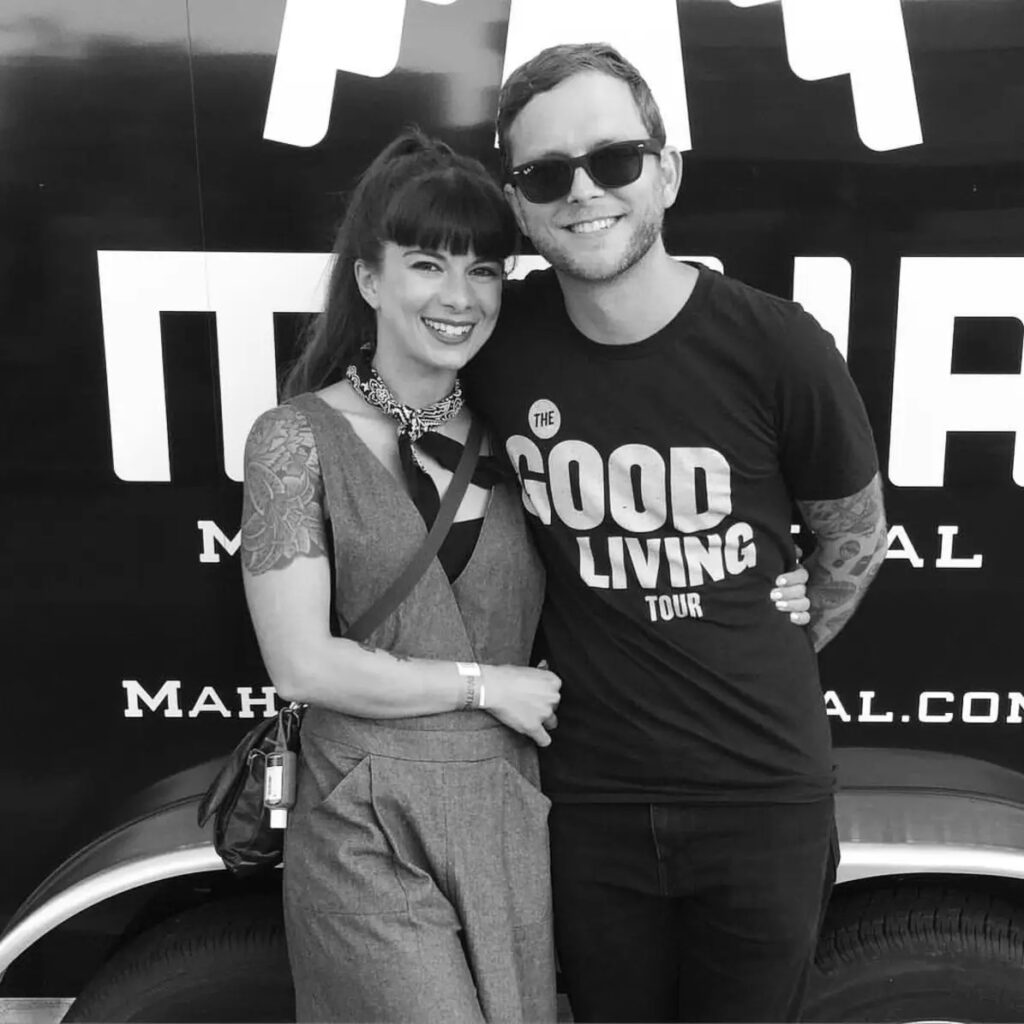
“Our journey together has always been a team journey,” she said. “We’ve never been married without being business partners and working together in some capacity, and we still actually really enjoy working together on projects even now. Early on, when we started Hear Nebraska, we operated purely out of grit and just wanting our project to succeed.”
Their shared passion for highlighting the state’s arts-culture scene became a way of life.
“We sort of built our lives around shows, working and traveling with journalists, photographers and musicians. We had full-time day jobs as we built our nonprofit in every other waking hour, lived cheaply, fed our interns bean burritos and hoped they’d stick around as we also learned on the job,” Angie said.
The couple’s collaboration turned into a family adventure when they had their son, Townes.
“We took him on this journey with us,” Angie said. “He even traveled with them across state for the Good Living Tour. It was a pretty unconventional way to start both a marriage and a nonprofit, but we have the best memories of that time.”
Like Angie, Andy looks back on the by-the-seat-of-their-pants start with nostalgia.
“We had this platform and some resources and people who believed in us. We’d have an idea and make it happen. It was thrilling and addictive,” he said.
He values the many relationships formed in his career, but he said Angie is “still to this day my most trusted adviser and partner.”
The couple came of age making it happen.
“It was our life and a labor of love and we did it together,” he said. “It was a really beautiful thing. But it was also incredibly taxing. We knew there were all these foundations in Omaha but we didn’t know how to get to them and didn’t have any relationships to get there. So our strategy was let’s just prove it and we’ll ask later. There were so many outcomes we were very proud of.”
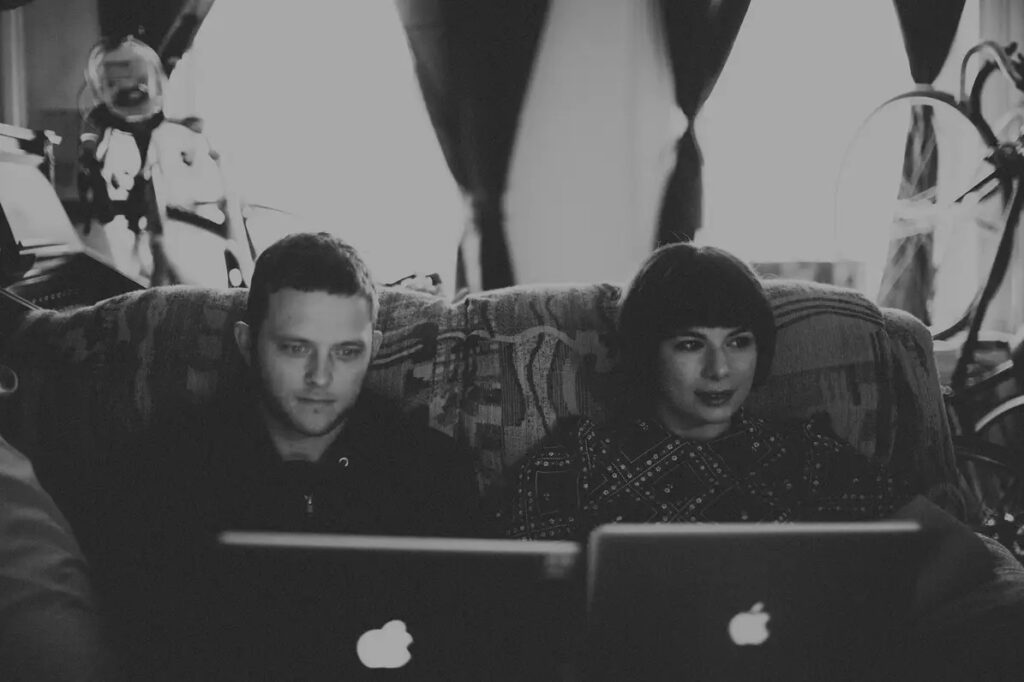
As director of a growing entity, he did what he had to do in order to make it sustainable.
“I’m deeply connected to the mission and the mission requires I put myself out there and do something that scared me – ask for money,” he said. “I learned to build relationships. I talked to enough smart people who said nobody’s going to raise money for this organization except you, you’re going to have to do it, and so I figured it out.”
By then he already had proof of concept results to sell donors on. The rest is history. Today, Angie has her own business, DahliaFrame. But she and Andy remain involved in each other’s enterprises.
“It’s just a natural reflex for us to troubleshoot together. It’s been so wonderful to see Andy put all of those years of relationship-building in both Lincoln and Omaha to work in a whole new way,” she said. ”To watch him from the outside for the first time, knowing how he operates, and to cheer him on from the sidelines has really been a gift and a whole new perspective. I’m beaming standing beside him, cheering him on as the next chapter unfolds.”
“We felt we weren’t moving the needle enough on making Nebraska a place where artists could thrive,” he added. “We knew that we needed to do more education to support artists who are starting bands and how to manage the business side of it. Meanwhile, Mike Smith and The Bay were reaching youth. It felt like an opportunity for two organizations to come together and be more sustainable. We decided to fold everything under the brand Rabble Mill, which is still the 501(c)3.”
Then there was the workforce development expertise and track record that Hear Nebraska brought to the mix. Connecting young people to careers has proved attractive to donors. Norman said the relationship building that drove Hear Nebraska and The Bay enabled the organization formed after the merger to successfully raise millions for the new building project now underway.
Support has come from major philanthropists, including the William and Ruth Scott Family Foundation, Sherwood Foundation, Lozier Foundation and Peter Kiewit Foundation, as well as the Douglas County Visitor Improvement Fund and Nebraska’s Department of Economic Development’s Shovel-Ready and North and South Omaha Recovery Grant programs.
“I have definitely found my purpose,” Norman said. “It’s an honor to be able to lead this group of talented humans. It’s one of the most gratifying things I’ve ever experienced. I know it matters and I know it’s changing lives. It’s not something I would have foreseen but it’s turned into something I don’t think I could ever stop.”