

Growing up in the South Omaha projects, Dana Murray didn’t want to get lost to the streets like some peers did. His two loves and potential ways out were basketball and music.
Once realizing his future wasn’t on the court, he dedicated himself to finding out what it takes to be a great drummer. Committed to excelling, he practiced more than he slept, earning a scholarship to Berklee College of Music in Boston, gigging in New York, working a cruise ship, then getting the call to play with Wynton Marsalis. Murray’s long since joined America’s exclusive jazz fraternity.
After touring-recording with major artists, he returned to his roots several years ago, gaining custody of his son and raising him as a single father, making Omaha home base when not on the road. Along the way he’s shared his expertise and experience with youth, creating a drumming program at Beveridge Middle School, teaching at the University of Nebraska at Omaha, Burke High and Bellevue East, and leading the competitive drum line, Dojo Percussion, winner of the 2010 Winter Guard International championship. He built his own home studio, cutting his acclaimed 2018 original album about racism, “Negro Manifesto,” there. Some players he’s influenced have taken their talents to New York and other places.
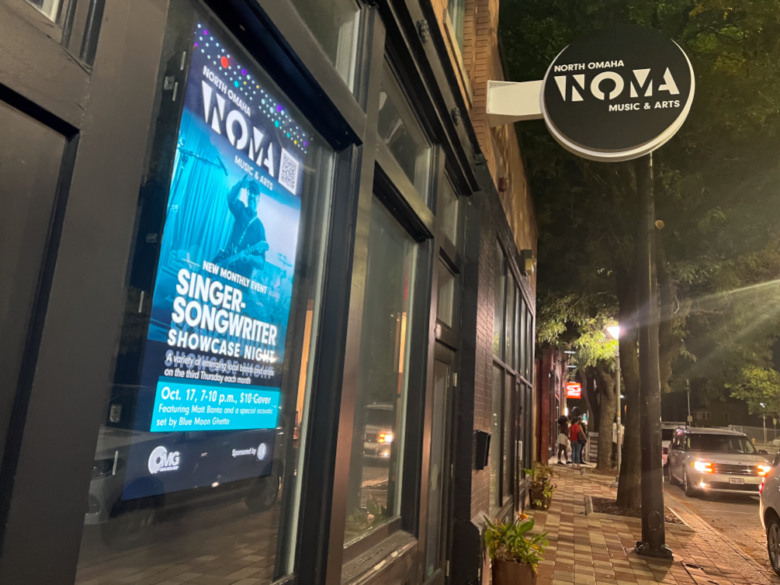
Now he applies his passion for jazz’s legacy to North Omaha Music and Arts, 2510 N. 24th St., where he’s founder and executive director. The nonprofit’s fifth annual NOMAFest, Aug. 13-16, is a celebration of African American and Afro jazz beats. The schedule and featured artists for this four-day concert fundraiser are:
- Aug. 13, bassist and vocalist Mohini Dey, at NOMA
- Aug. 14, vocalist and multi-instrumentalist Frank McComb and trumpeter and vocalist Keyon Harrold at NOMA
- Aug. 15, Memphis funk pioneers The Bar-Kays with experimental bassist MonoNeon and Kenyon Harrold at Gene Leahy Mall
- Aug. 16, and multi-instrumentalist and vocalist Richie Love of Omaha, at NOMA
The festival is an extension of NOMA’s mission of exposing locals to world-class musicianship. NOMA instructors introduce school-age students to an array of instruments in music labs. Murray encourages aspiring, emerging and established artists to showcase their chops at Monday night jazz or jam sessions. He taps his network of elite musicians to perform concerts and conduct master classes.
“In this organic hub of appreciation and learning, generations mix and an endangered art form thrives. Jazz education has never been more needed, he said. “Most people know it’s all hands-on deck if we want this art form to be sustainable.”
Guitarist, songwriter and NOMA assistant director Andrew Bailie, one of several Murray mentees from Omaha who have found success in music capitals only to come back in order to give back, said, “What NOMA is dedicated to is making Omaha a magnet for great players. That means raising up players of high quality. We don’t have this mentality that only greatness comes from the coasts.”
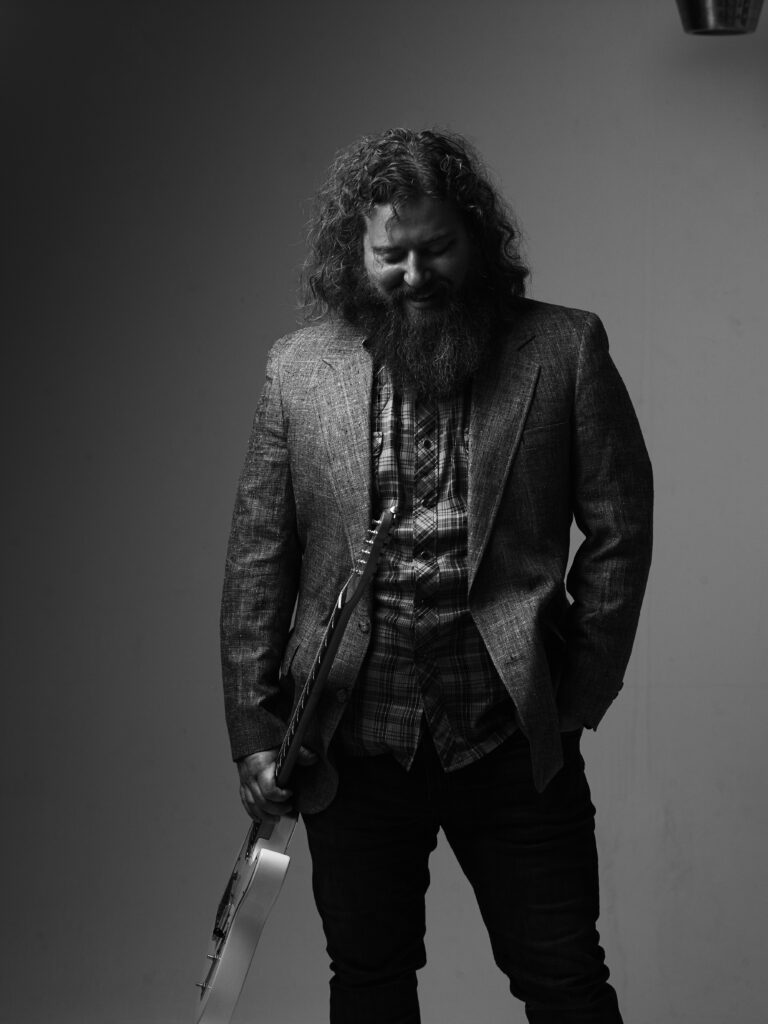
Bailie and other Murray disciples who have tasted the big time, such as percussionist David A. Hawkins, are NOMA instructors eager to share their expertise and experience of having been there, done that.
“We bring that perspective,” Bailie said. “When we build on that, that becomes the fuel for the next generation.”
Bailie and Co. sometimes jam at NOMA. Last March he, Hawkins and one more star Murray mentee, Nick Semrad, played for Murray’s birthday celebration there. For Bailie, connecting older and younger artists continues the lineage of great players that Nebraska’s produced (Preston Love Sr., Buddy Miles, Norman Love, Richie Love, The Gulizia Brothers, Matt Wallace, Arno Lucas, Dave Stryker, et cetera). He sees NOMA as a way of keeping that lineage alive, He encourages jazz aspirants to do what his mentor encouraged him to do – get steeped in the history and the greats who invented and advanced that music.
Everything bound up in NOMA is a coming home story for Murray. As a youth he played drums to Preston Love, Sr.’s saxophone across the street at the Showcase Lounge. Love was a living local legend. Murray gleaned insights into what a life in music entails from him and others, including percussion masters Luigi Waites and Curly Martin.
Murray regrets missing out on the heyday of North 24th Street’s live music scene of the 1940s through early 1960s those cats experienced, when homegrown greats jammed with national artists. At NOMA Murray wants to help rebuild what was lost after ‘60s urban risings decimated an area only just now coming back.
He likes to think NOMA embodies the “spirit” and “soul” of a community hungering to thrive again. He knows there’s a long way to go.
“We’re just at the start of getting things to where they were,” Murray said.
Dreaming big is encouraged at NOMA, where Murray does for kids what mentors in Omaha, Boston and New York did for him – provide examples of what excellence looks like.
Making this full circle story complete is his family’s participation. Wife Deb Murray is operations manager. Mother Faye Comer is facilities manager, Stepfather Clyde Comer is greeter and jack-of-all-trades (he helped build the stage and bar). Murray’s brother and nephew handle security. Bailie, Hawkins, Semrad and other Murray mentees are considered family.
“Everybody’s pitching in where they can,” Clyde said.
“I think it’s a beautiful thing – the family coming together and working together to do it. When the kids come into class with big smiles on their faces, rushing to get to get to the classroom, it’s so rewarding. That reminds me what we’re doing this for and why we show up,” Faye added.
Though renovations have already created classrooms, a multimedia lab and a posh nightclub space, Murray has a grander vision. He’s hopeful that a capital campaign will raise $20 million for an expansion highlighted by a 450-seat performance space and a restaurant. Nearby land at 25th and Lake streets has been secured for the addition of a music education facility. Together with the North End Teleservices mixed use development slated to rise directly across the street from the current site and a new Great Plains Black History Museum facility planned near there, North 24th is poised for long overdue transformation. He thinks NOMA can be a catalyst for making that historic entertainment and business district thrive again.
A previous attempt to revitalize the space that NOMA occupies, Love’s Jazz and Arts Center, started with fanfare and moderate success but over time mismanagement got it into hot water with the City of Omaha, who owned the property. When North 24th Street Business Improvement District Executive Director LaVonya Goodwin initially asked Murray to take the job of breathing new life into the space after the BID took it over, he declined. He was still busy touring and, besides, the vision presented to him wasn’t his. Then COVID hit.
“I think like it did for everyone, the pandemic really got me thinking about my life, what’s most important and ways I could continue to make a difference,” he said.
What has become NOMA had been percolating in him for years. The BID gave him the opportunity to act on it.
“It’s close to my heart because having grown up with little resources I run towards where the greatest need is and that happens to be in North Omaha.”
He envisioned creating something without compromises.
“What I had in mind was like a mini Berklee,” he said.
He pitched the idea to Goodwin and the North 24th BID board. They were all in.
“Once I knew it was going to happen, then I kicked the planning and the vision into overdrive,” he said.
He made NOMA’s ownership a prerequisite.
“I had no misconceptions about how heavy the lift was going to be,” he recalled. “wasn’t going to make it any harder than it needed to be. What was here before (Love’s Jazz and Arts Center) for whatever reason wasn’t sustainable. So I came in and said, ‘Listen, this is going to take a helluva lot more than me – it’s going to take the community, the city, everyone being willing to sacrifice something if this place is going to be transformational.’ And I said the city should start with giving us this building.
“We were going to need to own something to have equity to make the kind of moves I want to. God bless our former mayor (Jean Stothert) who thought that was fair and gifted it to us. With that equity we bought the lot just north of us.”
Murray’s vision from the start was education centric.
“I didn’t come down here thinking we’re going to have a music venue, too,” he said. “Once I got my feet on the ground I decided it would be irresponsible on a lot of levels not to have something that is going to stimulate the economy. People need to have a place to go and see jazz on a high level at a place rooted in the history of the community. We need a top-flight jazz venue right here on 24th Street that ranks with any in the nation. I’m proud we’ve been able to do that so far.”
Among the acclaimed artists he’s brought to Omaha are Orrin Evans, Eric Revis, Nasheet Waites, Sherman Irby, Camille Thurman and JR Robinson.
“NOMA is a resource for everyone, including the Omaha music scene,” Murray said. “It’s important to the fabric and growth of the music scene, which could be stronger. That’s a big part of what we do as well. I’m proud that we’re a destination not just for North Omaha but the entire city.”
With his inclusive concept of it being both an education center and a performance venue, he said he worked with TACK Architects “to get renderings of what I thought transformation looked like.” Images of the gleaming new-space-to-be depict a game-changer for the area.
The campaign to fund that plan includes an endowment.
“I think about sustainability a lot. It’s almost all I think about,” he said. “That is part of my sense of urgency. I want to make sure this place is around a long time. It needs to thrive with or without me.”
Paying forward what’s been given him is motivation. He serves the role Preston Love Sr. played for him as someone who’s lived a life in music and played with elite artists. Just as Love’s stories made it “so real and “tangible” he felt he could “touch it,” he endeavors doing the same for young people.
For anyone aspiring to greatness, he said, it helps being curious.
“I was someone that asked questions,” he said. “Those cats who schooled me could see and feel how serious I was by the questions I asked.”
Standing in the gap and showing the way is key, he said, especially in an underserved community where not every kid who needs a mentor has access to them the way Murray did.
Without a safety net, he added, “A kid who takes the wrong turn may never get back to that right road. I sacrifice and go as hard as I do because I feel like lives absolutely depend on what we’re doing, and I treat it like that.”
Knowing few NOMA students will become professional musicians, Murray said the goal is “to grow critical thinking young people who are curious, are problem solvers, are committed to maximizing their potential in whatever it is they want to do.” He’s a firm believer the focus, discipline and confidence youth learn through the arts carry over to other fields.
He knows not all kids have the discernment skills he had. That ability to see clearly where his future lay helped when deciding to make music, not hoops his path.
“I was serious about basketball. I went to camps. I was on varsity as a sophomore, so I was pretty good. But I had to make a choice,” he recalled. “No matter how good I thought I might turn out to be I knew I wasn’t blessed with the kind of physical gifts that were going to allow me to be a professional. I had to be honest with that and that’s hard to do as a young person when you think you can conquer the world.”

That decision changed his life.
“When all my friends kept going on in basketball I said, okay, enough, it’s just music,” he said. “After that I had so much more room in my brain to just devote to developing music, it was crazy, so it was nothing for me to go into practicing eight hours a day. It’s all about bandwidth and kids don’t have bandwidth today. It’s very hard for kids to be critical thinkers today when most stuff is spoon-fed them.”
He applied his competitive drive to music, convincing himself his “quality of life” depended on being successful and thus, he said. “I practiced as if my life depends on it because it did.” He knew his dream school Berklee, where some of his idols attended, was financially unattainable.
Though deemed a prodigy, Murray said, “I knew I didn’t sound like the people on the albums I aspired to be. I told myself if I’m not extraordinary there’s no way I’m getting a scholarship. I understood my work ethic had to match my dreams. So while a lot of friends went to movies, hung out, played video games, I practiced. By the time the audition came around that was the easy part.”
His biological father was not in his life but did arrange for 12-year-old Dana to have an impactful behind the scenes glimpse of professional music-making. His dad tour managed Marvin Gaye when the artist came to play Omaha’s Civic Auditorium. Dana got to witness the band set-up. Gaye’s drummer saw his interest and shared how much practice he needed to reach that level. Murray uses anecdotes like these to give kids a reality check and an appreciation for how everything is relative. It’s hard knowing what hard work looks like without a metric. The bar’s usually higher than assumed. He provides metrics to guide progress.
“It’s common to view things in a box when cut off from bigger markets. Once you show what’s outside that box you know what you’re preparing for,” he said.
Getting that perspective can mess with your ego.
“The hardest thing with developing your art is managing your emotions,” he said. “You really can’t be in your feelings if you’re trying to develop. Failing is part of the process. When you’re not afraid to fail, that opens up a whole other part of your brain. I don’t know if it was a self-preservation survival mechanism, but I latched onto that mentality very young that I was going to go for everything, and if I came up short it wasn’t going to be because I didn’t know where the bar was or I didn’t work hard enough.”
He shares with students just how much time and effort he put into it, acknowledging that kind of single-minded dedication “can be extreme.” His practicing kept his parents up at night. “There weren’t enough hours in the day.”
His systems engineer stepfather helped him navigate his path.
“He introduced me to know the game you’re playing, don’t think you’re going to achieve this without the appropriate effort, and don’t whine if you come up short if you could have worked harder,” Murray recalled. “He talked about commitment, work ethic, accountability, and don’t blame anyone else – look at yourself. Those messages were drilled into me and I took those life lessons to heart. Being the oldest, I had to grow up quick because I had to take care of my brothers a lot.”
Murray said much of the teaching and mentoring he does today is informed by that “really good life stuff.”
Prescriptions for success were reinforced in New York’s ultimate proving grounds, particularly at the legendary club, Smalls.
“The contemporaries I hung out with all had that obsessive thing,” Murray said. “To have everyone really going after it was a shot of adrenaline. It was like, okay, I’m home, I’m around people like me. That’s what makes a scene. That saying ‘If I can make it there I can make it anywhere’ is true, I tell kids it’s one thing to be the best in the room in Omaha. But what happens when you get in a room and everybody’s great? The rooms start getting smaller. You want to be in the tiniest room. If you commit yourself to that you are comfortable anywhere.”
Those same tools of development, he said, “can be applied to anything.”
“We want kids to max out whatever they’re going to do,” Murray added. “That’s really what it’s about. It’s more than music, it’s really a lifestyle. If you’re committed to being a self-fulfilled human, music is great vehicle.”
Zedeka Poindexter appreciates what her daughter Zoey, who studies drums, bass, piano and dance, is gleaning.
“I love the fact she’s learning to focus in a different way. She thrives in that environment. It makes her confident in what she can do.” Poindexter said. That includes interviewing visiting artist JR Robinson in a podcasting lab. “My daughter feels at home there. She knows they care and are invested in her doing well. He can’t wait to come through the doors.”
Murray compares his “process” for bringing kids along to “a sports training camp or military basic training.”
“It’s grueling. I think of my style as preparing them emotionally to deal with what I know life is going to present. I just want them to understand what the landscape is and know what awaits them,” Murray explained. “Most people would have way more fight in them if they knew what they were up against. That’s why I infuse a level of competition because life is a competition. They’re going to compete at everything to get ahead. I want that to be normalized. If you’ve got fight in you, that will carry you. I’m a prime example of that.”
He has served as mentor and coach for native Omaha musicians now pursuing careers in New York, including David A. Hawkins and Thomas Jorgensen.

“I gained so much from just being around him,” Hawkins said. “It was about absorbing the way he went about it and the bar he held me, himself and everybody around him to and the refusal to lower that. He used tools to build you up. He was amazing at that.”
Jorgensen said he appreciates Murray for “instilling in me the importance of maintaining a relentless pursuit of maximizing my own potential, to dream and reach for the stars, to really believe greatness is … actually attainable. That lesson has been the foundation on which I’ve navigated my life’s journey not just as a professional musician, but as a human being.”

Hawkins said he’s learned from Murray that “all of that self-improvement and empowerment in realizing your potential is not just for you. Him doing everything he did in life led him back to Omaha because it was never supposed to be just for him.”
“If you get people on a path and believing in a system of development, then that’s the catalyst that can shift the whole projection of their life,” Murray said. “It’s hard to maximize your potential here because there aren’t enough people around you that are doing that.”
The mentor sees a lot of himself in his mentee, starting with “the spirituality” Hawkins embodies.
“He’s always been a God-fearing young man. I sensed that in him,” Murray said. “Probably reminded me the most of myself when I was coming out of high school and getting ready to do bigger and better things. A lot of my confidence was rooted in church and faith. My spiritually still guided me but not necessarily in a religious way. It was believing that if you jumped off a cliff in the dark someone was going to catch you. When you feel that you fear nothing and David has always embodied that. David possessed an almost superhuman belief in himself.”
For Murray, it’s imperative that young bloods like Hawkins know that they can make it anywhere as long as they believe in themselves and do what it takes to get there and to hang there. Much of Murray’s work, as he sees it, is to help instill that in young people.
“It’s aspirational, inspirational. Anything that can help others believe this is possible, that I can dream something and if I believe it I can get there,” he said. “I think that is a very important story to tell here in this area.”
Murray is proud of the fact that Hawkins, Jorgensen, Matt Albeiter, Seth Ondracek, Nick Semrad and Andrew Bailie, among others, have made it from here in New York. “It’s a great story.”
Murray never expected to manifest his dream of passing the torch while still at the peak of his powers.
“I’ve had to pivot my life. It’s not about my art right now, and I’m fine where I’m at because there’s going to come a time when it will be about art again,” he said.
Even when the new space gets built, he harbors another, even bigger dream.
“The 10-year plan is to have a charter school. I want kids to be able to graduate from a music academy,” he said. “Making that a reality is the bigger vision.”
For complete MOMAFest schedule details and tickets, visit the website.