

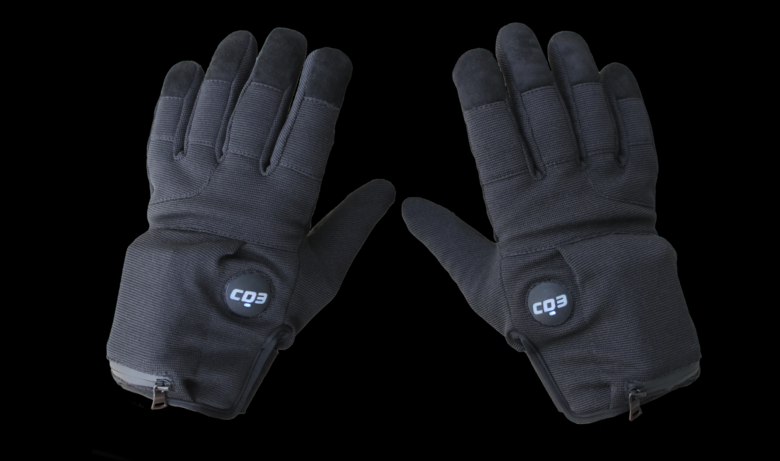
The electric shock gloves making headlines after Immigration and Customs Enforcement announced it was planning to outfit its agents with the technology have already been used in Nebraska for years.
Last May, the Omaha Police Department submitted a request to the Omaha City Council to buy 40 pairs of the gloves for a little under $66,000. The gloves were intended to be used by school resource officers “as another use of force option with the goal of deescalating and preventing use of force situations,” according to documents submitted to the City Council.
The council unanimously approved the purchase as part of its consent agenda on June 3, 2025. No one spoke about the purchase at the meeting.
The gloves are made by Compliant Technologies, a Kentucky-based company that provides nonlethal use-of-force options to law enforcement. Its official name is The GLOVE, which stands for Generated Low Output Voltage Emitter. It’s advertised as a “non-lethal and non-injurious” method to gain control of a subject through pain compliance for “law enforcement, adult and juvenile corrections, hospital security, EMS and the military.”
The Bellevue Police Department has also utilized the gloves for about three and a half years, according to a statement from Capt. John Stuck. Road patrol officers check out the gloves before their shifts, and all school resource officers have a pair assigned to them. Officers carry the gloves as part of their gear and only put them on when “the situation calls for it,” Stuck said.
Administering an electric shock with the gloves is considered a use of force. Stuck said the gloves have been used twice this year “with successful deescalation that resulted in no injuries to suspect or officer.” Neither of those incidents involved school resource officers.
Electric shock gloves carry less electricity – and potentially less risk of injury – than tasers. The gloves deliver electrical pulses directly to the skin, while tasers circulate an electrical current throughout a person’s body.
Use-of-force policies in both Omaha and Bellevue instruct officers not to use the gloves to grab a person’s face, neck, chest or groin. They are also prohibited from deploying them on small children, the elderly and people who are visibly pregnant.
Both policies also allow officers to use the gloves on people who are passively resisting, meaning they are refusing to follow orders. In Omaha, officers who deploy the gloves on passively resistant people are required to submit a written justification as to why lesser force was not used. Bellevue’s policy allows officers to use the gloves to “control a potentially dangerous or violent subject when the subject, through words or actions, communicates impending resistance, opposition, or the attempt to flee.”
An Omaha Police Department spokesperson said the department has received a number of inquiries about the gloves and plans to release additional information in the coming days. This story will be updated when more information becomes available.