

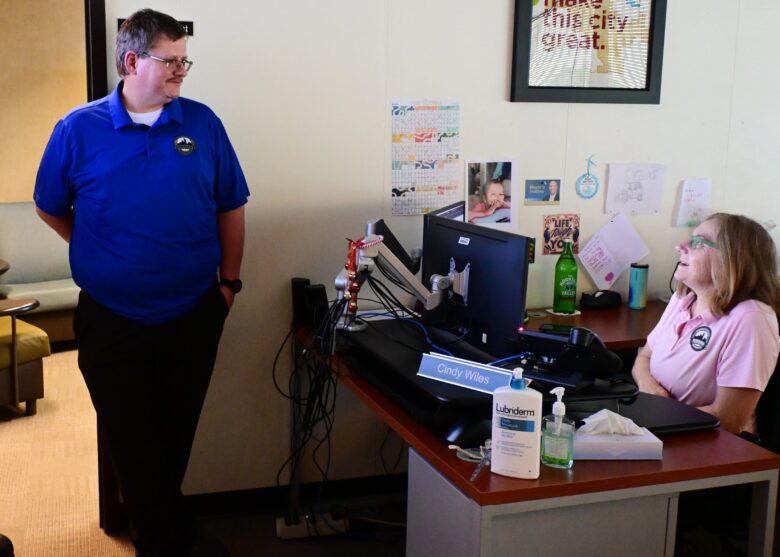
Cindy Wiles paused a conversation with her colleague to pick up the phone ringing on her desk. She answered with the same greeting she’s uttered thousands of times before: “Mayor’s hotline, can I help you?”
The calls are fairly continuous in the little office on the third floor of Omaha’s city hall. Wiles is part of a five-person team operating the Mayor’s Hotline, a service that for years has taken reports from the public on everything from potholes to overgrown lawns and vacant vehicles.
Hotline Director Shawn Winquest describes his job as a combination of civic service, problem solving, record keeping and — simply — listening.
“You truly don’t know what’s going to happen day in and day out,” Winquest said.
Here’s how it works: An Omaha resident calls the hotline at 402-444-5555, or makes a report online. Winquest and his staff intake the questions, concerns and complaints.
When a phone call or email comes in, the hotline staff enters the information into an online system before routing the issue to the appropriate office or agency so it can be addressed. For example, complaints around abandoned vehicles would be directed to the police department. Potholes or snow removal would go to public works.
Every issue raised through the hotline or through an online submission form is recorded by the team. A monthly report is then published on the Mayor’s Hotline website.
In July, more than 4,000 reports were made by phone and online. What concerns are causing the most commotion? Overgrown vegetation and abandoned vehicles.
“I believe (the hotline) is important because it gives the citizens a channel to report city issues to,” Winquest said. “Several cities don’t have a centralized area that they can call to report an issue.”
Some calls can’t be handled by the city. For example, a caller complaining about their neighbor’s rooster would be referred to the health department. Complaints of an aggressive dog would be directed to the Humane Society.
Winquest said the biggest challenge is hearing someone share their problem and not having a solution.
“We’ve gotten calls from people saying that they’re having issues with the federal government, federal agencies like CPS, or they are getting scammed,” Winquest said. “Not being able to assist someone is one of the hardest challenges that we see.”
Omaha Mayor John Ewing said the hotline is meant to be a one-stop shop for communicating with the city. When a call comes in, the hotline team takes down the information, which can be shared anonymously. They then identify the best route for the complaint to be addressed.
“Because sometimes you don’t know if you need planning, or if you need public works, or if you need the Visitors Bureau,” Ewing said. “You don’t know, so this way they can shoot us the information, and then we can get it to the right person.”
In 2025, Winquest and his team responded to more than 50,000 calls and emails.
The job’s not always easy. Calls sometimes come in from frustrated residents who take their anger out on the person at the other end of the line. Or lonely individuals, who just want someone to listen.
Wiles has worked with the city for more than 25 years, she said having good coworkers makes all the difference.
“It’s hard to leave,” Wiles said.