
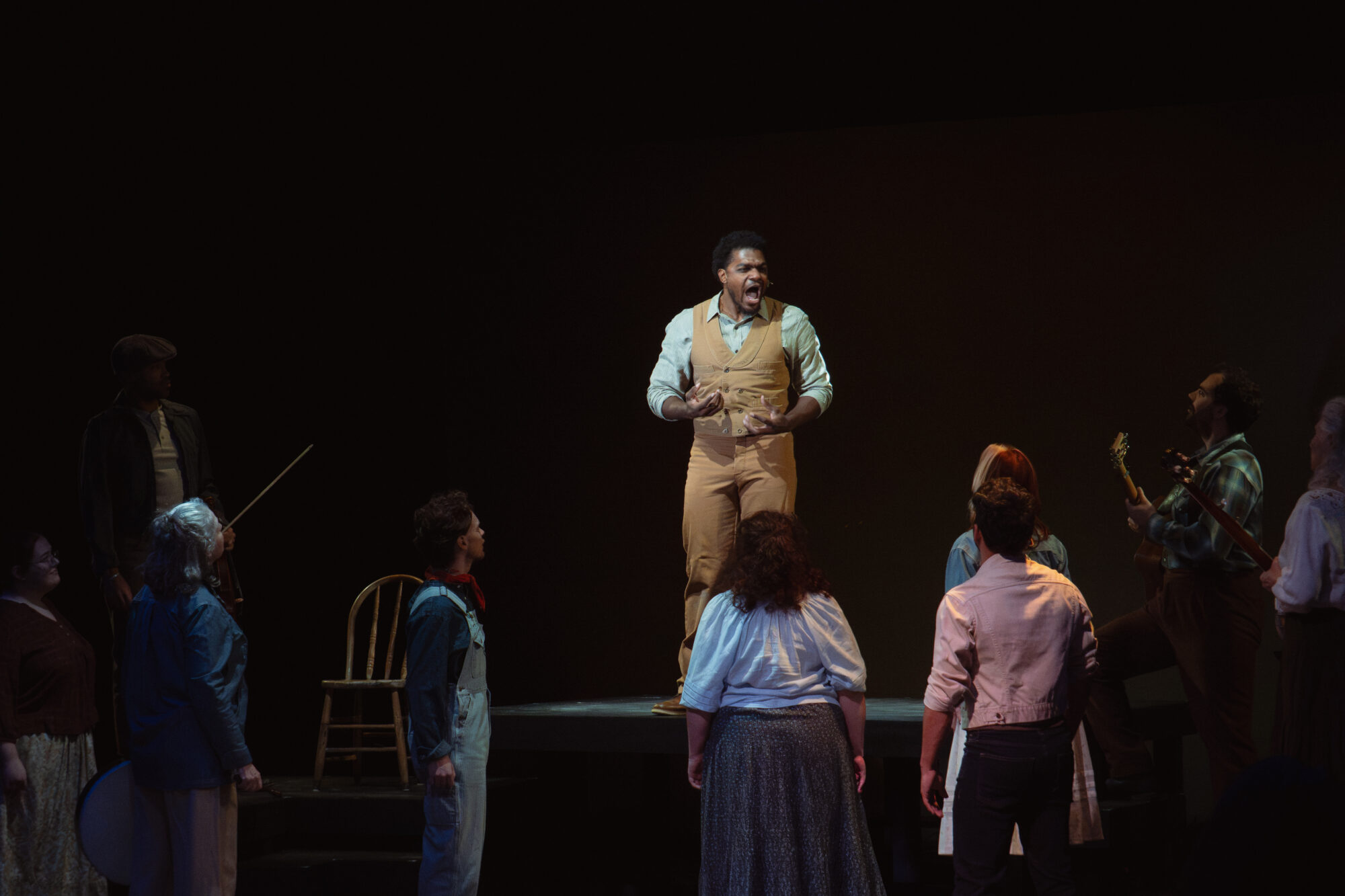

Veteran Omaha theater artist and singer Jill Anderson is known for deep subject dives – from Irish folk music to literary icons. As writer-director of a new staged concert at the Bluebarn Theatre, “Rise: Songs of Resistance and Resilience,” she delves into social justice music.
The opening show in Bluebarn’s 2026-27 season features dozens of songs drawn from American history performed by a 14-member ensemble, Anderson among them. Opening Sept. 24 and running through Oct. 18, “Rise” goes up in Bluebarn’s Porchyard amphitheater.
Anderson, who produced Joslyn Castle Literary Festivals on the Bronte sisters, F. Scott Fitzgerald, Oscar Wilde and Bram Stoker’s “Dracula,” is back to her cabaret-musical theater roots with “Rise.” But unlike most song fests, this one has an edge with themes that counter and rebut certain political forces seeking to oppress and divide.
“Well we live in a very conflictual and contentious age,” she said. “That’s definitely the case. I found inspiration in the moments in history when people have felt moved to speak out against oppression and have found a voice when there’s been a pressing need for social change or a compelling issue like the Vietnam War.”
The show’s title, she said, comes from the spirit and words of the songs themselves.
“Rise up. Get up. Stand up. These kinds of things come up in the lyrics of social movements and social music,” she said. “Rise in this sense is more about taking a situation and lifting up out of oppression or depression. It can be individual or societal. I wanted to keep it broad so that the selection of music would be not only political but personal.”
She believes the songs are just as relevant today as when they first entered the public domain.
“The things that arise in the human condition are endemic,” she said. “Things cycle back around. I would say all of these songs have their co-relatives with modern day questions and issues.”
The creator feels aligned to a season statement issued by Bluebarn producing artistic director and CEO Susan Clement about imagination, creation and joy being acts of resistance. Besides “Rise,” the season includes two more works centered in resistance, “An Iliad” and “Liberation.”
From the statement: Imagine joy as resistance, Not as escape. Not as denial. But as defiance. In a world saturated with division, exhaustion and noise, choosing joy can feel almost rebellious … Joy is often mistaken for lightness, when in truth it requires immense courage. It asks us to remain open-hearted in a time that rewards detachment. To stay tender in a culture that … celebrates numbness. To keep imagining beauty, connection and possibility even when the world feels fractured. That is what theater does so powerfully … We are reminded that empathy is alive … vulnerability still matters … that art can pull us closer instead of pushing us apart.
I wanted to go there with the subject matter. So there are stories of struggle, but it’s not a gloomy production. It’s all about the push towards something better,” Anderson said, emboldened by that manifesto. “There are songs that are unquestionably an invitation to raise your voice in song… We go up the aisles marching and dancing. Hopefully the audience will feel inspired to pitch in with us.”

For Anderson, themes of resistance and resilience are more than symbolic, they describe her response to personal health challenges. In 2014 she was diagnosed with multiple sclerosis. She still deals with its effects. More recently she was diagnosed with myxopapillary ependymoma, a slow growing spinal cord tumor. The prospect of “gnarly” surgery to remove the tumor forced her to postpone “Rise” last year. She’s since rejected the surgery option, at least for now, and opted instead for a medically supervised wait and see approach.
“I’ve had four MRI scans and none of them have shown any change or growth so it seems that the tumor is stable,” she said. “I’m going to bank on that and stick with the watchful waiting.”
“Right now I’m functional,” Anderson said. “I have MS symptoms to deal with and those aren’t going away. But I’m still able to do things like a project. So I’m just going to keep going as long as I can.”
She’s even directing another Bluebarn production – the Eric Overmyer play “On the Verge.” She describes it as a linguistically zany adventure by three Victorian women explorers in uncharted territory.
Fixing on a final song collection for “Rise” took some doing.
“The first thing I did was make a long list of social justice and protest music I already knew about,” she said, adding that online research introduced her to more. “It was broad painting with very large strokes. The big picture. And then from that I whittled it down to a shorter and shorter list of selections that fit into themes.”
Anderson leaned into Clement, a longtime collaborator, to make “the narration very lean and mean” and “to keep the show from being didactic.”
“I’m not trying to be partisan or political in a modern sense,” Anderson said. “This show is really kind of focused on the history and the function of this kind of music.”
Clement pointed out Anderson’s “history with Bluebarn goes all the way back to our inception,” and said she’s become part of the fabric of Nebraska theatre.
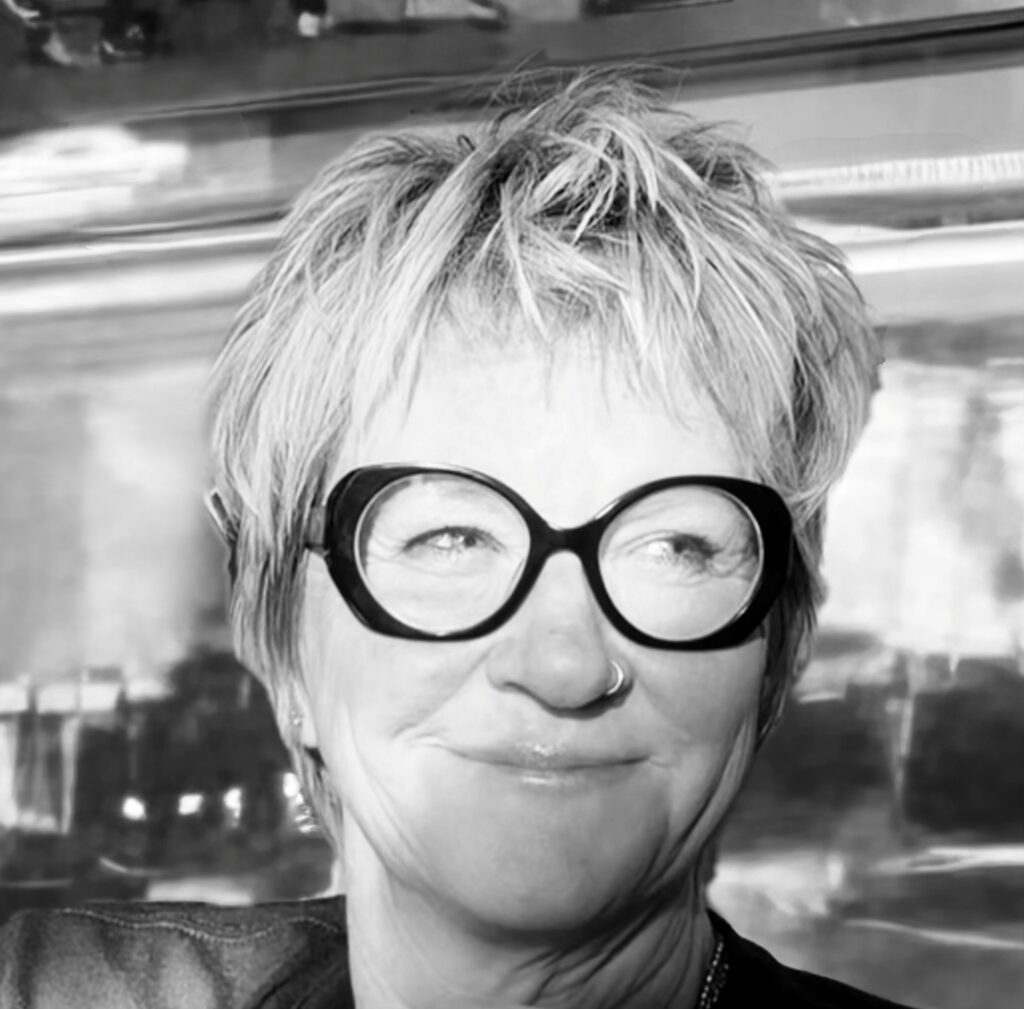
“What makes Jill truly special is the humanity, curiosity, humor and joy she brings to everything she does. Working alongside her is always an adventure,” Clement said. “You never quite know where the process will take you.. Her creativity, instincts, humor and fearlessness often lead us somewhere unexpected, and we end up with performances that are surprising, joyful and deeply human.”
Clement added she admires Anderson’s, “extraordinary ability to connect with an audience – she brings intelligence, vulnerability, humor and an authenticity that makes you want to lean in and listen.”
“I wanted it to be a combination – some old standards and other things you would expect to hear (from folk and rock legends) Bob Dylan, Crosby Stills Nash and Young. Woody Guthrie, certainly,” Anderson said of “Rise’s” featured songs. “Johnny Cash and Nina Simone, too. We open with Guthrie’s ‘This Land is Your Land,’ which is already a complicated song because whose land is it, who did we take it away from. Guthrie’s original version is a protest song. People don’t know there are missing verses about inequality and poverty that are rarely sung.”
One of those verses goes:
In the square of the city, in the shadow of a steeple. By the relief office I’d seen my people. As they stood there hungry, I stood there asking, is this land made for you and me?
The other missing verse is:
As I went walking I saw a sign there, And on the sign it said “No Trespassing.” But on the other side it didn’t say nothing, That side was made for you and me.
“A few more recent artists interested in social justice music have added the verses back into performances.” Anderson said. Written by Guthrie in the depths of the Great Depression, “Land” was his critical response to the popular Irving Berlin paen, “God Bless America.”
“Guthrie was really interested in the haves and the have nots,” Anderson said, while noting how relevant the topic is now, “as we see more and more the gulf and rift between the haves and have nots.
“There are a couple of amazing labor union songs I’m particularly fond of in the show. One is ‘Which Side Are You On?’ It’s a labor standard.”
As with many tunes, there’s rich context behind it.
“It was written in the middle of a vicious labor war between underpaid, overworked coal miners and the company over them in Harlan, Kentucky,” she said. “Squeezed ever harder, the pressure got too much so the workers went on strike. The company sent out thugs to hound, beat up, intimidate them… Families of union leaders were evicted from their company housing. They ended up taking up arms against the company. It escalated into ambushes, bombings, executions. Incredible violence.”
It took a proto-feminist to give voice to the struggle.
“The thing I love is the song’s not written by a man, but by a woman. Florence Reece, the wife of a union organizer. The company invaded the Reece home,” Anderson said. “The husband was not there. They ransacked the place and stood watch outside waiting for him to return. He didn’t come home that night, which saved his life. The wife pulled a sheet off of a calendar and wrote the words of this song on it. It’s full of piss and vinegar. It’s got an ax to grind and is highly tribal.”
In “Rise” the song is performed as part of a medley with “Bread and Roses,” a piece inspired by a labor struggle in Massachusetts in which 20,000 mostly female immigrants walked off the job in what came to be called the Bread and Roses Strike.
Unlike the coal miners, she said the textile workers prevailed – their demands were met.
“It was an incredible coalition of different immigrants,” Anderson said. “There was an anthem going around then being used by the suffragists as well as women in the labor movement. The anthem was a poem set to music entitled ‘Bread and Roses.’ Amazing words to that.”
While “Whose Side” is a bitter rebuke, she describes “Bread and Roses” is “a positive anthem that makes a humanistic case for the dignity of women workers.”
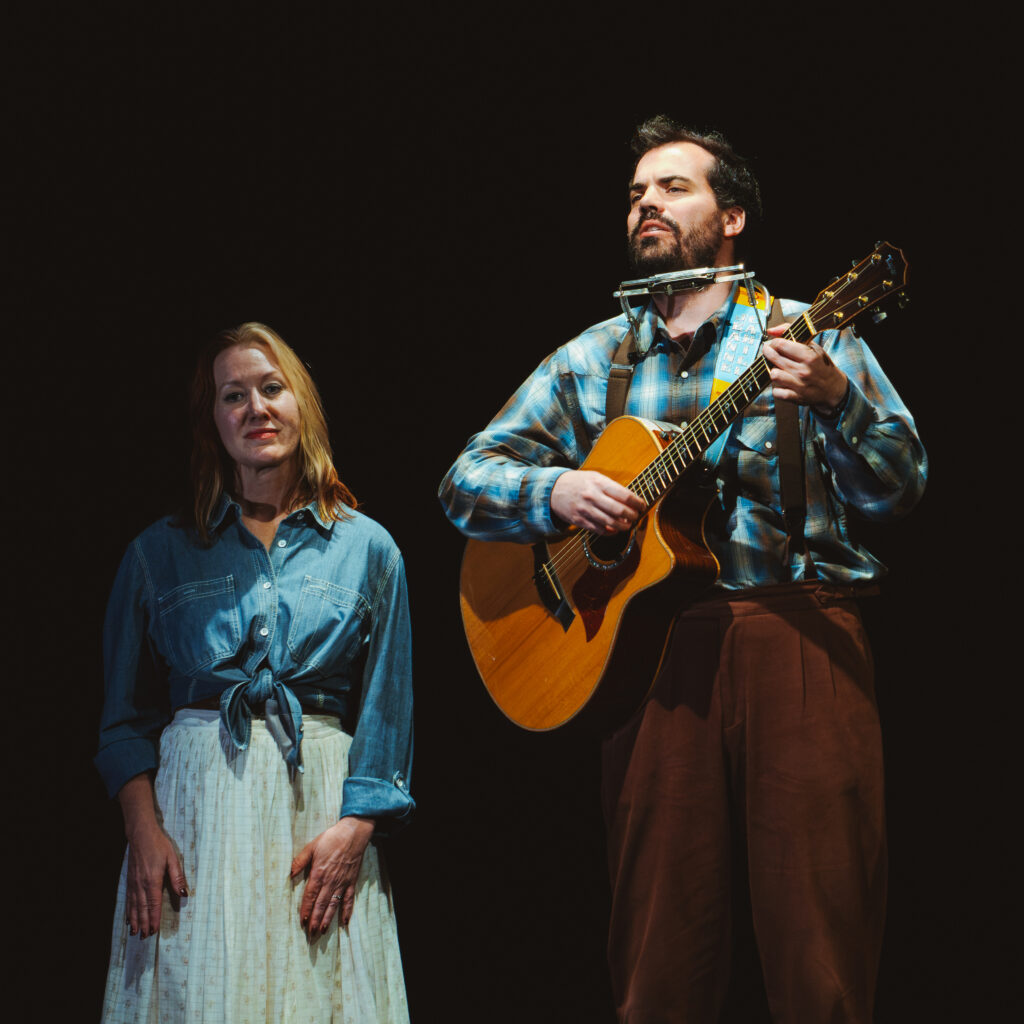
“Protest music is part of what the evening is but it’s not about all of what it is,” Anderson said. “It’s also songs about how do we rise as individuals and societies, different groups, different identities.”
“Rise” has music, she said, “tied with social movements that go even further back or moments in human history when music, for example, played an important part in the lives of enslaved Africans in this country.”
“You had the music of the slaves themselves and the music of the abolitionists,” she added.
The show includes spoken word narrative bridges in which actors recite the words of historical figures. In the slave section, Brandon Willams as abolitionist Frederick Douglass “speaks eloquently about the music.”
“Douglass’ words are very moving. He was haunted all his life with the memory of the sounds that slaves made in the way of music,” Anderson said. “I’m a big fan of Douglass. I think his words are incredible. He expressed himself so beautifully.”
The self-professed “egghead” Anderson enjoys the complexities and contradictions that inhabit history.
“I love the glitches of the story. Complications make the story richer. Then it’s not just a cakewalk of a story. For example, you might be tempted to think of the abolitionists as a monolith. They were not,” she explained. “There were many who couldn’t tolerate the idea of chattel slavery. They found it completely inhuman and a stain on America. At the same time they held the opinion that if Black slaves were emancipated they certainly would never be on equal grounds with white people. They were fighting for freedom but not equality.
“We think of Abraham Lincoln as the great liberator of the slaves but during the Lincoln-Douglas debates he said things to placate spectators – Don’t worry, Black people may be free but they’ll never be equal with us. Lincoln freed the slaves, but he also presided over a mass hanging of Native Americans in Minnesota.”
All Anderson can conclude from seeming contradictions, she said, is that “people are complicated and these movements have been complicated.” “Those inconsistencies, the unexpected things keep me fascinated.”
The show explores many ways music has been used for different purposes. One of those, she said, has to do with asserting identity – the right to be who you are.
“To put the problem or issue in front of people in song. There are examples of music that let off steam for cathartic effect,” Anderson said. “The wonderful ‘Twisted Sisters’ song ‘We’re Not Going to Take It’ is in the show. It’s part of a rock and punk medley. It fits tempo and attitude wise right along with Joan Jett and Green Day in this section of the show that includes statements of nonconformity and anti-authoritarian pushback.”
She said she admires the ethos of Jett’s “Bad Reputation” and how it asserts “I’m going to be who I am and maybe that gets me a bad reputation but you’re not going to silence me.” She admires, too, the Green Day song “American Idiot” and it’s “total takedown of modern America.” She believes it’s the most modern song in the show.
“Then there’s ’60s anti-Vietnam War material,” she said, with the plaintive, soaring “Let the Sun Shine” from “Hair” closing the second act. “There’s also a wonderful Pete Seeger song – ‘What Did You Learn in School?’ about the way people can be indoctrinated to accept the status quo.”
In conceptualizing the project Anderson said she searched for “what social justice musical theater works might be out there.” That led her to the Tony Award-winning “Suffs” by Shaina Taub about the Suffragist movement. She saw “Suffs” in Lincoln on its current national tour. She said what sold her on it is how Taub “took factual points from history and wove them into high impact music with humor, wonderful lyrics, and a compelling story to show different facets and complexities of the suffrage struggle.”
Broadway shows on tour generally forbid regional theaters from producing any part of them. But Anderson wrote a personal message to Taub and got permission to do three songs from “Suffs.” One of those, “Wait My Turn,” is about the first organized women’s march on Washington.
“This is after decades of hard suffrage work and push and struggle by so many women to try and get the vote,” Anderson said. “Arguments did not confront the issue head on. Instead they used oblique, passive tactics, and it didn’t come. Then this group of young upstarts got very radical and said, Hell, no, we’re going to be as visible and loud as possible and 200,000 women from all over the nation responded. An incredible outpouring of support and involvement.”
Solidarity only went so far.
“When it was learned Black women would be allowed to march Southern donors threatened to pull their backing,” she said. “Theres this wonderful scene in ‘Rise’ where Ida B. Wells, a prominent Black journalist, anti-lynching activist and feminist, confronts Alice Paul, the leader of the march’s organizing group. Ida’s been told as a compromise she can march in the back and hope for more in the future. In ‘Wait My Turn’ Ida absolutely lets her have it. It’s a scorching indictment of this weakness on the issue of Black inclusion.”
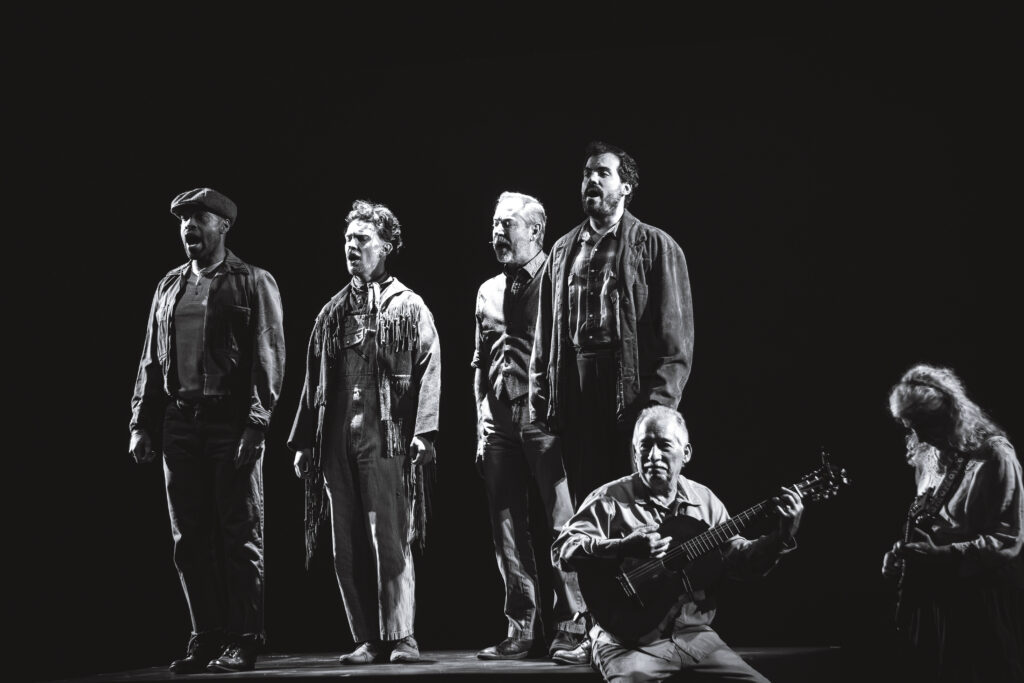
“Rise” called for a formidable African American stage presence to play Wells and another Black woman hero, Harriet Tubman. Anderson found just that in Omaha theater veteran Doriette Jordan, who sings perhaps the show’s most moving and disturbing piece, “Strange Fruit,” made famous by Billie Holiday. Written by a white, Jewish teacher and Communist Party member from the Bronx, Abel Meeropol, “Strange Fruit” is a protest poem against racism and lynching. Meeropol and his wife performed it in New York, generating buzz. After it was brought to Holiday, she performed it at Cafe Society. Afraid it might offend some patrons the integrated club made sure Holiday closed her act with the song and did no encore.
When Columbia balked at producing a record of her singing it, she got a one-time release from her contract to cut it with an indie label. It eventually sold a million copies, becoming her biggest-selling record. It regularly makes all-times lists of greatest songs and is cited as an influence by many artists.
Anderson said Jordan is more than up to the task of doing “Strange Fruit” and Holiday justice.
“Deeply feeling, deeply thinking, good humored, team player and then she has this voice that’s as big as all outdoors. It’s a huge, powerful voice with so much soul and expression,” Anderson said. Surprisingly, Anderson had never met or seen Jordan perform before. When she did, Anderson said, “she just blew my socks off – she’s so good, just the whole package.”
Questions of agency pop up in other “Rise” songs. When cast members Matthew Bailey and Jordan Willis, who are a couple off-stage, asked if they could create an original piece of their own for the show, Anderson agreed.
“They’re exquisite artists, both dancers and singers. Jordan Willis is also a gorgeous violinist. They’ve made an absolutely beautiful piece of dance, spoken word from James Baldwin text, and violin.”
Two more artists new to her, Miguel Cintron and Gonatan Ramirez, sing Spanish-language songs of sacrifice and independence.
Given recent reminders of her own mortality, she appreciates more than ever that everyone has a story of resiliency and agency to share, yet another reason why she’s excited to present “Rise.”
“I love the idea of finding one’s voice and raising your voice,” she said. “Finding what lights you up, what you feel strongly about and finding a way to express it through song. That’s powerful.”
After living with social justice music for two years, she said, “I’d love to write my own protest song. I have thoughts and ideas for one.”
She hopes “Rise” has life beyond Bluebarn but isn’t counting on it.
“Maybe who knows. I’m not fixating on the idea it’s going to have legs,” Anderson said. “…I hope people get a lot out of it, I really do. There’s plenty of moving material in this.”
Showtimes can be found online.