

The most shocking moment in Other Mommy has nothing to do with its sensational opening scene. No, the most shocking moment is when the credits reveal that the movie was based on a book. Really? An actual book? With words and such? And a full novel of about 400 pages, not just the words “What if mom was a literal demon?” sent in a group chat? Wow (which is “mom” upside down).
It is entirely possible that the book, Incidents Around the House, slaps from start to finish. The movie, at best, kinda tickles. Still, nobody who sees it can say that they weren’t given precisely what the trailers promised. The horror genre has been routinely transcendent these days, but any higher hopes should be thoroughly dashed going in. No spoilers, but the ending is so hacky, unearned, unsatisfying, and lame that I knew it deviated from the source material before the internet told me I was right.
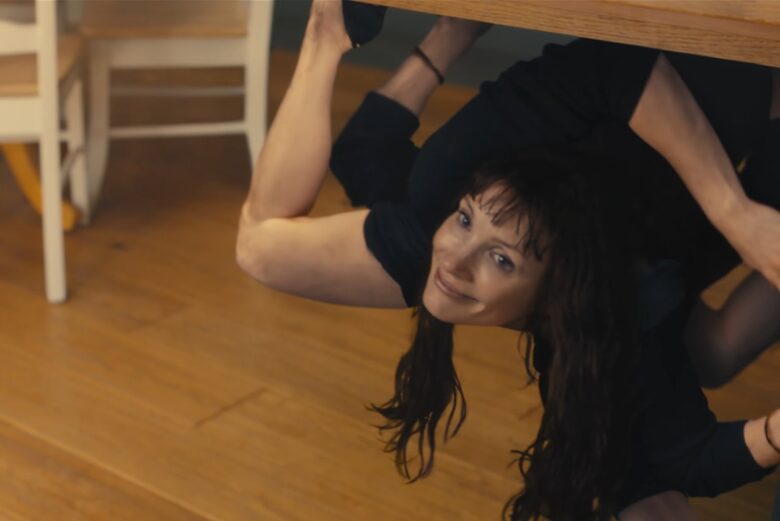
Less right: What Jessica Chastain’s arms and legs do in the opening scene of Other Mommy. For the first 5-10 minutes, screenwriter Nathan Elston and director Rob Savage deliver nearly perfect maternal madness. Bela (Arabella Olivia Clark) is being watched by her dad (Jay Duplass) because her mom (Chastain) is always busy working. Side note: As a kid, I used to think “parent who overly prioritizes work” was a fair critique on family dynamics. As an adult, Bela should stop whining until she generates income.
Bela has a demon from another dimension living in her closet. That demon frequently takes a form that looks like her mother if her mother had too many of certain body parts and all of those parts moved in upsetting ways. This is shown in the opening sequence of the film, and her dad witnesses it. No slow burn here, baby!
Everyone assumes an actual crazy woman/contortionist broke into their home. They decide to go ahead and throw a big party. Like room temperature shrimp or the soundtrack to Eraserhead, once Other Mommy is introduced to the gathering, things get really gross and upsetting. Mom, dad, and daughter soon find themselves on the run, seeking help from their woo-woo grandmother (Karen Allen) and some paranormal “experts.” All the while, the bogeyma’am keeps demanding Bela let her “into her heart.”
The best part of Other Mommy is that absolutely zero moments of screen time are spent with people trying to convince other people that something awful and supernatural is happening. The speed with which everyone is like “Shoot, really sucks we have an unstoppable demonic force after us” cannot be undervalued. If only there were more to it.
Not every entry of spooky cinema has to teach us something about trauma or act as an allegory. They can just be scary (which this really isn’t), fun (strike 2), or wholly original (surely at least some monsters don’t do the crab/spider walk thing). Maybe if the ending wasn’t repellently stupid? Or maybe if the familial secret that was revealed was surprising or weird? Or maybe if the film didn’t seem to go out of its way to make the real mom so unlikable? There is some combination of elements that could have worked, just not the ones currently assembled here. It’s not as bad as its Rotten Tomatoes score would lead you to believe but it’s also not something you’d recommend to someone you love or even like a decent amount.
Grade = C-
Other Critical Voices to Consider
Katie Rife at Inverse says “Where the shallowness becomes a real problem is in the film’s regressive social messaging, which can be boiled down to ‘maybe if you were a better mother, your kid wouldn’t have a demon attached to her,’ but more insulting somehow.”
Alison Foreman at Indiewire says “Between a surreal balloon-popping nightmare on the ceiling and an abundance of brightly colored ball-pit balls throughout the film’s second half, Other Mommy sometimes resembles Skinamarink by way of The Backrooms.
Siddhant Adlakha at Variety says “In the most basic sense, a film in which supernatural scares arise courtesy of negative space ought to at least have thoughtful framing, but the endless series of startles arrive with the same weight and energy as the fake outs. Tension dissipates no matter who or what jumps out from darkened spaces, as the movie veers between physical dangers and imaginary sequences as Chastain’s spiritual entity occupies young Bela’s attention like an annoying, persistent daydream.”