
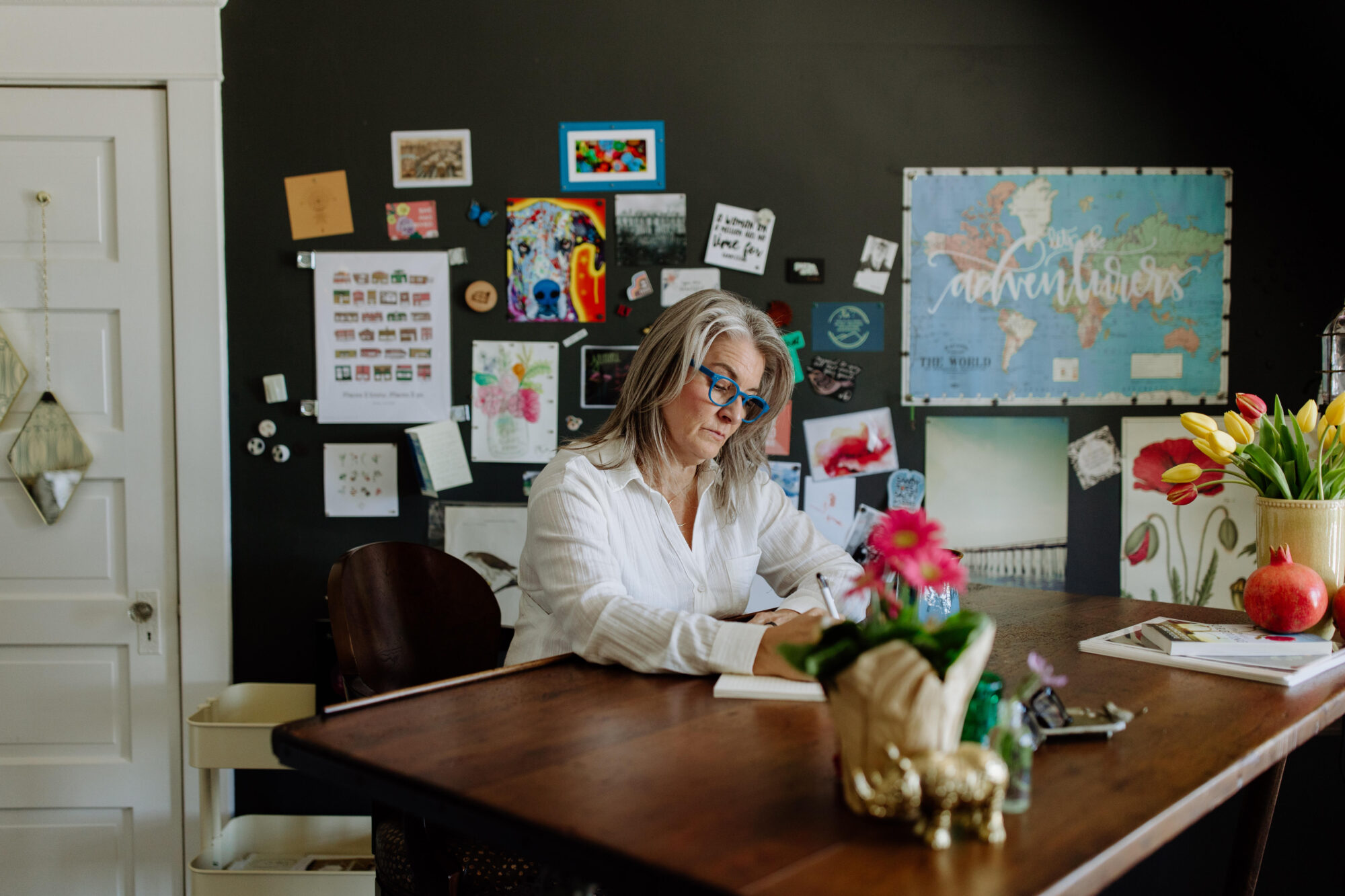

When my grandfather made the decision to die after cancer treatment worsened his symptoms, I felt a call from deep within to stand beside him during the process and to help him move through the experience with peace and dignity.
When it comes to natural death, the inescapable kind that comes at the end of every long life, my outlook tends to be that the Western traditions and societal norms around death do not do what they intend to do — comfort those of us still on this side of the plane. Rather, I’m left feeling unsettled by it all, and that there is so much more honoring of the dead that could be done.
Just as we are born, we die. What if we embraced the process and our relationship to death, just as we embrace when a life is first brought into this world?
What if, instead of burying our grief, we put it on a pedestal instead?
What if, instead of being afraid to remember the dead, we continued to say their names, laugh at our favorite memories, and pass their stories on to the next generation?
When my grandfather was ready to enter hospice, I wanted his path forward to feel supported. I remembered that there are people who dedicate their lives to helping families and the dying walk through this transition — end-of-life doulas.
Doulas are trained professionals who provide support during life’s major transitions — namely birth and death. They provide emotional support, education, and perhaps most importantly — an unwavering presence during one of life’s most sacred times.
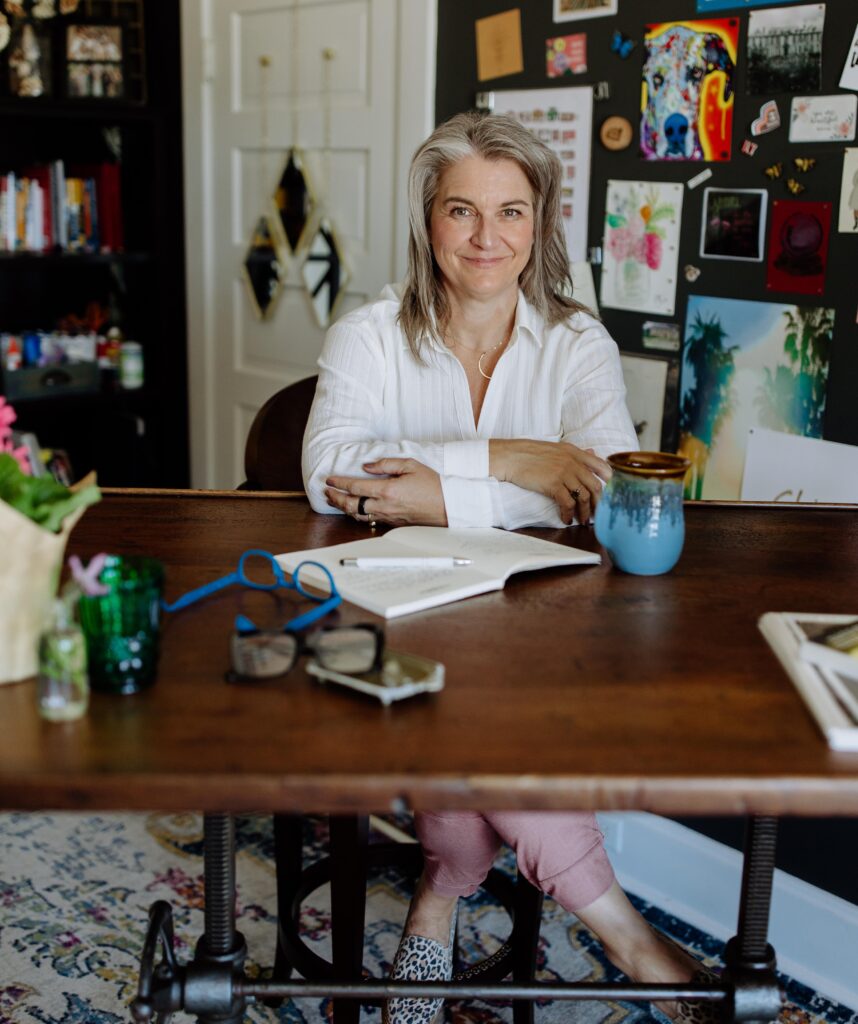
After some research, I found a doula in our area and began the process of inviting her into our world.
As he awaited the move into hospice, my grandfather — still very alert — voiced a few concerns and wanted to know what he could expect. As his family, we were experiencing waves of emotions and acceptance. I knew this was an area where we could all use some guidance.
So, in my initial inquiry into the doula, I said we were looking for someone compassionate and experienced enough who could provide end-of-life comfort and help us all navigate the journey.
The doula, Jenni Herchenbach with Flourish Collaborative, guided us into the process and began by meeting with several of us to learn more about the kind of support we were looking for.
Next, she met with our larger family, this time including my grandfather. I was grateful that she put his needs and desires first — asking him questions directly and listening intently, while still tenderly holding space for the feelings of those around him. Prioritizing him as the person entering his final transition felt like an act of honor in and of itself.
He was able to ask the questions that he had, and with newfound clarity, he was more at ease, and we felt more empowered to be his advocates.
From that point forward, we continued to communicate through the process. She was a sounding board for all the feelings, uncertainties, and reflections that arose.
Now that I’m on the other side of it all, I look back at our decision to engage a death doula as an integral part of what made his passing feel gentle and intentional.
After this very personal experience, I connected with Herchenbach to learn more about her work, her thoughts on why Western society tends to avoid conversations about death, and how doulas are helping to change that narrative.
One of the first points she made was to tell me that she likes to think of herself as a “grief tender.” She said she understands that when people reach out to her, they’re at their most vulnerable.
“My practice as a death doula in this town, in this world, is an act of service that I do not take lightly,” she said.
As a former occupational therapist in a trauma center, she’s seen some bad deaths, exacerbated by COVID.
“There was a density of death that my peers had never experienced,” Herchenbach said. “So suddenly, whether people wanted to or not, they were talking about death. It was a little bit of an entrance point to where this weird girl who liked to talk about death even as a child finally could do it in a way that I wasn’t going to be shushed.”
After that experience and the desire to transition to a less physical job, she found a way she could talk about life and death with people in a different format — through doula training.
“We finally in our society talk more about birth, and to me, death is another birth,” Herchenbach said.

I asked her why she thinks people avoid talking about death and dying, and why the lens that honors death as part of life isn’t yet fully embraced.
“We live in a society where pain and discomfort are things we’re not supposed to have to experience,” Herchenbach said. “Chasing them away actually hurts us more than it helps us. Most of my work is stepping into areas of discomfort with people.
“There’s an undercurrent of grief in our society that we just walk past and pretend isn’t there.”
She said she offers no guarantees that doing the work is a straight path to peace.
“I know people want to feel better, but I don’t believe we stop grieving,” Herchenbach said. “I believe we learn to live and grieve at the same time.”
She also poses the question, Why is grief something we want to get over?
“To me, grief is how a love story continues,” Herchenbach said. “To me, grief is a thread that I don’t want to leave out. Is it really difficult? Yeah, and it’s achingly beautiful.”
She added that stepping into discomfort is worth the reward.
“It’s going somewhere that’s the unknown,” Herchenbach said. “How about we ritualize it? How about we talk about it? How about we fantasize about it? How about we pursue it? In order to pursue something, you have to know where you’re going. So you have to say, well what do you want? What don’t you want?”
She said when families are able to step into those conversations, it empowers others to voice their own preferences — about death and life — and start airing out all the things that may have been left unsaid.
She approaches each relationship uniquely and believes there is no one-size-fits-all approach. She said it’s typical for the most “death curious” or “death open” person in the family to initially reach out, but she’s clear that the dying person is her primary concern until after the death. Then the process of working through grief begins.
I asked her how she creates space for hard conversations about mortality that feels safe and dignified, especially for those who feel discomfort around such topics. Herchenbach said she does so by encouraging people to shed fear and bring forward the thoughts or feelings they may deem shameful or unpalatable — assuring them she has a large enough container for it all.
“I don’t want people to have to come to be filtered, or airbrushed, or worried that they’re going to say the wrong thing or make me uncomfortable,” Herchenbach said. “I want everything to come forward.
“It makes sense to me that this doesn’t feel good. And if we can just start talking a little bit more about it, it actually frees everyone.”
When it comes to the full range of emotions that arise in this type of work, Herchenbach said it’s about presence.
“I stay still,” she said. “There’s something about being a still point in the chaos.”
When I asked her about what this work has taught her about living, she replied, “Grief is beautiful. I laugh and cry pretty hard every day. I don’t want to live any different from that.”
If there’s one piece of wisdom she could share with someone facing the end of life, she said it’s to embrace it.
“Lean in,” she said. “Lean all the way in.”
She pointed to other societies that ritualize every piece of life, including death — cultures that celebrate the full circle and that aren’t afraid to talk about it openly.
“I don’t think it’s a relearning, I think it’s a remembering,” Herchenbach said.
She wishes more people could hear what is said at their funerals while they are still alive.
“It would change us,” Herchenbach said. “It would change everything. I’m convinced that if more people knew how loved they were, then we wouldn’t be so afraid to die.”
And it’s those moments of heart-wrenching, deeply human connection — if we are brave enough to embrace them in those final days and weeks — that can change us fundamentally and bring us closer to understanding this circle of life we experience with consciousness. They are equal parts pain and beauty. The yin and the yang. Perhaps we should learn to treasure them a bit more.
And as Jenni reminds us, “We’re all going to die; we deserve to do it well.”