

Both as a public service announcement and because it is genuinely grating amateur-hour nonsense: Obsession has a beloved pet’s death in its first five minutes. It is later the basis for several jokes, which will either worsen or lessen your reaction to the literal worst story beat a human can devolve to using. Take note, AI overlords.
If you can get past that, there are still other things that make reacting to Obsession complicated. If you can solve those complications, you will agree that writer/director Curry Barker has followed Jordan Peele and Zach Cregger in successfully jumping from sketch comedy to spooky goodness. The third example means it is no longer a coincidence: Everyone doing TikTok pranks should immediately be given a shot at the Nightmare on Elm Street reboot or something.
Because Obsession has a post-Ozempic-sized plot, we can quickly get through it to discuss the harder-to-figure-out stuff. Bear (Michael Johnston) is an awkward “nice guy” who is in love with his friend, Nikki (Inde Navarrette). She almost certainly knows, but he definitely hasn’t said anything about it. Bear’s friend Ian (Cooper Tomlinson) encourages him to not rock the boat while his friend Sarah (Megan Lawless) has developed unspoken feelings for him.
Then, Bear stumbles into a hippie-dippy witch shop and buys a kitschy “toy” called a One-Wish Willow. Make a wish, snap the stick, your wish comes true. No takebacks. Bear wishes for Nikki to “love him more than anyone else in the world.” It does not go well.
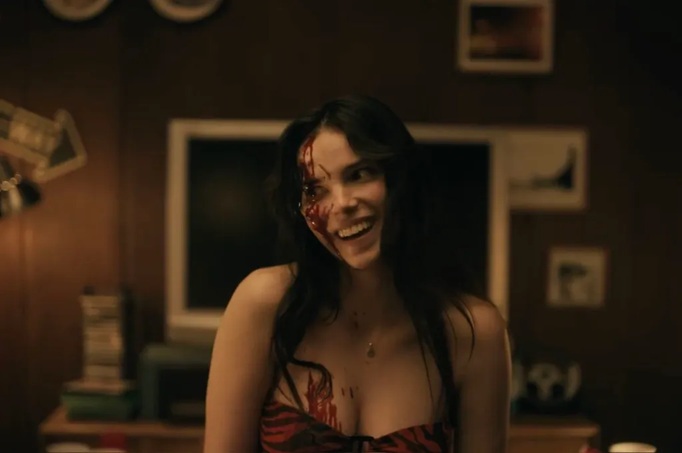
Starting a review for Obsession anywhere other than with Navarrette is wrong and stupid. She’s incredible here. The scary bits are 100% cliches. It’s all “twitchy backward movements” and variations on jump scares. It all works because Navarrette sells them so perfectly. More than that, her haunting performance is so remarkably disquieting that it actually introduces a minor problem.
You’re not supposed to think Bear did the right thing. But Barker seems to want you to like him. At the very least, you’re supposed to pity him. Navarette’s tortured screams and pleading, suffering eyes make you root so very hard for Bear to die. Quickly and horribly.
That visceral anger at the central character then makes the surreal, darkly comic tone feel irresponsible in a way. This is fairly explicitly supernaturally aided rape. It can’t be defensibly read as a “toxic relationship.” This isn’t a metaphor for flawed romance, it is evil. And that makes the goofy bits slightly harder to stomach.
Slightly…
Because in the end, the film bends but doesn’t break under the weight of loathing its lead. The grotesque climax and finale actually surprisingly help to smooth things over. In the end, Obsession doesn’t wind up being some clever social commentary or “elevated horror” so much as blunt force trauma.
Barker has the Texas Chainsaw Massacre up next, which feels right. Navarette should be in pretty much everything immediately. All of this is to say that somehow Obsession actually lives up to the hype.
Grade = B+
Other Critical Voices to Consider
Monica Castillo at A.V. Club says “Navarette is contorting her face in unnatural ways, screaming at the top of her lungs like a toddler, and—through some of Barker’s editing magic—speeds up or reverses her movement to look even more otherworldly. Navarrette’s wild performance channels Isabelle Adjani’s turn in Possession in her commitment to the emotionally and physically intense role.”
Emma Kiely at Little White Lies says “Navarrettegives an all-time horror performance as the sickly sweet Nikki, who snaps in and out of a truly terrifying possessed entity. More than anything, the filmannounces an exciting voice in horror filmmaking. While the subtextual gleanings may not be particularly illuminating or fresh, Obsession delivers everything you could want from a story that is as terrifying, maddening, and tragic all at once.”
Jordy Sirkin says “There’s this lovely retro atmosphere to the film that gives it an almost nostalgic feel of the 80s and 90s. And with an unnerving ambient score, it adds so much more to the film in terms of aesthetics and this overall sense of unease.”