

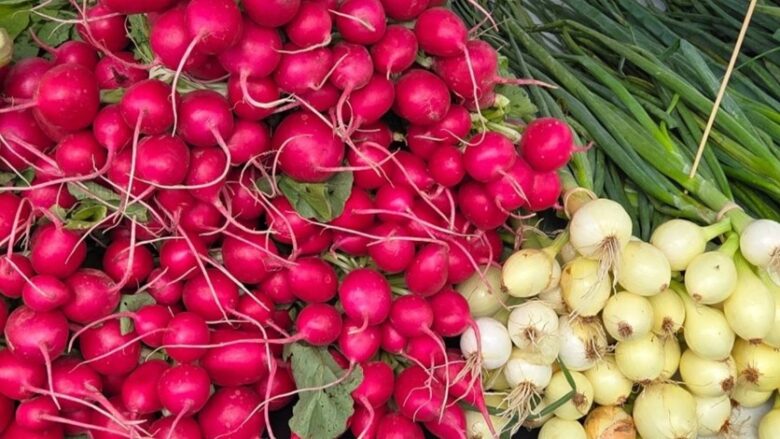
On a weekend visit to the Omaha Farmers Market, you can find local growers selling tomatoes and greens, cottage bakers with a table full of bagels and artisan makers selling unique, handmade gifts. But spend a little time talking to Maggie Winton, Marketing and Communications Director for the Omaha Farmers Market, and it becomes clear that she sees something much bigger.
For Winton, the market is an ecosystem. It’s a place where farmers make a living. Entrepreneurs test new ideas. Shoppers discover foods they might not otherwise try and local dollars circulate through the community.
The market now has substantially more home-goods vendors, bakers, and other artisans than it did several years ago. Winton said the changing agricultural makeup of the market doesn’t necessarily mean there are fewer farmers. Some of the growers are urban farmers working with smaller amounts of land producing more focused yields than a traditional full-scale farm, while the dry, hot summer has impacted some of the variety available.
“I’ve been with the Farmers Market since 2021, and we’ve seen a huge increase in people who, during COVID, were stuck inside and learned new skills,” Winton said of the increase in home-based artisans. “Crafting, baking, anything that brought them joy. And they continued after covid.”
The Omaha Farmers Market gives these creators a space to share their wares.
Winton said that approximately 300 vendor applications are being considered at a given time, creating opportunities for sellers to pilot new ideas and products to a curious and open-minded public. The market rotates vendors throughout the season, allowing some to participate weekly and others to appear once or twice a month or seasonally, depending on their products.
For shoppers, the rotating vendor schedule means there is always variety in what they find. For vendors, it creates an opportunity to participate in the market in a way that works with the scale and seasonality of their businesses.
That is particularly important for the entrepreneurs using the farmers market as a place to develop their businesses.
The Omaha Farmers Market collaborates with Nebraska Enterprise Fund and Kitchen Council, organizations that work with entrepreneurs who want to build food-related businesses. The market can give those entrepreneurs an opportunity to put their products in front of customers, learn what works and make adjustments.
Winton points to Omaha Bagel Co. as one example. The company first helmed a booth as a No More Empty Pots pop-up, and eventually became a regular Saturday and Sunday vendor at the market before recently opening its first store.
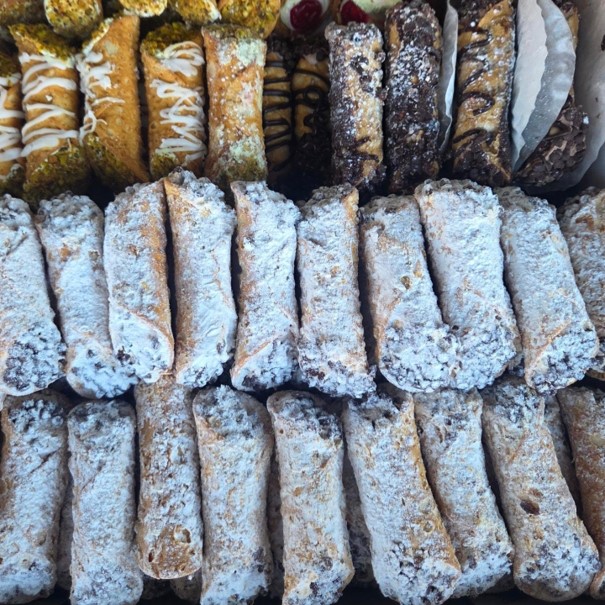
“It’s so cool to see folks, they got to use the market to workshop and figure out what parts of their business works, what they need to adjust,” Winton said.
That collaborative approach is something Winton values about the market.
“I think there’s such value in recognizing that just because we’re in the same type of space, we’re all in the food world, propping up entrepreneurs,” she said.
For shoppers, supporting those vendors means supporting businesses that are often still developing and potentially helping them take the next step. The same is true when shoppers buy directly from local farmers. The Omaha Farmers Market growers all come from within 150 miles of Omaha, and vendors are the farmers themselves, not resellers. That gives shoppers an opportunity to know where their food comes from and to talk directly with the person who grew it.
“When you shop from a farmer at the market the produce you’re getting was hand grown, hand cut, transported by the people standing in front of you at the booth,” Winton said.
The market’s vendors are also required to meet health department requirements, and health officials visit during the season to check permits and answer questions.
“There’s something to be said safety-wise about knowing where you’re getting your veggies from,” Winton said.
A shortened supply chain can provide fewer points of handling and greater traceability. While our current food system is suffering the ill-effects of cross-contamination, sourcing directly from local, highly-regulated growers is an increasingly attractive option for many.
That direct connection can also help shoppers feel more comfortable trying foods they might otherwise pass up. Winton and her coworker Kristen Beck have been talking about the educational role the market can play, particularly for people who aren’t accustomed to preparing fresh produce. They are consistently seeking partnerships that may be beneficial to local shoppers.
“It can be intimidating to pick up fresh produce from the market,” Winton said. “Bok choy and unfamiliar greens may look appealing, but shoppers may not know how to prepare them. The market wants to make it easier to ask questions and learn from the farmers who grow those products.”
Metropolitan Community College’s Dean of Culinary and Horticulture Brian O’Malley currently serves on the board of the Farmers Market. The role has opened communications about possible future partnerships with the culinary program to help develop recipes to make some of the less-familiar produce items feel more accessible.
Accessibility isn’t limited to knowing what to do with the food. For many in our community, fresh food feels like a financial impossibility.
“Shopping local and supporting local farmers shouldn’t be a financial burden,” Winton said.
The Omaha Farmers Market accepts SNAP and EBT, and its SNAP Match program provides up to $20 in paper vouchers for fruits, vegetables and herbs when SNAP shoppers use their benefits at the market.
“Our farmers are participating in that program, so it’s not only supporting those in the community who don’t always have access. It’s supporting our farmers,” she said.
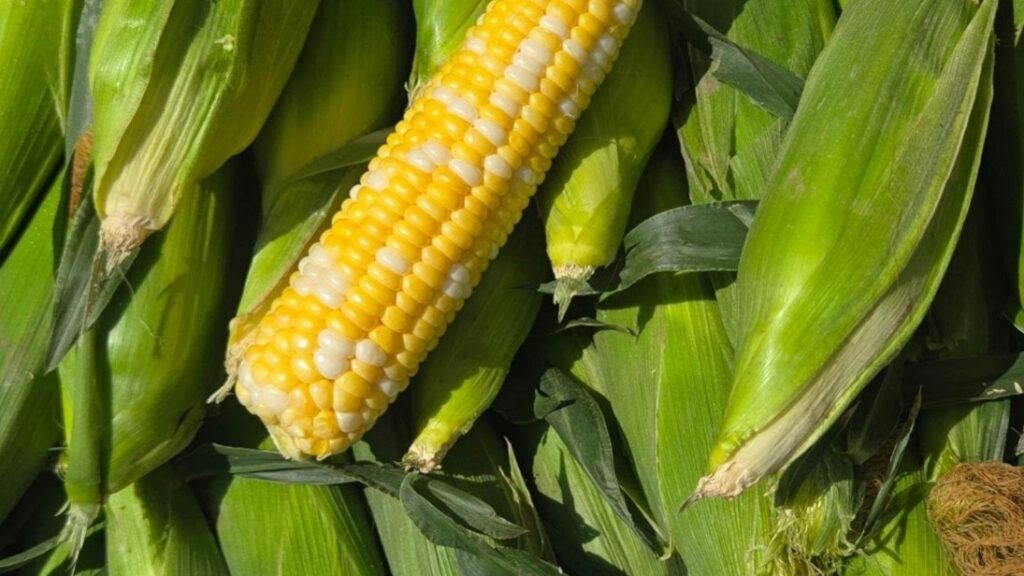
That access is important to Winton because financial circumstances can change, and the people who need assistance aren’t necessarily who we might expect. She pointed to students, young professionals and families who may be experiencing financial pressure and, in some cases, using SNAP for the first time.
“Because of their circumstances, they may not be able to shop the market,” she said. “We see so many medical students, hospital interns, people you wouldn’t guess would be struggling so much financially who are just finding out that they qualify for these food assistance programs. It’s such an honor to be able to provide this opportunity to help support them and their young families. There’s nobody in our community who doesn’t deserve to eat. I’m so glad we get to be part of the answer to at least one of the problems these families are facing.”
The market’s physical accessibility is also something Winton said she thinks about constantly. The organization spends considerable time planning where vendors go, ensuring there is space for accessibility devices and strollers, maintaining access for emergency vehicles, and keeping public walkways clear.
It is a small example of how much planning goes into creating a market that feels easy to navigate. But perhaps the most important thing for shoppers to know is that they don’t have to arrive with a particular level of knowledge or experience. You don’t have to know how to prepare every vegetable. You don’t have to be an expert on local agriculture. You don’t have to have a large grocery budget. And you don’t have to visit the same vendors every week.
You can ask questions. You can try something new. You can meet the person who grew your food, support an entrepreneur who is building a business, or simply see what local vendors have brought that week.
The Omaha Farmers Market has changed considerably in recent years. But for Winton, that change has created more opportunities for local farmers, entrepreneurs and shoppers to be part of the same community.
And that may be the best reason to stop by: you never quite know who you’ll meet, what you’ll learn or what you’ll find.