

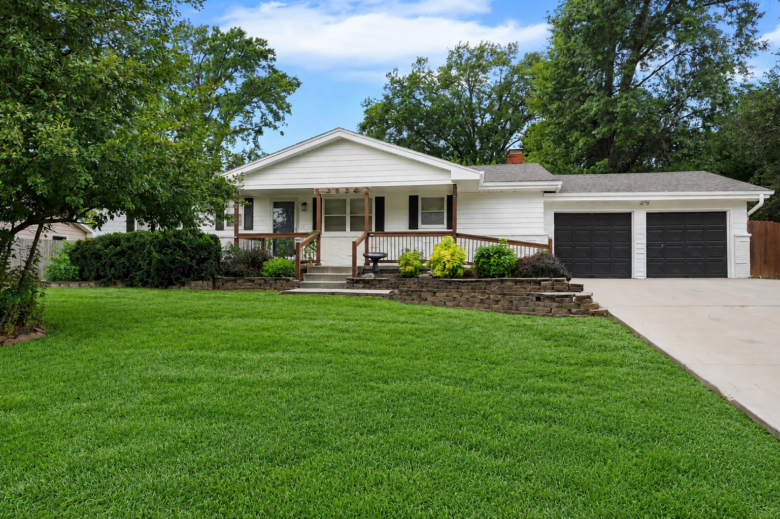
A men’s-only sober living home opened in Omaha this week, offering a structured place to live for men going through outpatient addiction treatment.
Aaron Barnes runs the home, called RCVRY House. Barnes struggled with addiction himself and has been sober for more than 10 years. In 2017, two years after getting sober, he started Sober Coaching, a nationwide recovery coaching company he still runs.
Barnes said the idea for RCVRY House came together earlier this year. He said a couple of outpatient treatment centers in the Omaha area don’t have sober living homes of their own, even though outpatient treatment only takes up part of the day.
“When you leave there [outpatient care], you either have to go back to your house, your parents house, an apartment… And the living environment can have a huge impact on your ability to thrive in the outpatient,” Barnes said.
Up to eight men can live at RCVRY House at a time, along with a live-in manager who is also in recovery. Every day includes outpatient treatment, group workouts five days a week, a few evening recovery meetings a week and a weekly volunteer project. When residents aren’t in treatment or house programming, they’re required to work or attend school part time.
Barnes charges $2,500 a month, which he calls a participation fee. It covers housing, food, transportation to and from treatment and meetings, and one-on-one recovery coaching from Barnes, who is a certified recovery coach.
It’s a private-pay program. Insurance doesn’t cover sober living, Barnes said. But he has a limited number of scholarship spots for men who apply and qualify.
Barnes said local outpatient providers want to work with him, because it helps ensure their patients get to treatment and have support the rest of the day.
Raelyn Barton, a psychiatry ambulatory supervisor at Nebraska Medicine, said stable housing plays a real role in whether outpatient treatment works.
“Unstable housing can be a significant barrier to completing outpatient treatment,” Barton said. “Housing instability can increase stress and make it more difficult to focus on treatment and recovery. Increased stress can also contribute to a return to maladaptive coping strategies, including substance use.”
Nebraska Medicine doesn’t formally track how often patients run into housing problems, Barton said, but the issue comes up often enough that her team keeps a list of community resources to help.
“There are housing resources in the area that we can explore with patients, but sometimes the patient does not meet the criteria for a particular resource,” Barton said. “When that happens, we may see patients remain in living environments that make it more difficult to maintain their recovery.”
Homes like RCVRY House are meant to offer exactly that kind of stability. But the state of Nebraska doesn’t check or regulate them. The Nebraska Department of Health and Human Services only requires a license when a facility provides supervision of residents’ personal care or daily living needs. Sober living homes like RCVRY House don’t, so the state classifies them as exempt residential self-help programs.
Barnes said the city of Omaha still holds him to its own rules. He said RCVRY House falls under a zoning category called “Small Group Living Disabled,” which he said caps occupancy at eight residents plus a live-in manager and requires that none of them be related. Barnes said he met with the city’s planning department before opening to make sure the house qualified.
Beyond that, Barnes said he’s pursuing accreditation on his own. He’s working toward joining the National Alliance for Recovery Residences, a national organization that sets standards for recovery housing. Barnes said he’s personally in touch with someone on NARR’s board who’s been supportive of Nebraska starting its own chapter, though the state doesn’t have one yet.