

Was “Serial” worth it? Since that program injected super-soldier serum into the veins of the podcast medium, the format has elevated openly evil people to a new form of stardom and contributed more than a little to, you know, all of the bad things going on everywhere. Along comes undertone, an entry in one of the most delightful subgenres: an on-the-nose spooky movie where a metaphorical problem like podcasting is made explicitly and literally demonic.
Writer/director Ian Tuason proves for the umpteenth time why horror is arguably the best cinematic incubator. This microbudgeted flick relies on sly suggestion above vulgar and obvious VFX. It demonstrates a clear creative playfulness and marks the first time that Gen Z’s well-publicized fear of liminal spaces is broadly terrifying. undertone is by no means perfect, but for enjoyment return-on-investment, you’d be hard pressed to find a better bang for your buck right now.
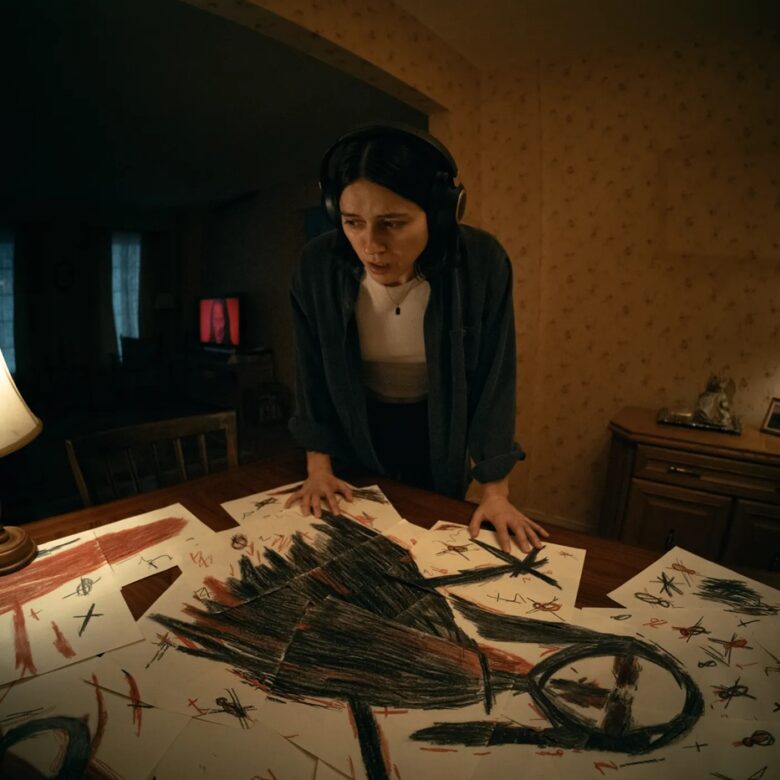
Evy (Nina Kiri) is watching her mom die, which sounds gross but is actually kind. She has moved back into her family home to caretake for her mother during the end of her life, which should really be any damn minute now. Due to stress from this and an unplanned pregnancy, Evy has wicked insomnia. “Luckily,” she records a podcast in the middle of the night with Justin (Adam DiMarco), an old friend who lives in London.
The podcast shares the film’s title and is all about creepypasta/icky rumors. Justin is the enthusiast, Evy is the skeptic, with both acknowledging that they exaggerate those traits into “characters” for the recordings. Justin gets an email with 10 audio files sent to the podcast’s inbox. Those contain creepy backward children’s songs and potential evidence of demonic possession. Still not worse than things that have aired on many real-world podcasts.
undertone descends into expected madness in ways that aren’t surprising so much as they are efficient and restrained. The latter is a rarity for horror movies, where the temptation for jump scares and grotesquery often proves a deal too devilishly sweet to refuse. Much of Graham Beasley’s cinematography is swirling up and around the old home of a dying Catholic woman, a mortifying site that doesn’t get explored enough. The tracking shots slowly move and bend in ways that the house’s architecture simply can’t support. It’s not disorienting so much as it is highly upsetting in a way that Skinamarink could never.
Although there isn’t an explicitly stated “message” that would lift the film into divisive “elevated horror” territory, it thoughtfully pokes at themes of traumatic motherhood. The damage done to and by mamas that didn’t want to be mamas casts a big black shadow that is every bit as upsetting as hearing “Baa Baa Black Sheep” in reverse on repeat. Using those broken relationships as a central spine could have felt like exploitation but never does.
That’s perhaps the best way to describe undertone: It doesn’t do anything particularly new but does everything in such a measured, careful, well-executed fashion. Go see this one in a theater. Your sound system is good, but it’s not as good as you think it is. And part of the fun here is getting freaked out by hearing unfamiliar noises around you while you watch. Even if you are overly grumpy about rude theater goers, they actually can only add to the tension for once.
Grade = A-
Other Critical Voices to Consider
Alisha Mughal at Exclaim! says “There is nothing alive, raw, scared, sad, weeping, or grieving here. Peeling back the technical layers that have been so meticulously wrought to make this film look and sound good, you won’t find anything human, you won’t find anything at all — no beliefs, no backbone, no stance, and I think that’s the most terrifying thing about it.”
Nicolás Delgadillo at Discussing Film says “It’s a fully formed directorial debut that is unafraid to alienate viewers who demand easy answers or conventional scares. This is a film that rewards patience, close attention, and repeat viewings. If you tap into its unique wavelength, undertone is a work that lingers long after the sound cuts out, leaving you alone with whatever your mind conjures next.”
Kimber Myers at Crooked Marquee says “I spent most of its running time with actual chills, drawing my knees into my chest and using our progression through the 10 emailed recordings to estimate roughly how much more time I’d be panicking for. I appreciate being given such a nice round number, so that I could easily calculate the percentage of the movie left, since I lacked higher brain function and could only think about how scared I was.”